

The Essential Guide to Marketing Transformation in 2025




In 2025, marketing transformation is not just a trend—it is the difference between thriving and fading away for B2B SaaS and enterprise software companies. Buyers expect more, competition is relentless, and technology is evolving faster than ever.
This guide is your blueprint for future-proofing your go-to-market strategy. You will discover how to harness the power of AI-driven automation, including the rise of Agentic AI, and unite product, marketing, and sales into one growth engine.
What does marketing transformation really mean in 2025? What forces are driving this seismic shift? How can you align your teams, adopt new technology, and measure real business impact?
If you are ready to break down silos, drive measurable revenue growth, and lead your organization with confidence, let’s dive in. The path to sustainable success starts here.
Defining Marketing Transformation in 2025
Marketing transformation in 2025 is far more than a digital facelift. What began as isolated upgrades to tools or campaigns has become a sweeping, organization-wide shift. According to Forrester, true marketing transformation means rethinking people, processes, data, technology, and culture to break free from traditional silos that often hold back SaaS and enterprise software companies.
Today, the most successful organizations are dissolving the walls between product, marketing, and sales, building unified growth teams with shared goals. This convergence enables every activity to be measured against pipeline impact and ARR growth. For example, companies that once focused solely on product-problem fit are now scaling rapidly by aligning their go-to-market strategy—see these go-to-market strategy examples for real-world proof. Still, only about a third of businesses feel confident in their transformation approach.
Agentic AI is emerging as a foundational pillar of modern marketing transformation. Autonomous agents now help orchestrate campaigns and optimize revenue operations, making it possible to move from guesswork to data-driven growth. As you’ll see in the next sections, embracing this shift is essential for sustainable success in 2025.

Key Drivers of Marketing Transformation in 2025
The landscape for B2B SaaS and enterprise software is shifting fast. In 2025, marketing transformation is driven by a mix of new buyer behaviors, rapid tech advancements, and fierce competition. Buyers now expect ultra-personalized experiences at every touchpoint, forcing companies to rethink how they engage, convert, and retain customers.
Key drivers shaping marketing transformation today include:
- Evolving Buyer Expectations: Customers demand relevant, timely content and seamless digital journeys.
- AI and Agentic Automation: The rise of Agentic AI, capable of autonomous decision-making and optimization, is revolutionizing GTM execution. According to Agentic AI in Marketing Transformation, AI agents now orchestrate campaigns, score leads, and personalize outreach at scale.
- Advanced Analytics: Real-time insights enable granular tracking of pipeline, ARR, and customer lifetime value.
- Market Saturation: Standing out means crafting a differentiated value proposition and uniting product, marketing, and sales as one growth team.
- Unified Metrics: Companies move from isolated KPIs to integrated, revenue-driven dashboards.
- Regulatory Pressure: Stricter privacy and data security rules demand transparency and robust compliance.
For example, SaaS leaders who embraced AI-powered journey mapping report double-digit revenue growth and a 30% boost in engagement (Forrester, PAN Communications). These shifts make marketing transformation not just a competitive advantage, but essential for survival and relevance.

The 5 Essential Steps for a Successful Marketing Transformation
Embarking on a successful marketing transformation in 2025 requires a clear roadmap, cross-functional alignment, and a willingness to embrace new technologies. These five essential steps will help B2B SaaS and enterprise software companies future-proof their go-to-market strategies, drive sustainable revenue, and outperform the competition.

Step 1: Assess Current State and Set Clear Objectives
Begin your marketing transformation by auditing current go-to-market processes, technology, and data. Identify where customer experience falls short or pipeline contribution lags. Set objectives such as ARR growth, improved conversion rates, or higher sales-qualified pipeline.
Use frameworks from Grant Thornton to benchmark against industry best practices. For example, a SaaS firm that realigned KPIs to focus on sales-qualified pipeline quickly saw measurable improvements. Leadership buy-in and a unified vision are essential to drive lasting change.
Step 2: Align Product, Marketing, and Sales into a Unified Growth Function
Traditional silos no longer support growth in the SaaS and enterprise sector. Break down barriers by forming cross-functional teams, setting shared goals, and integrating dashboards. Hold regular alignment meetings and joint planning sessions to speed up decision-making.
According to Building a growth team, companies that unify product, marketing, and sales often see a 25% increase in pipeline. This alignment not only boosts efficiency but also sparks innovation and market responsiveness.
Step 3: Leverage Agentic AI and Automation
Agentic AI is the engine powering the next wave of marketing transformation. These autonomous agents handle campaign orchestration, lead scoring, and personalization at scale. Use AI-driven insights to fine-tune product-market fit and adapt go-to-market strategies in real time.
A recent study found that over 70% of B2B marketers are adopting Agentic AI to reduce CAC and accelerate pipeline velocity. For example, an enterprise SaaS company used Agentic AI to automate sales enablement, resulting in faster deal cycles and higher win rates.
Step 4: Modernize Processes and Technology Stack
Upgrade your martech and sales enablement tools for seamless interoperability. Integrate data sources to eliminate silos and enable real-time reporting. Automate repetitive tasks to empower teams to focus on strategy.
Adopt agile marketing methodologies for rapid iteration and continuous improvement. A company that replaced its legacy CRM with a unified RevOps platform saw a dramatic increase in lead-to-close rates. Modern technology is foundational for any successful marketing transformation.
Step 5: Foster a Culture of Innovation and Continuous Improvement
Sustained marketing transformation depends on a culture that encourages experimentation and rewards learning. Provide ongoing training in AI, analytics, and go-to-market best practices. Establish feedback loops between teams and customers to drive iterative improvement.
Consider quarterly innovation sprints, which can result in exponential lead growth. Celebrate wins, share learnings, and remember that a culture of innovation is the fuel for long-term success in a rapidly evolving market.
Measuring Success: KPIs and Business Outcomes
How do you know if your marketing transformation is working? It comes down to measuring what truly matters. In 2025, B2B SaaS and enterprise software companies are moving beyond vanity metrics, focusing on KPIs that directly impact revenue and growth.
Here are the critical metrics every marketing transformation should target:
| KPI | Pre-Transformation Benchmark | Post-Transformation Target |
|---|---|---|
| Pipeline Contribution | 30% | 60% |
| ARR Growth | 5% YoY | 15%+ YoY |
| Customer Acquisition Cost (CAC) | High | Reduced |
| Customer Lifetime Value (CLTV) | Flat | Growing |
| Sales Velocity | Slow | Accelerated |
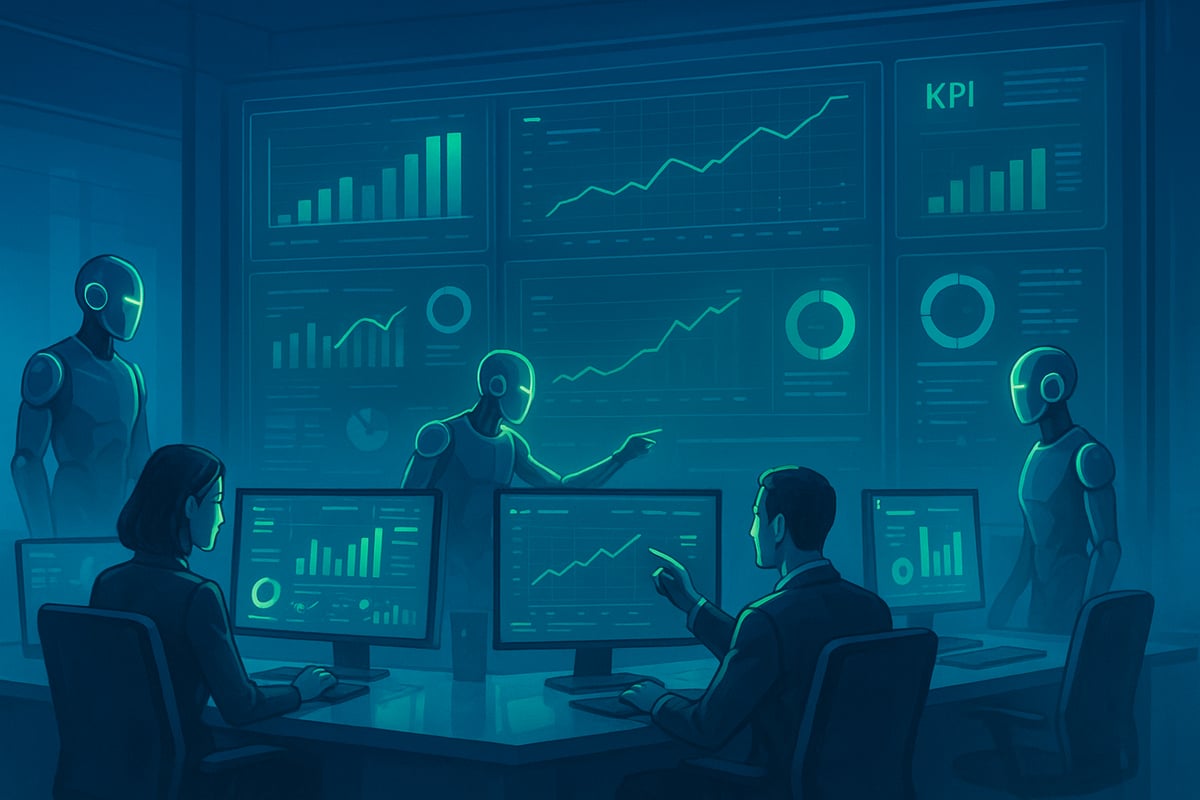
Unified dashboards and closed-loop analytics now provide real-time visibility across product, marketing, and sales. For example, companies embracing Aligning marketing and positioning strategies report up to 60% pipeline contribution from marketing after transformation.
Agentic AI plays a pivotal role, enabling precise tracking and optimization. According to McKinsey on AI Agents Driving Growth, AI-driven organizations see faster sales cycles and higher revenue per customer. This transparency increases trust, accelerates buy-in, and ultimately boosts ROI from marketing transformation.
Overcoming Common Challenges and Pitfalls
Embarking on a marketing transformation journey is never smooth sailing. Every organization faces unique hurdles, but certain obstacles are nearly universal in SaaS and enterprise software.
Common pitfalls include:
- Cultural and operational resistance to change across teams and leadership.
- Technology overload, especially when integrating new Agentic AI tools, as highlighted in Capgemini's CMO Playbook on AI Integration.
- Misalignment between executives and frontline teams, leading to confusion and stalled progress.
- Unrealistic expectations about timelines, causing frustration and burnout.
Pilot programs and stakeholder engagement help build early momentum. Quick wins—like aligning KPIs or running agile workshops—demonstrate value and inspire buy-in. Drawing on external expertise and peer benchmarking, such as the advice found in SaaS growth strategies, can accelerate results and avoid common traps.
Anticipating these issues is vital to marketing transformation success. By fostering open communication and celebrating progress, organizations create a foundation for long-term growth.
If you’ve made it this far, you’re probably feeling the urgency to break away from old habits and embrace the next wave of marketing transformation. I’ve seen founders, CMOs, and growth leaders turn uncertainty into opportunity—just by starting a conversation that led to real alignment and data driven growth. Imagine the difference when every team, every tool, and every tactic works together toward a single, measurable goal. If you’re ready to move from theory to action and want a roadmap tailored to your business, let’s connect. Book Your Personal Intro Call and take the first step toward transformational growth.

Latest From
The Blog
Go To Market Strategy Consulting Guide For 2025 Success

Go To Market Strategy McKinsey Guide For Success 2025
.jpg)
Crossing the Enterprise Chasm: A Practical Guide to Sales-Led Growth (SLG)

Let's Build The Future Together
