
The Essential Sales Enablement Content Guide for 2025

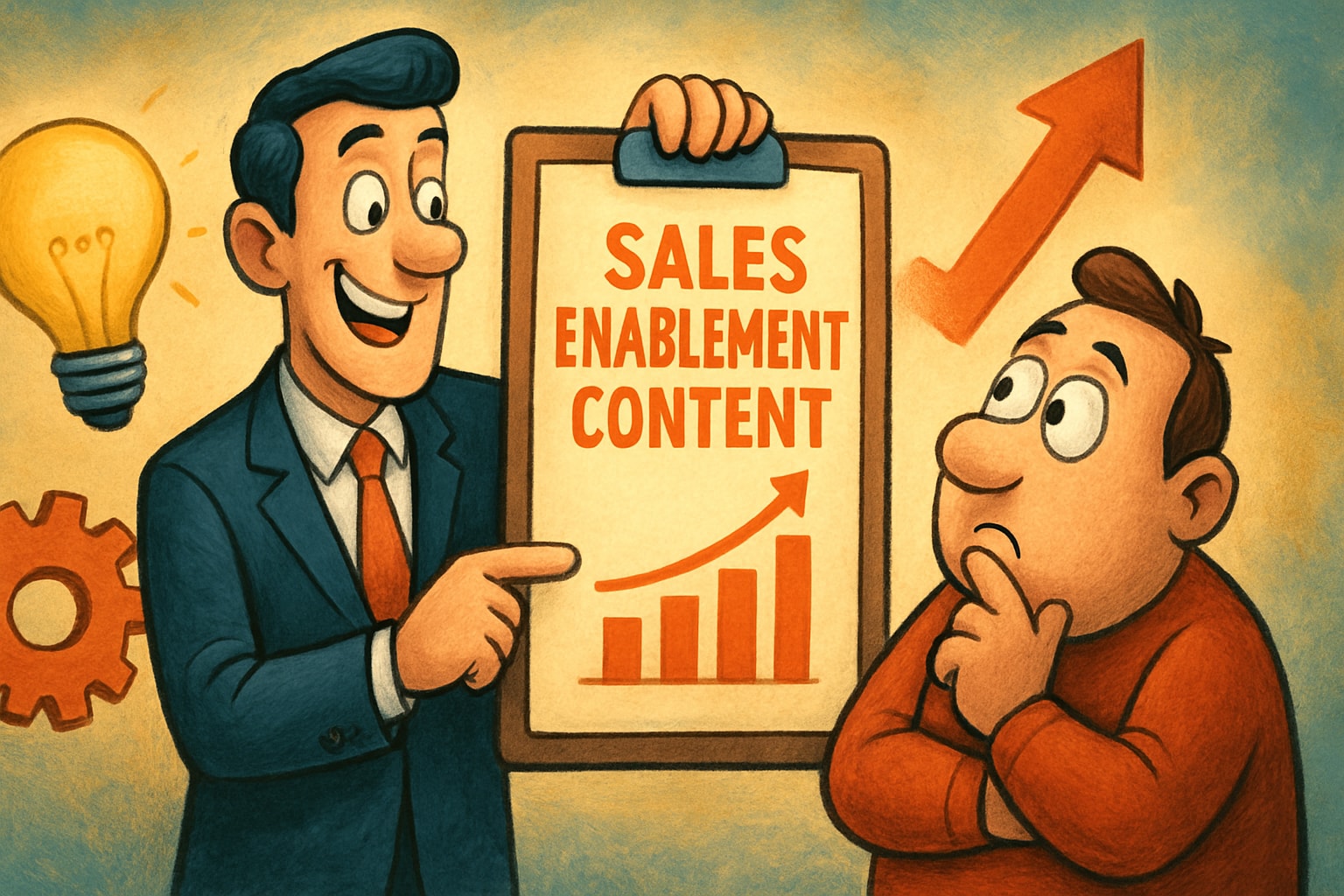


By 2025, over 80% of B2B SaaS companies will invest in advanced sales enablement content to stay competitive in a rapidly evolving market. Today’s enterprise buyers expect every interaction to be relevant, personalized, and backed by real data, which means outdated, static materials no longer make the cut.
Sales enablement content must now adapt to the needs of both buyers and sellers, moving beyond simple PDFs to dynamic, interactive resources powered by AI and real-time insights. The stakes are high—organizations that get this right see measurable improvements in pipeline velocity and annual recurring revenue.
This guide is your roadmap to building, optimizing, and deploying sales enablement content that delivers results. You’ll discover:
- The most effective content types for B2B SaaS in 2025
- Strategies for aligning sales, marketing, and product around unified messaging
- The game-changing impact of Agentic AI and automation
- Actionable steps to future-proof your enablement program and drive growth
Let’s explore how to turn your enablement strategy into a true driver of pipeline and ARR.
The Evolving Landscape of Sales Enablement Content in 2025
The world of sales enablement content is undergoing a dramatic transformation as we enter 2025. Static PDFs and generic decks no longer cut it for B2B SaaS teams aiming for enterprise growth. Buyers expect experiences that adapt to their needs and speak to their unique challenges.
Today, leading organizations are embracing dynamic, AI-powered sales enablement content that evolves in real time. Agentic AI is at the forefront, enabling content personalization and automating delivery across every stage of the buying journey. In fact, 74% of top-performing sales teams now leverage AI-driven enablement tools, according to Salesforce’s State of Sales 2024.
- Unified content streams are breaking down silos between sales, marketing, and product, ensuring every message is consistent and impactful.
- Agentic AI orchestrates multi-step content workflows, customizing assets for each stakeholder in complex enterprise deals.
- Companies like Salesforce and HubSpot use AI to tailor sales decks and case studies on the fly, ensuring relevance in every interaction.
- The demand for content that adapts to intricate, multi-stakeholder buying journeys is higher than ever.
According to Top Sales Enablement Trends 2025, AI-powered solutions are reshaping how teams engage buyers, automate processes, and drive measurable outcomes like pipeline velocity and ARR growth. To stay ahead, SaaS leaders must focus on measurable business impact—prioritizing content that accelerates deals, boosts win rates, and secures their position in a rapidly evolving market.

Core Types of Sales Enablement Content for B2B SaaS
Sales enablement content in B2B SaaS has evolved far beyond static PDFs or generic pitch decks. Today, GTM leaders need a diverse portfolio of content types to address every stage of the complex buying journey. Let’s break down the essential categories shaping high-performing SaaS organizations in 2025.

Foundational Content Assets
Foundational sales enablement content forms the backbone of any GTM strategy. These assets include:
- Product one-pagers with concise value props
- Solution briefs tailored to industry segments
- Competitive battlecards for quick objection handling
These resources are vital for onboarding new reps and ensuring messaging consistency across sales, marketing, and product teams. For example, SaaS enterprises often deploy battlecards to counter competitor FUD during high-stakes deals. Strong foundational content reflects sound product marketing strategy insights and empowers teams to speak with one voice.
Interactive and Personalized Content
Modern buyers expect more than static collateral. Interactive and personalized sales enablement content, powered by Agentic AI, is transforming buyer engagement. Examples include:
- ROI calculators that quantify value in real time
- Assessment tools adapting to buyer inputs
- Dynamic proposal generators for tailored offers
Agentic AI enables reps to instantly customize demos or proposals for each buying group. According to Gartner, interactive demos can boost conversion rates by 30 percent. The ability to adapt sales enablement content on the fly is a key differentiator in competitive SaaS markets.
Customer Evidence and Social Proof
Customer evidence is the trust currency in B2B SaaS. This type of sales enablement content includes:
- Case studies showcasing quantifiable outcomes
- Video testimonials from enterprise clients
- Peer review excerpts from trusted platforms
These assets are crucial for accelerating late-stage deals and building credibility with enterprise stakeholders. Forrester reports that SaaS firms using customer stories see sales cycles shrink by 41 percent. In enterprise deals, nothing moves the needle like authentic proof of value.
Aligning Sales, Marketing, and Product for Unified Enablement
The future of B2B SaaS growth demands more than just great sales enablement content. It calls for a unified force, where sales, marketing, and product teams move as one. By breaking down silos and aligning around shared goals, companies can create content engines that drive measurable pipeline and ARR impact.

Building a Cross-Functional Content Engine
Unified sales enablement content starts with cross-functional collaboration. Weekly GTM stand-ups bring sales, marketing, and product leaders together to align on messaging and asset needs. Revenue operations teams facilitate feedback loops, ensuring every voice is heard.
- Joint content planning sessions accelerate asset creation.
- Real-time feedback from sales improves relevance.
- Alignment reduces duplicate efforts and messaging gaps.
For teams seeking structure, a Go-to-market plan template helps operationalize these processes, making alignment second nature.
Data-Driven Content Optimization
Analytics are the backbone of data-driven sales enablement content. Teams use engagement tracking to see which assets accelerate pipeline. Reviewing win/loss data reveals what resonates with enterprise buyers.
- Monitor asset usage to prioritize updates.
- Use buyer feedback to refine messaging.
- Content engagement scores guide resource allocation.
Regular reviews ensure content evolves with market needs. Enterprise SaaS leaders rely on these insights to maximize ARR impact.
Ensuring Consistency Across Channels
Consistency is key for sales enablement content to build trust and authority. Unified messaging must span from website copy to live sales calls. Enablement platforms ensure every team member accesses the latest, approved materials.
- Version control tools prevent outdated messaging.
- Brand governance frameworks uphold standards.
- Automated distribution reduces manual errors.
When every touchpoint reinforces the same narrative, buyers move through the funnel faster, and teams achieve stronger market positioning.
Leveraging Agentic AI and Automation to Scale Enablement
Agentic AI is revolutionizing how B2B SaaS teams create and deliver sales enablement content. Unlike traditional automation, Agentic AI can proactively orchestrate entire content workflows, adapting in real time to buyer interactions. According to Agentic AI in Sales Enablement, these systems personalize experiences by analyzing buyer intent and context, then assembling tailored assets for every stage.
Picture an AI agent that automatically sends a customized demo recap, followed by a relevant case study, and then schedules a follow-up—all without manual intervention. This level of orchestration ensures that sales enablement content is always aligned with the buyer’s journey, improving efficiency and engagement.
What is Agentic AI in Sales Enablement?
Agentic AI refers to intelligent systems that not only automate tasks but also make independent decisions to move deals forward. In sales enablement content, these AI agents can:
- Analyze buyer behavior and signals on calls or emails.
- Proactively generate and deliver customized content sequences.
- Orchestrate follow-ups, reminders, and insights for reps.
This approach goes beyond static automation, enabling sales teams to deliver the right sales enablement content at exactly the right moment. The outcome is a smarter, more responsive GTM engine.
Practical Applications for B2B SaaS
B2B SaaS companies are already leveraging Agentic AI to assemble sales enablement content tailored to each persona. For example:
- Automated content assembly for different roles in the buying group.
- Real-time objection handling, powered by AI insights during sales calls.
- Instant pitch adaptation based on buyer engagement signals.
Interactive proposal generators and dynamic content streams help teams respond instantly to enterprise buyers’ complex needs. This precision drives measurable improvements in pipeline velocity and ARR.
Risks, Challenges, and Best Practices
Adopting Agentic AI in sales enablement content comes with challenges:
- Ensuring data privacy and security in automated workflows.
- Verifying content accuracy before delivery to buyers.
- Maintaining authentic human relationships while scaling automation.
To succeed, GTM leaders should pilot Agentic AI in high-value segments, monitor outcomes, and continually refine workflows. A balanced approach blends automation with personal touches, building trust and driving enterprise growth.
Step-by-Step Guide to Building a Future-Proof Sales Enablement Content Program
Building an effective sales enablement content program is like assembling a high-performance engine. Every part must work together, fueled by data, AI, and cross-team alignment. Let’s walk through the critical steps to future-proof your strategy for 2025.
Step 1: Audit and Map Existing Content
Start by taking inventory of all current sales enablement content. Map each asset to buyer stages and personas, using analytics to identify gaps and underperforming materials. This clarity ensures no critical touchpoint is missed and aligns your foundation for scalable growth.
- List every asset by type and purpose
- Assess engagement and pipeline influence
- Retire outdated or redundant content
Step 2: Align Stakeholders and Set Objectives
Bring together sales, marketing, and product leaders to define clear goals. Establish KPIs that tie directly to pipeline velocity and ARR impact. When everyone agrees on objectives, your sales enablement content becomes a unified growth lever.
- Schedule cross-functional workshops
- Set measurable targets for each team
- Align content themes with strategic priorities
Step 3: Implement Agentic AI Tools for Content Personalization
Introduce Agentic AI platforms to automate dynamic content assembly and delivery. These tools adapt materials to each buyer’s context, orchestrating multi-step workflows. For example, AI agents can generate tailored follow-ups after demos, driving deeper engagement. To understand the broader impact of this technology, see AI's Impact on Sales Enablement.
- Pilot AI-driven personalization in core segments
- Integrate AI with CRM and enablement platforms
- Monitor real-time adaptation for enterprise buyers
Step 4: Launch, Measure, and Iterate
Roll out your sales enablement content with clear usage guidelines. Track adoption, engagement, and direct revenue impact using analytics platforms. Run quarterly reviews, leveraging win/loss data and buyer feedback to optimize continuously.
- Set up dashboards for content performance
- Collect ongoing feedback from GTM teams
- Adjust assets based on pipeline and ARR results
GTM Consult: Expert Support for B2B SaaS Enablement
GTM Consult specializes in aligning product, marketing, and sales into a single, high-impact enablement function. Their services span enablement playbook creation, operational dashboards, and AI-driven frameworks for measurable growth. For teams seeking pipeline acceleration and enterprise-ready scaling, expert guidance can make all the difference.

Measuring Impact and Proving ROI of Sales Enablement Content
Proving the value of sales enablement content starts with clear attribution. Map each asset to specific pipeline stages and track which resources influence closed-won deals. This approach reveals what moves prospects forward and highlights gaps in your content strategy.
Robust analytics platforms provide visibility into how content is used. Monitor engagement rates, usage frequency, and revenue impact. For example, SaaS companies leveraging data-driven enablement report 20 to 30 percent higher win rates, according to the LinkedIn State of Sales 2024.
Key metrics to monitor include:
- Content-influenced pipeline creation
- ARR contribution per asset
- Reduction in sales cycle length
Continuous improvement is essential. Conduct quarterly business reviews, gather stakeholder feedback, and benchmark against industry peers. For more insights on pipeline growth and measurement, explore B2B SaaS lead generation.
After seeing how fast sales enablement is changing in 2025, it’s clear the old playbook just doesn’t cut it anymore. I’ve watched founders and GTM leaders struggle to turn product buzz into real, repeatable revenue—until they started connecting the dots between marketing, sales, and product with the right content and AI-powered tools. If you’re ready to bridge those gaps and build a future-proof enablement engine, why not take the next step together? Let’s talk about where you are now and where you want to go. Book Your Personal Intro Call

Latest From
The Blog
Go To Market Strategy Consulting Guide For 2025 Success

Go To Market Strategy McKinsey Guide For Success 2025
.jpg)
Crossing the Enterprise Chasm: A Practical Guide to Sales-Led Growth (SLG)

Let's Build The Future Together
