
Growth Lead Guide: Strategies for Success in 2026




The race for growth leadership in SaaS and B2B tech is moving faster than ever as 2026 approaches. Companies that master change are capturing new markets, while others risk falling behind.
To thrive, today's leaders must embrace a unified, data-driven approach that connects product, marketing, and sales into a seamless force. The growth lead is at the center of this transformation, turning scattered teams into a single engine for measurable results.
AI and Agentic Automation are rewriting the rules. Imagine AI-powered tools that spark viral campaigns, automate pipeline growth, and drive enterprise sales with precision. The opportunity for disruption is real, and the stakes are high.
This guide will show you how to evolve as a growth lead, build winning GTM strategies, leverage AI, align your entire funnel, and adopt actionable frameworks that deliver results. Ready to master the factors that define success in 2026? Let's dive in.
The Evolution of the Growth Lead Role in 2026
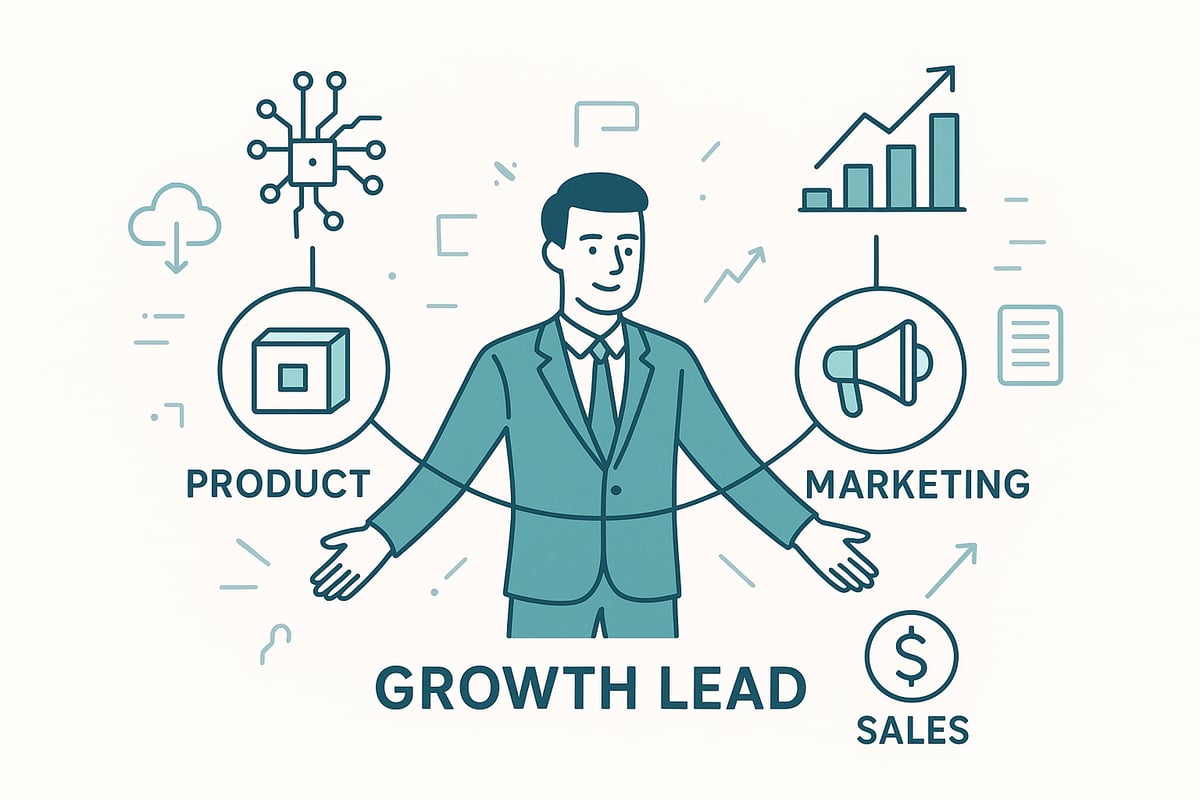
The growth lead role in 2026 is not just another title. It is the heartbeat of SaaS and B2B tech growth. Today’s growth lead bridges product, marketing, and sales, forming a single, unified growth function. This transformation is driven by the need for agility, technical fluency, and a relentless focus on measurable business impact.
Imagine a leader who thinks like a founder and acts like a builder. The modern growth lead owns the entire funnel, from pipeline creation to ARR expansion. Instead of working in silos, they drive cross-functional execution and champion outcome-driven KPIs. It is about rolling up sleeves, launching creative campaigns, and iterating fast—like the viral tweet that led to a six-figure ARR in just weeks.
Let’s break down the new demands:
- Own full-funnel metrics: Growth leads track pipeline, ARR, and retention, not vanity metrics.
- Drive cross-functional alignment: They connect teams to move from fragmented execution to a single source of truth.
- Champion technical content: Winning developer mindshare is now essential, as technical audiences grow in influence.
- Adopt AI and Agentic Automation: Autonomous systems streamline operations and enable rapid experimentation.
- Embrace a founder’s mindset: Hands-on, creative, and willing to test bold ideas.
The market is moving fast. Extend’s growth lead, for example, harnessed omnichannel strategies to dominate their category. Thanks to LLMs, document processing demand soared by 1000x, fueling explosive SaaS revenue growth—15x in just a few quarters.
To thrive, today’s growth lead must build high-performance teams and foster a culture of collaboration and experimentation. For deeper insights on growth team structures and execution, explore building high-performance growth teams.
Success in 2026 means leading with data, connecting every function, and pushing boundaries with AI. The growth lead is no longer a connector—it is the engine that powers the entire GTM journey.
Building a Unified Go-to-Market (GTM) Strategy
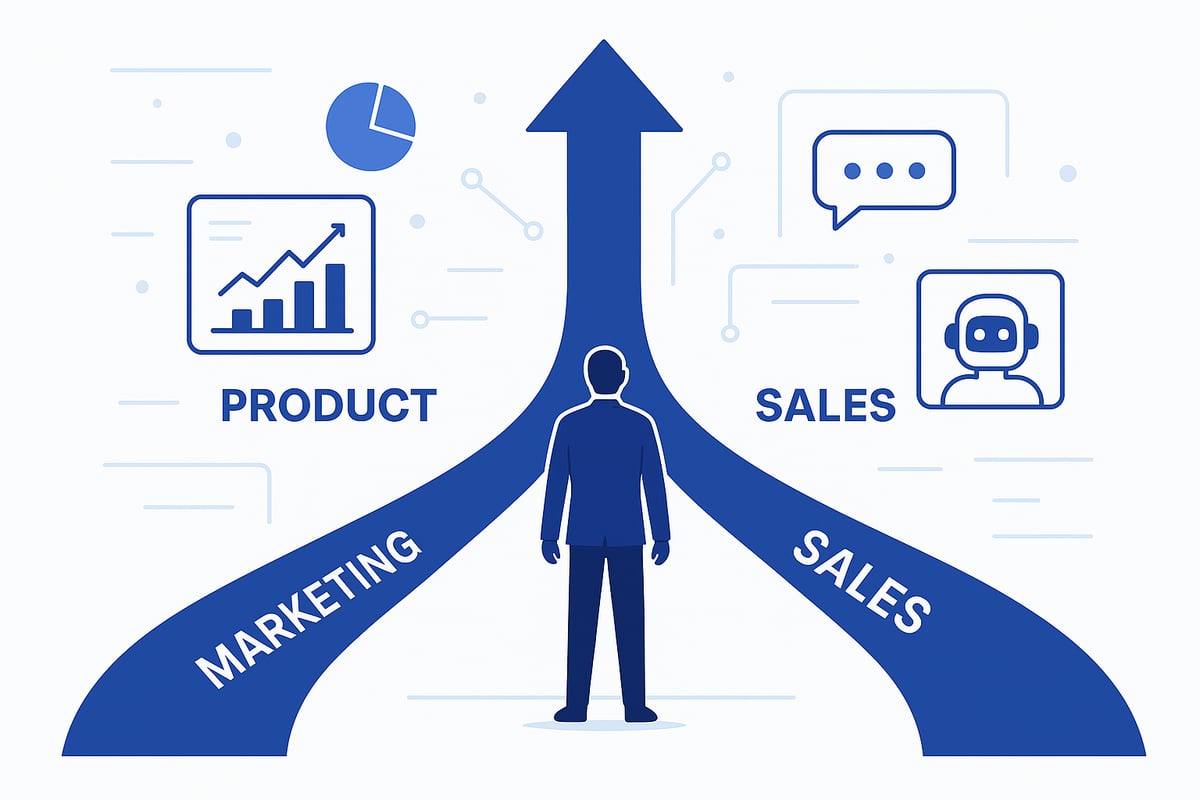
In 2026, a unified go-to-market approach is the foundation for any successful growth lead. Rapid shifts in SaaS demand a strategy that connects product, marketing, and sales into a single, agile growth function. Without this alignment, even the best products can miss their market.
A high-performing GTM strategy starts with three essentials:
- Clear value proposition that resonates with target buyers.
- Ideal Customer Profile (ICP) definition rooted in real data.
- Differentiated messaging tailored for technical audiences.
The growth lead must ensure these pillars are not siloed. Instead, all teams work toward shared growth targets, moving beyond disconnected KPIs. For example, SaaS startups often evolve from product-problem fit to product-market fit, and then scale up to predictable revenue. This journey requires cross-functional collaboration and outcome-driven goals.
Execution frameworks are critical. Playbooks for enablement, operational dashboards, and rapid feedback loops help teams iterate fast. For practical guidance, many turn to Unified go-to-market frameworks, which provide actionable steps for aligning growth efforts.
Measurable results set great growth leads apart: pipeline growth, ARR acceleration, and deeper enterprise adoption. GTM Consult’s expertise helps SaaS companies build this unified engine, empowering leaders to hit ambitious targets with confidence.
Leveraging AI and Agentic Automation for Scalable Growth
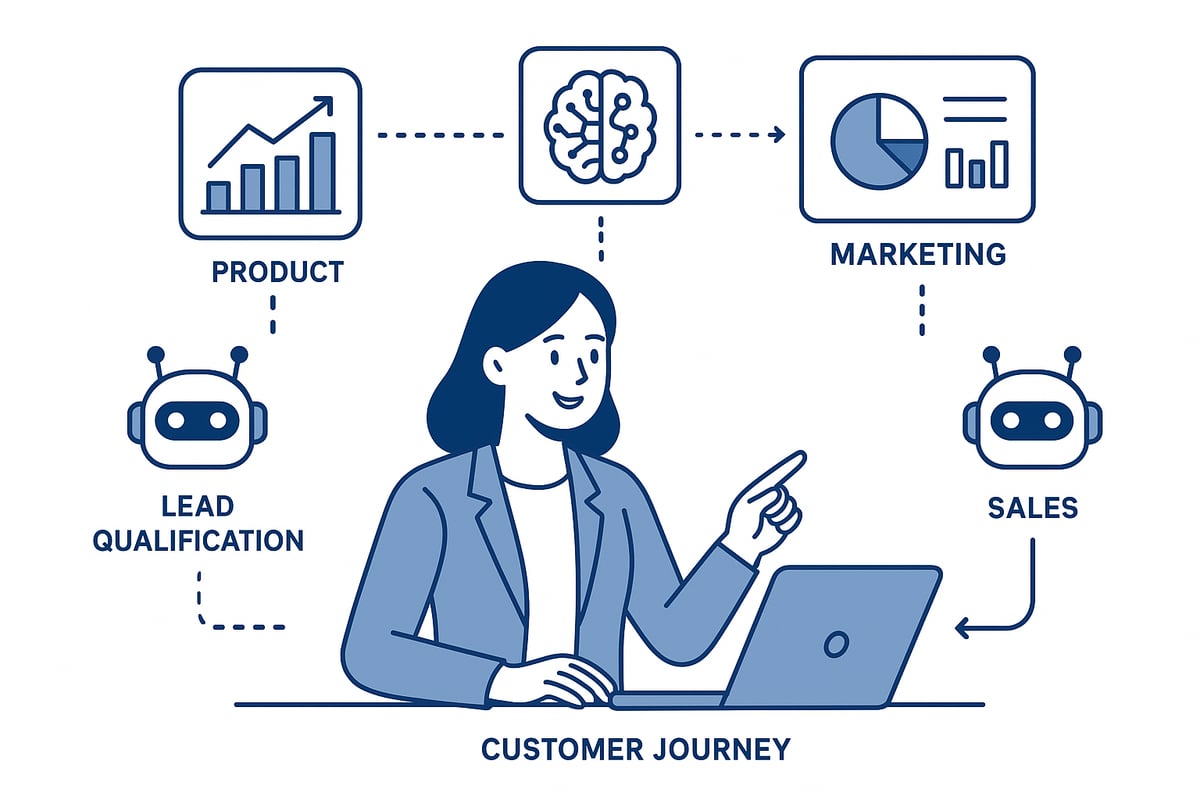
AI-driven transformation is redefining what it means to be a growth lead in 2026. Agentic AI, or Agentic Automation, refers to autonomous systems that handle complex, multi-step growth activities—think of AI-powered agents that can qualify leads, personalize campaigns, and even orchestrate entire customer journeys without constant human oversight.
Today, leading teams use these technologies to:
- Automate lead qualification and scoring, freeing teams from manual data triage.
- Optimize marketing campaigns in real time, discovering winning channels and messaging automatically.
- Orchestrate the customer journey from first touch through expansion, ensuring every interaction is context-aware.
For example, Extend’s programmable BPO uses LLM-powered document processing to deliver enterprise-scale solutions with fewer resources. A single viral tweet, amplified by AI-driven analytics, led to a 6-figure ARR contract—showing the impact of creative, agentic automation in the hands of a growth lead.
The benefits are hard to ignore. Teams iterate faster, cut headcount requirements in half, and boost NPS scores by delivering more relevant experiences. However, challenges remain, such as maintaining data quality, integrating AI with existing stacks, and ensuring that human expertise complements AI decision-making.
Recent campaigns have targeted over 1 billion impressions using creative, AI-enabled strategies. To dive deeper into actionable tactics, check out Leveraging AI for SaaS growth for proven frameworks and measurable outcomes.
The growth lead who embraces Agentic AI will unlock new levels of scale, efficiency, and impact in the SaaS landscape.
Full-Funnel Alignment: From Product to Revenue
Driving meaningful results in B2B SaaS starts with full-funnel alignment. For any growth lead, success depends on unifying product, marketing, and sales into a single growth engine. When teams work in silos, pipeline velocity stalls and revenue opportunities slip away.
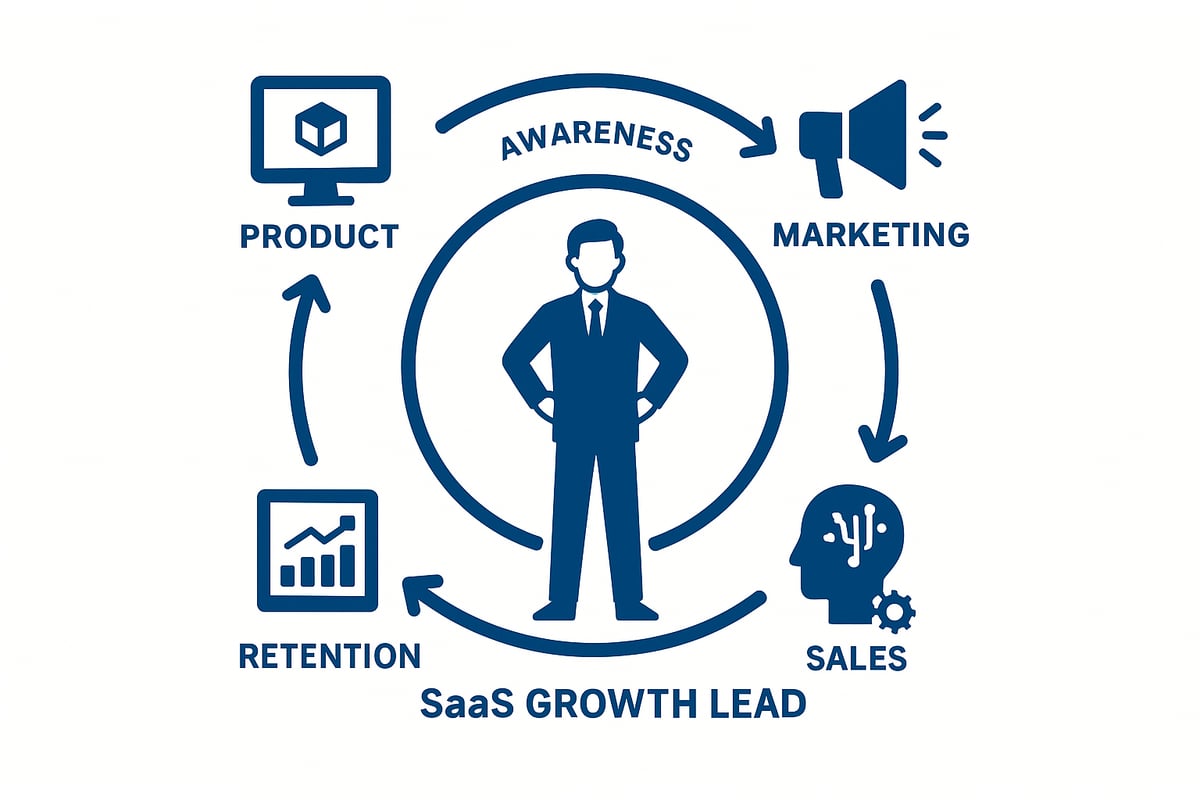
To master alignment, map the entire customer journey:
- Awareness: Build technical content that sparks curiosity among developers and decision-makers.
- Engagement: Launch campaigns that speak directly to your ideal customer profile (ICP).
- Conversion: Equip sales with enablement tools and clear messaging.
- Expansion: Nurture relationships post-sale for upsell and cross-sell.
- Retention: Use feedback loops to strengthen product adoption.
Modern growth lead roles demand data-driven execution. Unified dashboards provide real-time visibility into pipeline attribution, ARR, and engagement metrics. Closed-loop feedback ensures that every tactic—whether developer evangelism or high-velocity sales outreach—feeds insights back to product and marketing. OKRs focused on ARR and pipeline keep teams accountable.
According to industry benchmarks, SaaS companies with unified go-to-market functions see pipeline velocity increase by 25%. For example, Extend’s growth lead collaborates directly with founders and technical teams, using operational dashboards and B2B SaaS growth marketing strategies to drive enterprise adoption. This approach delivers measurable impact, helping the growth lead turn alignment into revenue.
Actionable Frameworks and Playbooks for 2026 Growth Leads
Building a repeatable playbook is essential for any growth lead aiming to scale in 2026. Modern frameworks empower leaders to align teams and drive measurable outcomes across product, marketing, and sales.
Core frameworks every growth lead should master:
- Market Positioning: Define your unique value and competitive edge.
- ICP Refinement: Identify and prioritize high-fit accounts.
- Technical Content Strategy: Craft messaging that resonates with developers and buyers.
- Enablement Playbooks: Arm teams with objection handling, battlecards, and scripts.
- Operational Dashboards: Track pipeline, ARR, and lead source attribution in real time.
| Framework | Key Metric | AI Opportunity |
|---|---|---|
| Positioning | Win Rate | AI-aided competitive analysis |
| ICP Refinement | Lead Quality Score | Predictive scoring |
| Content Strategy | Engagement Rate | Agentic AI's impact on SaaS |
| Enablement Playbooks | Sales Cycle Length | Automated script suggestions |
| Dashboards | Pipeline Velocity | AI-powered attribution |
Adopting Outcome as Agentic Solution (OaAS) models positions the growth lead to focus on results, not just activity. Test, measure, and optimize—AI-driven experimentation and rapid feedback cycles are now table stakes.
One SaaS scale-up achieved 15x revenue growth with lean teams and unified GTM frameworks, contributing 60% of pipeline. Leverage these actionable frameworks to drive your own measurable success as a growth lead.
As you wrap up this journey into the future of growth leadership, it’s clear that success in 2026 isn’t about chasing disconnected metrics—it’s about uniting your team, leveraging AI, and turning every challenge into a stepping stone toward scalable revenue. Imagine sitting down with someone who’s seen it all—who’s helped founders and growth leads just like you navigate the twists and turns from product problem fit to enterprise-grade growth. If you’re ready to put these strategies into action and write your own success story, let’s connect. Book Your Personal Intro Call

Latest From
The Blog
Go To Market Strategy Consulting Guide For 2025 Success

Go To Market Strategy McKinsey Guide For Success 2025
.jpg)
Crossing the Enterprise Chasm: A Practical Guide to Sales-Led Growth (SLG)

Let's Build The Future Together
