
Go-to-Market Strategy Guide: Unlock Success in 2026

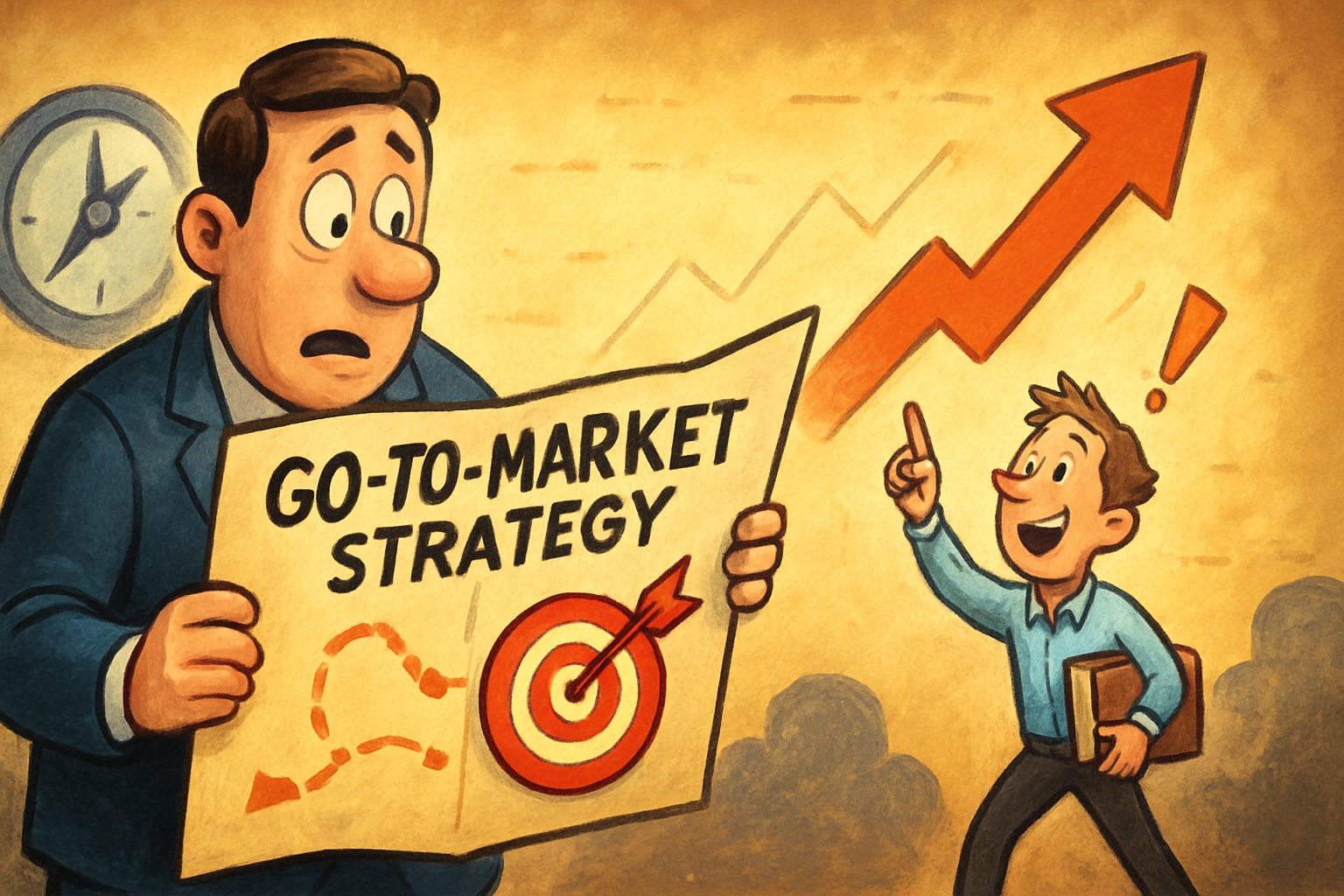


The B2B SaaS and enterprise software landscape is shifting faster than ever as we approach 2026. Mastering your go-to-market strategy is no longer optional—it is a race against disruption, rising competition, and customer expectations.
Growth now depends on tightly aligning product, marketing, and sales teams. When these functions work as a single engine, companies see measurable gains in pipeline velocity, market share, and annual recurring revenue.
Agentic AI and automation are redefining how teams execute, analyze, and adapt their approach. Data-driven frameworks are essential for success.
This guide will walk you through proven steps for go-to-market strategy mastery: market intelligence, positioning, cross-team alignment, and AI-powered execution for scalable, future-proof growth.
Understanding Modern Go-to-Market Strategy
Today’s go-to-market strategy for B2B SaaS and enterprise software is more than just a product launch checklist. It’s a living, data-driven framework designed to drive recurring pipeline growth and boost ARR. As SaaS markets evolve toward 2026, GTM strategies now integrate AI, automation, and real-time analytics to adapt at speed.
Unified alignment between product, marketing, and sales is the backbone of this modern approach. When these teams operate as one, you gain:
- Consistent messaging across every touchpoint
- Seamless handoffs that accelerate pipeline velocity
- Shared dashboards for transparent ARR tracking
Consider the difference between siloed and unified GTM execution:
| Failed GTM (Siloed) | Successful GTM (Unified) |
|---|---|
| Disconnected messaging | Cohesive story across channels |
| Missed handoffs, lost leads | Streamlined pipeline movement |
| KPIs focused on vanity metrics | Data-driven pipeline, ARR growth |
Salesforce’s focus on revenue lifecycle management shows how a unified go-to-market strategy can increase market share and speed up growth. Companies stuck in the past often measure outdated KPIs, while leaders use execution-based metrics powered by AI.
Agentic AI is now essential, orchestrating GTM activities, automating lead scoring, and personalizing customer journeys. For a deeper look at why team alignment is critical, check out Go-to-market team dynamics.
Modern go-to-market strategy is about breaking silos, harnessing AI, and focusing relentlessly on measurable outcomes.

Step 1: Market Intelligence & Segmentation
Understanding your market is the bedrock of a winning go-to-market strategy. In 2026, B2B SaaS leaders know that surface-level research is not enough. Deep market intelligence uncovers real customer pain, reveals hidden competitors, and prevents costly missteps.

Why Market Intelligence Matters
A successful go-to-market strategy begins with robust research. Leading companies use:
- Competitive analysis to benchmark features and pricing.
- Customer interviews to validate real-world needs.
- AI-driven data mining for actionable insights from massive datasets.
Agentic AI is transforming how teams gather and interpret data, surfacing trends humans miss. This intelligence fuels every stage of GTM planning.
Segmentation Strategies for 2026
Precise segmentation is critical for targeting the right buyers. Modern approaches include:
- Firmographics: Company size, industry, and geography.
- Technographics: Tech stack and software adoption.
- Behavioral signals: Buying intent, engagement, and churn risk.
| Segmentation Type | Traditional Approach | AI-Driven Approach |
|---|---|---|
| Firmographics | Manual research | Automated data enrichment |
| Technographics | Surveys | Real-time tech stack tracking |
| Behavioral | Basic web analytics | Predictive intent modeling |
Salesforce’s industry-specific solutions show how tailored segmentation powers GTM success. Before scaling, ensure your product-problem fit is proven within each segment.
In fact, over 60% of SaaS failures are linked to poor segmentation or market fit. Continuous feedback loops and dynamic data enrichment keep your segmentation current as markets shift. For more actionable insights, see these go-to-market strategy examples.
Step 2: Positioning, Messaging & Value Proposition
In the fast-moving B2B SaaS world, your go-to-market strategy lives or dies by how clearly you stand out. Positioning is not just a tagline, it’s the story that shapes customer perceptions, influences buying decisions, and sets the stage for pipeline growth. To cut through the noise, start by defining your ideal customer profile (ICP) and mapping your value proposition directly to their pain points.
Next, build a messaging framework that speaks the language of your market. The Product Marketing Alliance recommends a five-step approach:
- Discover customer needs and market gaps.
- Strategize with competitive insights.
- Define your position and unique value.
- Get set with consistent messaging.
- Grow by refining with feedback.
Agentic AI is transforming how teams approach go-to-market strategy. Today’s AI tools can test messaging variants across channels, analyze buyer responses in real time, and pinpoint what resonates most. By using these insights, you can optimize your messages for every segment and accelerate sales cycles.
Consider Salesforce’s “#1 AI CRM” positioning. This crisp message, backed by product innovation, shortens sales cycles and boosts win rates. Strong positioning, especially when paired with a product-led approach, can make your go-to-market strategy unstoppable. For practical tips on building a value-driven narrative, explore these Product-Led Growth in B2B SaaS Marketing strategies.
Always align your product features with the real problems your customers face. The best go-to-market strategy isn’t just about what you sell, but how clearly you tell the story of why it matters.
Step 3: GTM Execution Frameworks & Team Alignment
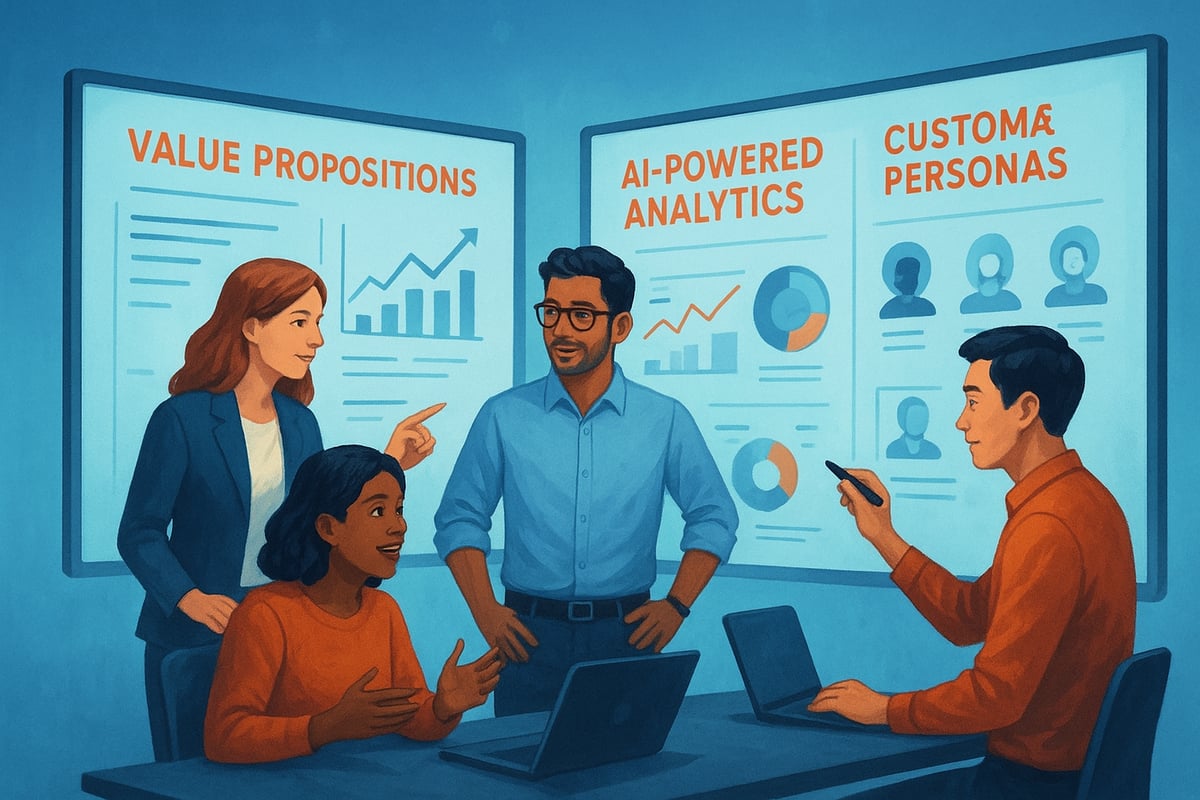
To achieve scalable growth in B2B SaaS, aligning product, marketing, and sales into a unified go-to-market strategy is essential. Many companies struggle when teams operate in silos, leading to fragmented efforts and missed revenue targets.
Aligning Product, Marketing, and Sales for Growth
The backbone of a resilient go-to-market strategy is operational alignment. Breaking down organizational silos creates a single growth function, where every team shares goals and accountability for pipeline and ARR.
Organizations like GTM Consult and Salesforce’s Sales Cloud exemplify this approach. They connect every GTM activity to revenue outcomes using:
- Shared dashboards for real-time visibility
- Enablement playbooks to standardize execution
- Regular cross-functional reviews to course-correct quickly
Research shows companies with unified GTM teams grow revenue 15 to 20 percent faster than their fragmented peers. To avoid common pitfalls, study why go-to-market strategies fail, focusing on unified execution and transparent metrics.
Leveraging Agentic AI & Automation in GTM
Agentic AI is revolutionizing go-to-market strategy by automating and personalizing critical GTM activities. These intelligent agents process vast streams of data, enabling faster, smarter execution.
Real-world use cases include:
- AI-powered lead scoring that prioritizes the best-fit accounts
- Automated sales agent workflows to boost productivity
- Dynamic campaign orchestration that adapts in real time
Platforms like Salesforce’s Agentforce and Marketing AI drive measurable improvements in pipeline velocity, customer engagement, and resource allocation. Yet, the most successful teams combine AI tools with human expertise, ensuring strategy stays agile and customer-centric.
Step 4: Launch, Scale, and Optimize
Launching a go-to-market strategy in 2026 requires more than a single event. Success in B2B SaaS hinges on a deliberate, phased approach that adapts to real data and user feedback. Begin with an MVP launch to validate hypotheses, then use early adopter insights to refine your offering for broader market fit.
The journey from MVP to enterprise readiness typically includes these stages:
- MVP Launch: Test core features with select customers.
- Early Adopter Feedback: Gather insights, iterate rapidly.
- Scaling: Expand to additional segments, optimize based on performance data.
- Enterprise Readiness: Harden the solution, align with compliance, and enable large-scale adoption.
For a practical roadmap, consider using a go-to-market plan template to structure each phase efficiently.
Continuous improvement is vital. Leading SaaS companies leverage AI analytics to track real-time performance, optimize campaigns, and enrich customer insights. Tools powered by Agentic AI help teams identify bottlenecks, personalize engagement, and drive faster pipeline growth. According to Agentic AI's Impact on B2B SaaS Growth, automation is now essential for maximizing ARR and market share.
Avoid common pitfalls like overengineering the initial launch, neglecting post-launch enablement, or skipping iterative optimization. The most effective go-to-market strategy is a living framework, constantly refined by data, customer feedback, and advanced AI capabilities.
GTM Consult: Expert B2B SaaS GTM Execution
In today’s B2B SaaS landscape, GTM Consult stands out as a trusted partner for startups and scale-ups aiming for go-to-market strategy excellence. By working closely with founders and GTM leaders, GTM Consult unifies product, marketing, and sales into a single growth engine, inspired by the convergence of product and marketing in GTM. Their services include:
- Market positioning that captures unique value
- Enablement playbooks for execution
- Operational dashboards for real-time insights
- Data-driven frameworks for sustainable pipeline and ARR growth
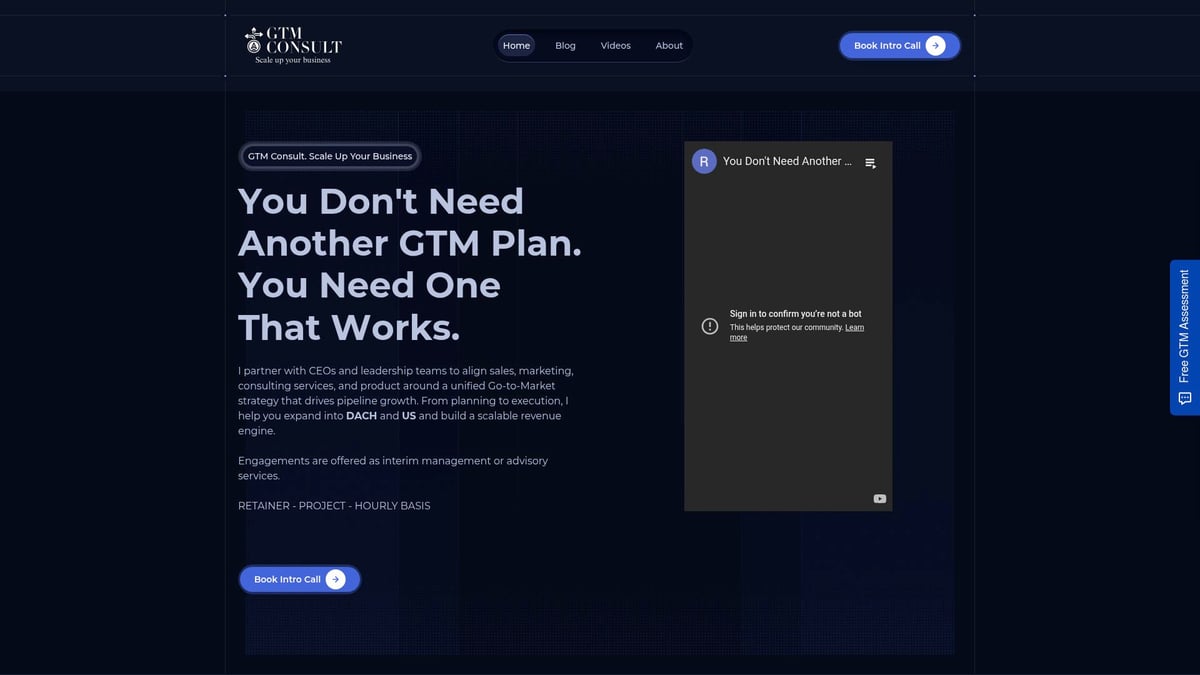
Flexible engagement models, from interim CMO to project-based advisory, ensure tailored support for DACH and US markets. GTM Consult’s hands-on, execution-first approach bridges the gap between strategic vision and daily operations, delivering measurable results for every go-to-market strategy.
As we’ve navigated the twists and turns of scaling a B2B SaaS business—aligning teams, harnessing AI, and turning every insight into action—you might be wondering, “What’s my next step?” I’ve seen founders and GTM leaders light up when disconnected efforts finally click into one powerful growth engine. If you’re ready to bridge strategy and daily execution, let’s talk about how your story can unfold with data-driven frameworks and hands-on support. Sometimes, the journey to repeatable, enterprise-grade growth starts with a simple conversation. Book Your Personal Intro Call and let’s unlock your GTM success for 2026, together.

Latest From
The Blog
Go To Market Strategy Consulting Guide For 2025 Success

Go To Market Strategy McKinsey Guide For Success 2025
.jpg)
Crossing the Enterprise Chasm: A Practical Guide to Sales-Led Growth (SLG)

Let's Build The Future Together
