
Product Messaging Guide: Crafting Impactful Messages in 2025

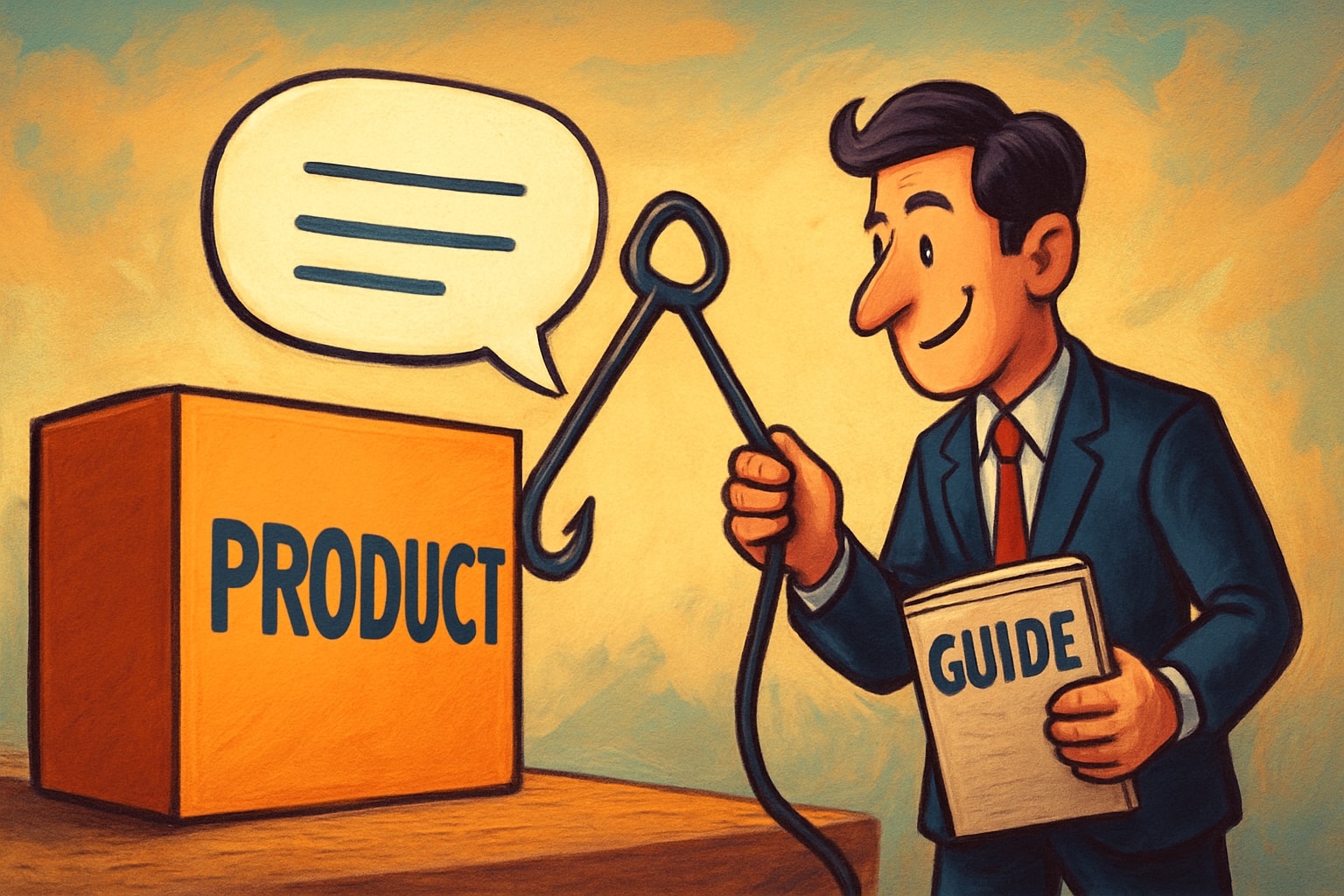


In 2025, product messaging is the decisive factor for B2B SaaS companies striving to stand out in a crowded market. With enterprise buyers demanding more clarity and value, the right approach to product messaging can make or break your go-to-market strategy.
This guide is your roadmap for creating compelling, data-driven product messaging that unites product, marketing, and sales teams. You’ll discover the essential building blocks of a winning framework, see how AI and Agentic Automation are transforming message alignment, and learn actionable steps to craft messages that drive pipeline growth and boost ARR.
Through real SaaS success stories and proven frameworks, we’ll explore what works, what doesn’t, and how you can future-proof your messaging strategy. Ready to elevate your impact and power measurable business outcomes? Let’s get started.
The Foundations of Product Messaging in 2025
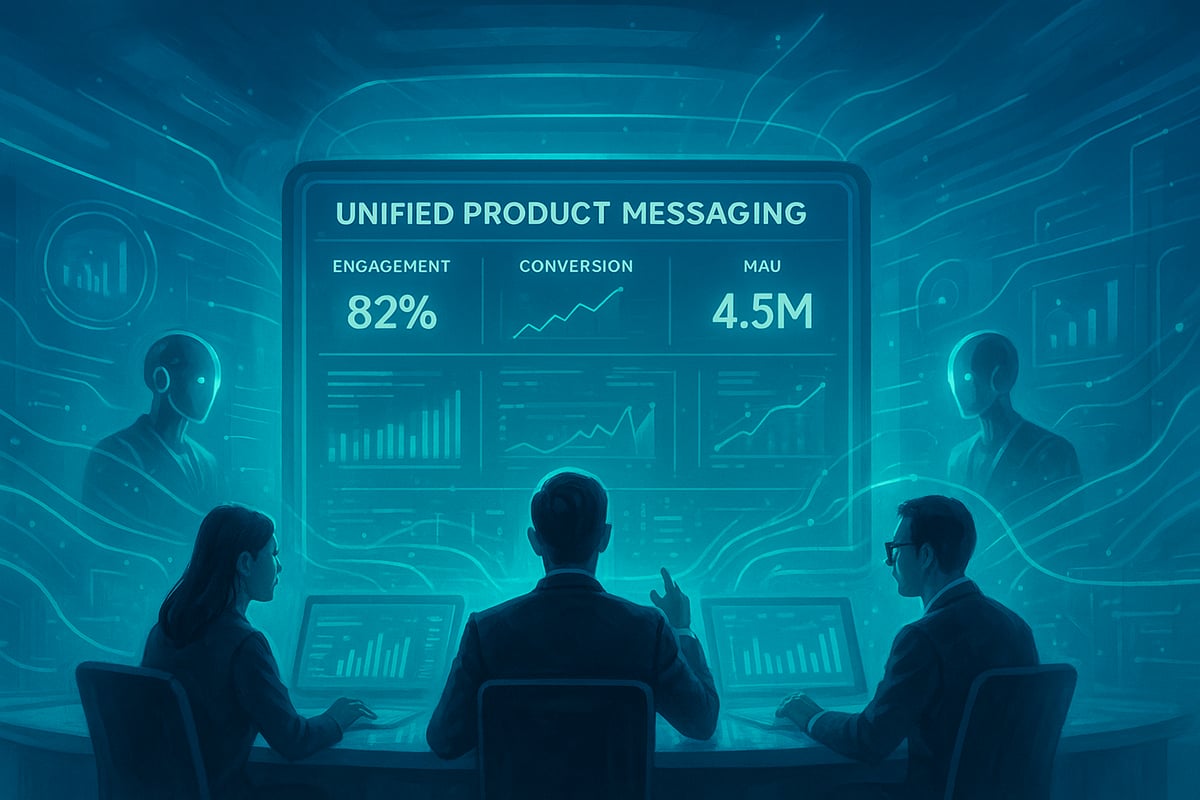
In today’s B2B SaaS landscape, product messaging is the bridge between innovation and revenue. It shapes how buyers perceive your solution, aligns teams, and directly impacts outcomes like pipeline growth and ARR. As competition intensifies, clear and unified product messaging becomes a strategic lever for winning and keeping enterprise customers.
2025 brings a new set of challenges and opportunities. The rise of AI and Agentic Automation is transforming how teams research, develop, and validate messages. Buyers are more sophisticated, evaluating not just features but the measurable value your software delivers. With marketing channels multiplying, consistency across every touchpoint is now mission-critical.
Key shifts in 2025:
- AI-driven research and rapid message iteration
- Higher buyer expectations for value clarity
- More channels demanding consistent product messaging
- Real-time feedback loops for message optimization
Leading SaaS brands have succeeded by aligning product, marketing, and sales around a single voice. For example, companies like Monday.com and Slack have thrived by making their value propositions crystal clear, while others have lost ground due to vague or inconsistent communication.
| Success Factor | Example | Outcome |
|---|---|---|
| Unified product messaging | Monday.com | Faster pipeline growth |
| Data-driven value proposition | Slack | Improved ARR and trust |
| Inconsistent messaging | Recent SaaS launch X | Lost buyer trust, slower growth |
Competitors like Userpilot and Product Marketing Alliance emphasize that frameworks and channel consistency are essential for market positioning. Messaging clarity is not just a marketing tactic—it is a foundation for enterprise sales enablement.
A recent study found that 70% of SaaS buyers cite inconsistent messaging as a top reason for lost trust. For a deeper dive into building a unified strategy, explore Product marketing strategy essentials.
In 2025, the companies that master product messaging—grounded in research, aligned across teams, and powered by AI—will lead the charge in GTM success.
Essential Elements of a Modern Product Messaging Framework
In the rapidly evolving B2B SaaS landscape, a modern product messaging framework is your playbook for unifying product, marketing, and sales. Let’s break down the essential elements that drive clarity, differentiation, and measurable growth.
Defining Your Target Audience and ICP
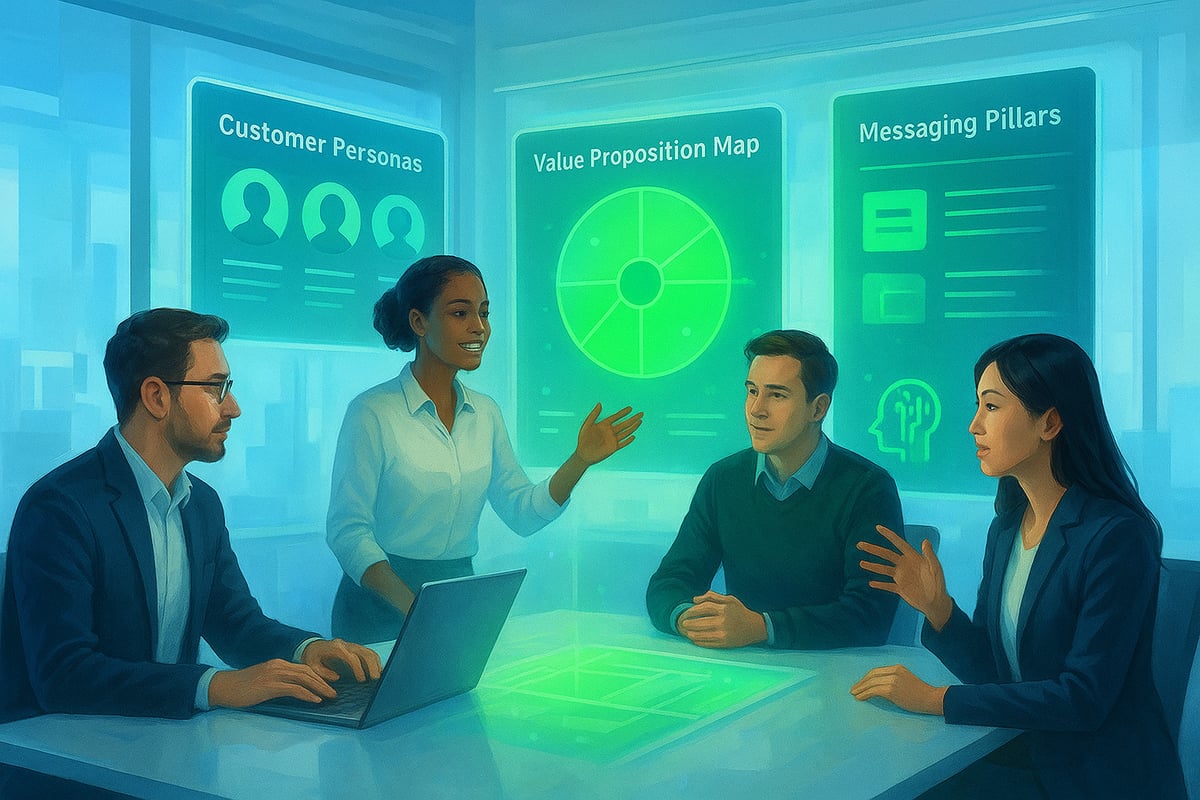
Effective product messaging starts with a crystal-clear understanding of your target audience and Ideal Customer Profile (ICP). Rely on data, not assumptions.
Combine qualitative methods like customer interviews and focus groups with quantitative surveys and analytics to build rich personas. Monday.com, for example, shifted from broad messaging to persona-specific campaigns, seeing engagement soar.
Incorporate Jobs-To-Be-Done (JTBD) frameworks to map real buyer needs. Avoid the pitfall of assumption-based personas, which often miss the mark in B2B SaaS.
Crafting a Differentiated Value Proposition
A compelling value proposition cuts through noise and positions your offering uniquely for enterprise buyers. Use PMF surveys and MVP-stage feedback to gather data and validate your claims.
Slack’s evolution from a simple chat tool to “Made for people. Built for productivity.” shows the power of outcome-driven messaging. Always align your value proposition with buyer pain points and tangible outcomes such as ARR growth or efficiency gains.
For deeper insights, explore how product-market fit and messaging work together to ensure your message truly resonates.
Building Key Messages and Messaging Pillars
Structure your product messaging with a core message supported by 3 to 5 thematic pillars—think simplicity, automation, or security.
Each pillar should anchor proof points like case studies or data. Zoom’s move to “limitless human connection” unified their GTM channels and drove consistent outcomes.
Ensure every touchpoint, from sales decks to web copy, reinforces your messaging pillars and ties back to measurable business results.
The Role of AI and Agentic Automation in Messaging Alignment
In 2025, Agentic AI is transforming how B2B SaaS teams approach product messaging. Agentic Automation empowers organizations to create, test, and refine messaging at an unprecedented scale, ensuring every touchpoint resonates with evolving buyer needs.
Imagine launching a campaign where AI instantly analyzes customer sentiment, adapts messages in real time, and learns which value propositions drive conversions. This is not just theory—60% of high-growth SaaS companies already deploy AI-driven messaging platforms, according to Userpilot (2024).
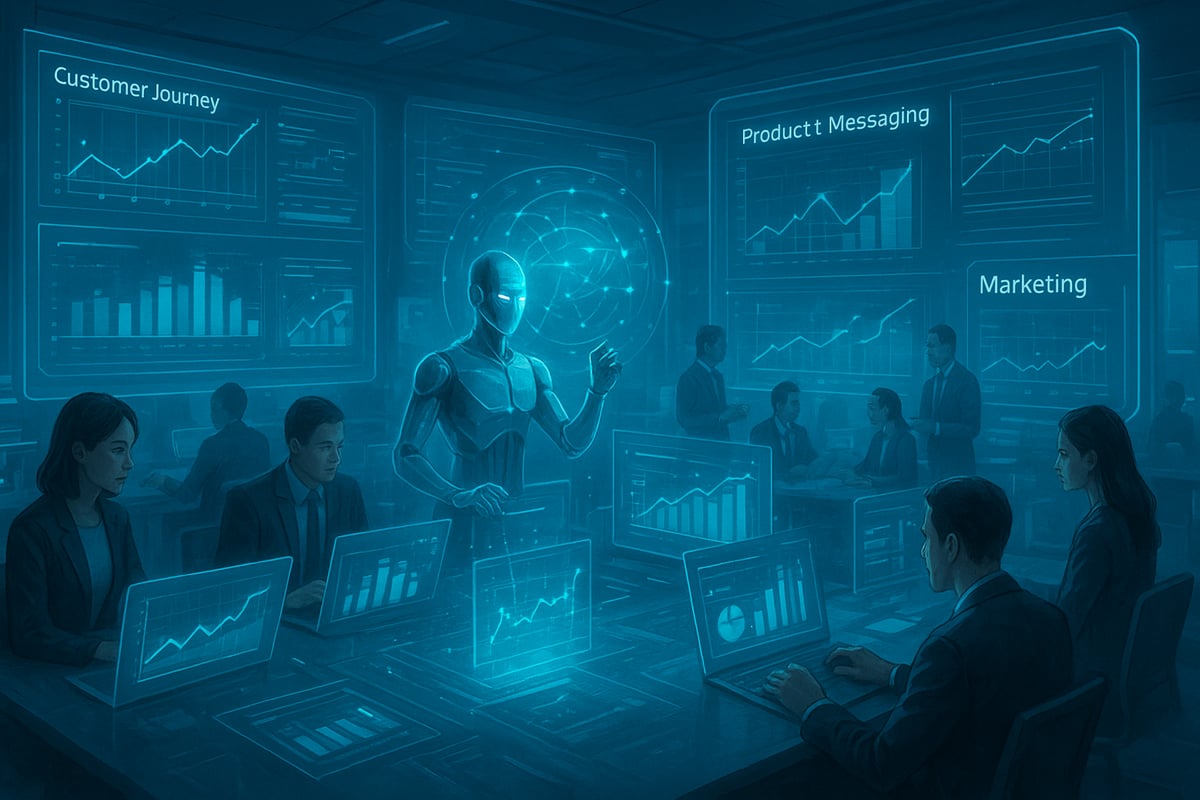
How Agentic AI Powers Modern Product Messaging
Key applications of Agentic Automation in product messaging include:
- Rapid persona research through natural language processing of interviews, reviews, and support tickets
- Automated A/B testing of key messages across email, web, and sales scripts
- Sentiment analysis to gauge buyer reactions and optimize tone
- Dynamic content personalization, tailoring value propositions to each enterprise segment
- Adaptive messaging sequences that evolve as prospects move through the funnel
For example, a SaaS company can deploy Agentic AI to personalize onboarding emails based on user behavior, then refine the product messaging for high-value accounts in real time. Learn more about AI-driven personalization in B2B SaaS marketing and how it drives measurable results.
Benefits and Risks: A Quick Comparison
| Benefits | Risks |
|---|---|
| Accelerated message testing and optimization | Potential loss of authenticity |
| Data-driven persona and sentiment insights | Over-reliance on automation |
| Unified GTM messaging across teams | Need for strong human oversight |
| Scalable frameworks for enterprise sales enablement | Misinterpretation of nuanced feedback |
AI is a powerful catalyst for aligning product, marketing, and sales. It ensures product messaging is consistent, relevant, and measurable across every channel. However, successful teams balance automation with human creativity and judgment to maintain trust and brand authenticity.
Looking ahead, Agentic Automation will continue to elevate product messaging as a unified growth engine. To stay competitive, B2B SaaS leaders must harness these tools while preserving the human touch that drives enterprise relationships.
Step-by-Step Guide to Crafting Impactful Product Messages
Creating standout product messaging in B2B SaaS is a disciplined, iterative process that fuses data, AI insights, and real customer feedback. Here’s how enterprise teams can align product, marketing, and sales for GTM success in 2025.

Step 1: Conduct Deep Market and Customer Research
Start by gathering actionable insights through customer interviews, competitor analysis, and win/loss reviews. Use AI-driven tools to spot patterns in buyer feedback and segment data for sharper persona development.
- Interview key accounts to uncover pain points
- Analyze competitor product messaging for gaps
- Map Jobs-To-Be-Done (JTBD) for each segment
Userpilot exemplifies how surveys and interviews refine personas. For more on research-driven approaches, see B2B SaaS marketing strategies for 2025.
Step 2: Develop and Validate Your Value Proposition
Translate your research into a differentiated value statement that speaks directly to your ICP’s needs and goals. Test your product messaging with real buyers, using PMF surveys and MVP feedback to validate resonance.
- Synthesize value in one clear sentence
- Gather fast feedback from target users
- Iterate based on measurable buyer response
Refining the value proposition at the MVP stage keeps messaging aligned as your solution evolves.
Step 3: Create Core Messages and Messaging Pillars
Draft concise key messages that address the top pain points of your ICP. Build 3-5 messaging pillars that reinforce your core message, each with proof points like customer testimonials or data.
- Core message: the “why” of your product
- Pillars: thematic anchors (e.g., automation, security)
- Proof points: case studies, metrics
Aligning product messaging across all GTM channels ensures clarity and trust.
Step 4: Test, Refine, and Operationalize Messaging
Leverage AI for rapid A/B testing and sentiment analysis. Collect feedback from sales, customer success, and buyers to identify gaps. Update product messaging as the market shifts, and operationalize it across all collateral.
- Run live message tests with Agentic Automation
- Schedule regular message reviews
- Equip GTM teams with up-to-date enablement
Continuous iteration makes product messaging scalable and relevant as your SaaS grows.
Real-World SaaS Messaging Examples and Lessons Learned
In B2B SaaS, product messaging can make or break growth. Let’s look at three industry leaders who evolved their messaging to drive results.
Slack: From Collaboration to Productivity
Slack’s early product messaging focused on team chat. As buyer needs shifted, Slack repositioned around productivity and outcomes. Their new message, “Made for people. Built for productivity,” resonated with enterprise buyers seeking measurable impact.
- Persona research guided the shift
- Messaging pillars highlighted workflow integration and time savings
- Proof points included customer productivity data
Zoom: From Features to Purpose
Zoom initially led with technical features. Over time, they pivoted to a more emotional, purpose-driven message: “Limitless human connection.” This reframing helped Zoom stand out in a crowded market and connect with enterprise buyers on outcomes, not just specs.
- Messaging pillars focused on reliability, security, and connection
- Consistency across website, sales, and campaigns
- Data-backed proof supported claims
Monday.com: Clarity and Specificity
Monday.com’s early product messaging was broad, targeting “teams.” By refining their ICP and using Jobs-To-Be-Done research, they shifted to persona-focused, outcome-oriented messaging. This brought clarity and stronger value propositions.
- ICP research informed new messaging
- Value props aligned with buyer pain points
- Clear proof points built trust
Lessons Learned
What worked? Brands that aligned messaging with buyer personas and business outcomes saw faster sales cycles and better pipeline growth. What failed? Vague claims, lack of differentiation, and inconsistent product messaging across channels.
Top performers invested in data-driven iteration and cross-team alignment. For more on aligning your strategy, explore these GTM positioning best practices. According to Userpilot, companies with clear, evolved messaging see sales cycles accelerate by 30 percent.
Effective product messaging is not static, but a living, collaborative effort that powers go-to-market success.
Trends and Best Practices for Product Messaging in 2025
In 2025, the product messaging landscape is evolving at breakneck speed. Enterprise buyers expect precision, relevance, and measurable value, making it critical for B2B SaaS teams to stay ahead of the curve.
Key Trends Reshaping Product Messaging:
- Agentic Automation and AI-powered Optimization: Advanced AI and agentic automation are transforming how organizations test, personalize, and scale product messaging. Explore frameworks for Agentic AI in B2B advertising to understand how hyper-personalized outreach is redefining GTM execution.
- Outcome-oriented Content: Buyers prioritize solutions that directly impact ARR, operational efficiency, and pipeline growth. Value-based messaging that speaks to tangible results is now a must.
- GTM Alignment: Unified messaging across product, marketing, and sales is essential for building trust and accelerating deal cycles.
- Data-driven Performance Tracking: Analytics platforms empower teams to monitor message resonance, optimize campaigns, and link messaging to pipeline outcomes.
Best Practices for 2025:
- Conduct regular message audits to ensure alignment and relevance.
- Establish feedback loops between GTM teams for continuous improvement.
- Invest in enablement training to equip sales and marketing with up-to-date messaging.
- Maintain authenticity by avoiding “AI-washing” and ensuring human oversight in message creation.
- Schedule quarterly messaging reviews to adapt to market shifts and buyer needs.
As product messaging becomes more dynamic and adaptive, staying agile and data-driven is the key to measurable business impact.
After reading about how the right product messaging can move the needle for SaaS growth in 2025, you might be wondering where to start for your own company. I’ve seen founders and GTM leaders go from uncertainty to clarity by uniting their product, marketing, and sales messages—and the impact is real measurable growth. If you’re ready to align your strategy with what actually drives pipeline and ARR, let’s talk about your unique challenges and goals. Together, we can turn your product story into an engine for repeatable success.
Book Your Personal Intro Call

Latest From
The Blog
Go To Market Strategy Consulting Guide For 2025 Success

Go To Market Strategy McKinsey Guide For Success 2025
.jpg)
Crossing the Enterprise Chasm: A Practical Guide to Sales-Led Growth (SLG)

Let's Build The Future Together
