
Scale Growth Guide: Proven Strategies for Success in 2026




The race to scale growth has never been more urgent. In 2026, B2B SaaS and enterprise software companies face a landscape shaped by rapid technological change, unpredictable economies, and evolving buyer expectations.
Disruptive forces like AI and Agentic Automation are rewriting the rules. Buyers demand more value, faster. Markets shift overnight. Traditional playbooks for growth quickly fall short.
This guide is designed for founders, revenue leaders, and enterprise teams who need a proven path to scale growth. You will find actionable frameworks, expert insights, and real-world examples tailored for the challenges of 2026.
Inside, we focus on three core pillars:
- Strategic alignment across product, marketing, and sales
- Data-driven execution that powers pipeline and revenue
- Next-gen automation, including Agentic AI, to unlock efficiency at scale
Together, these strategies deliver measurable business outcomes. Let’s dive in and discover how to master scale growth in the new era.
Understanding Scale vs. Growth: Key Differences for 2026
In 2026, the difference between growth and scale growth is more important than ever for B2B SaaS and enterprise software leaders. Growth means doing more of what already works, like adding more sales reps or ramping up ad spend. Scale growth, by contrast, is about increasing revenue at a much faster rate than costs, unlocking operational leverage that drives true business value.
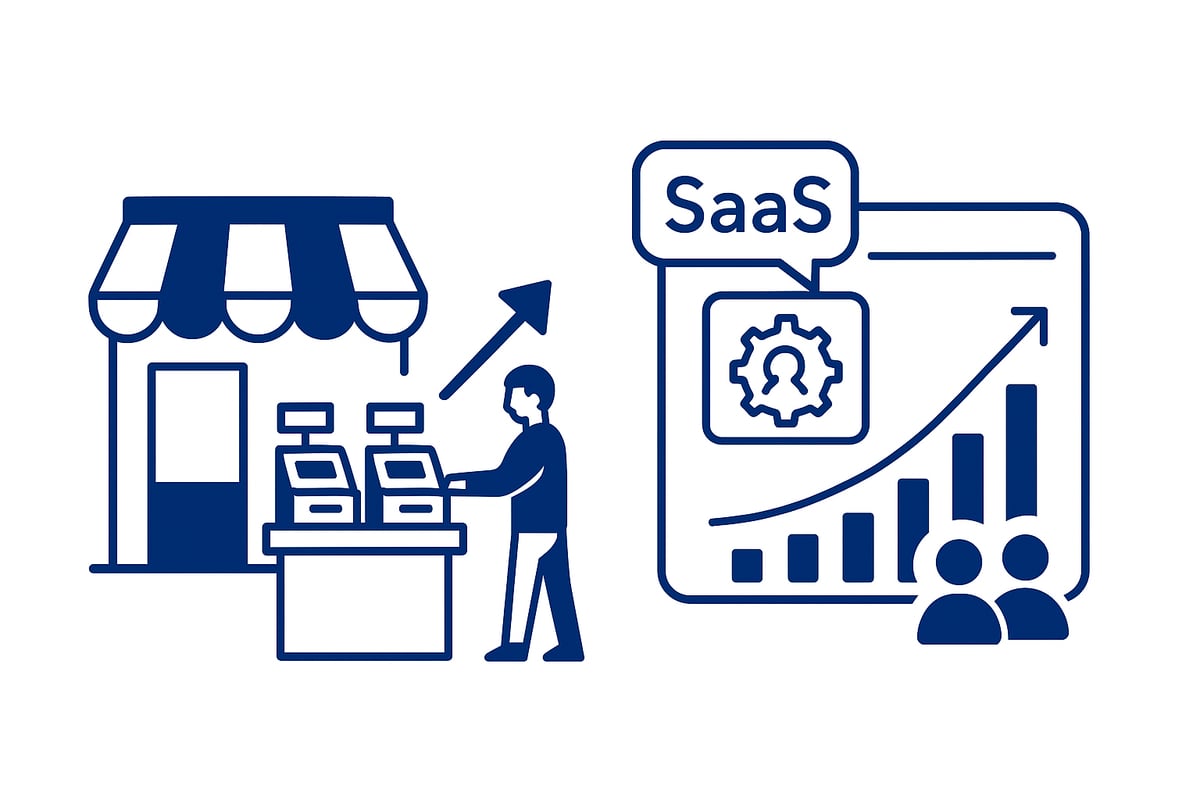
Table: Growth vs. Scale Growth
| Aspect | Growth | Scale Growth |
|---|---|---|
| Revenue vs. Cost | Grows together | Revenue outpaces costs |
| Process Change | Minimal | Major transformation |
| Tech & Team | Add more people/tools | Integrate automation & AI |
| Example | More stores in retail | Automated onboarding in SaaS |
For example, a retail chain might boost same-store sales by hiring more staff, but this adds cost. A SaaS company, however, can expand its user base using automation and Agentic AI, so costs rise much more slowly than revenue.
Why does this matter? Scale growth is essential for SaaS companies backed by venture capital or private equity, where investors expect efficient, rapid expansion. Without scalable systems, companies risk burning cash, misaligning teams, and stalling progress. Pitfalls include growing too quickly without robust processes or unified product, marketing, and sales alignment.
To avoid these traps and prepare for the demands of scale in 2026, explore proven SaaS growth strategies explained for practical frameworks that deliver real results. Ultimately, scale growth readiness is the difference between outpacing competitors or being left behind.
Aligning Product, Marketing, and Sales: The Unified Growth Engine
Imagine a SaaS company racing to scale growth in 2026. Product, marketing, and sales all sprint ahead, but in different directions. The result? Confusion, missed targets, and lost market share. True momentum comes only when these functions become a unified growth engine, sharing goals and data.
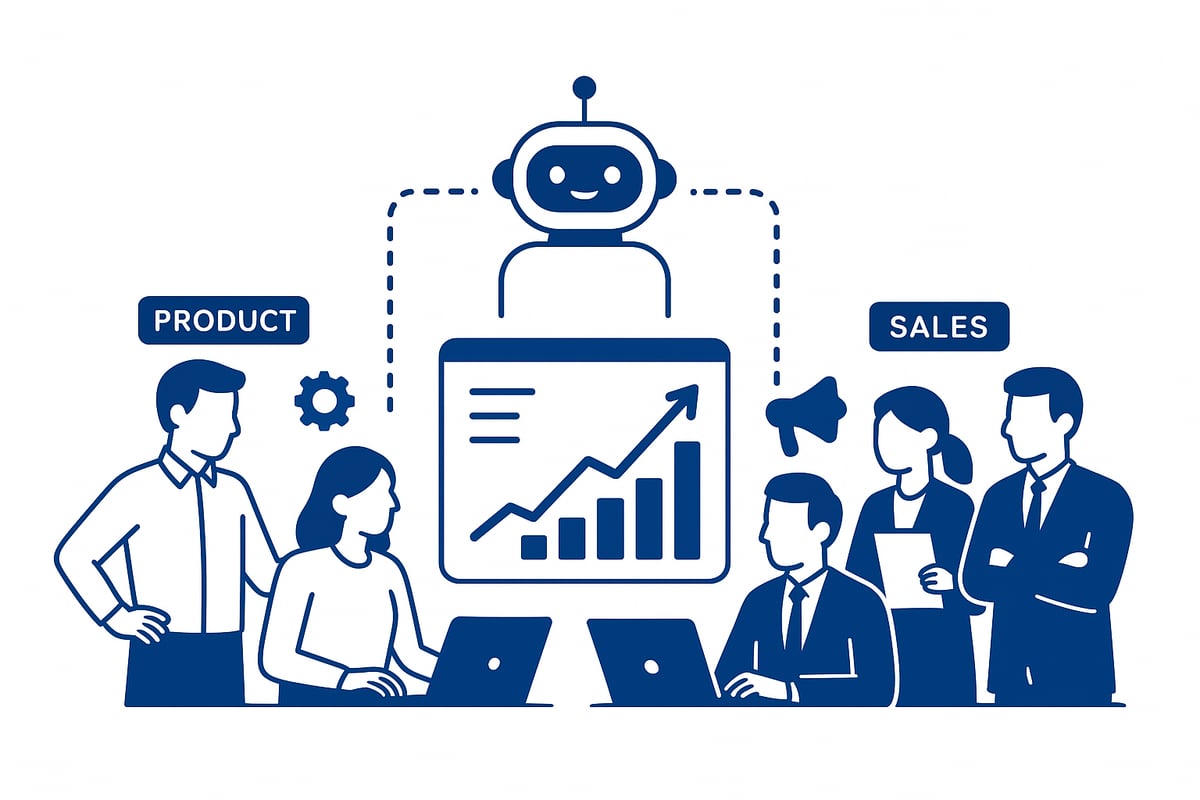
Why Alignment Drives Scale
Siloed teams slow scale growth and create a maze of conflicting KPIs. When product, marketing, and sales each pull in their own direction, progress stalls. Companies that align these functions outperform: research shows organizations with strong sales-marketing alignment see 36 percent higher retention and 38 percent more sales wins.
A real-world example: leading SaaS firms move from product-problem fit to repeatable revenue by breaking down silos. They build unified teams with shared metrics. Discover more on the benefits of unified sales and marketing teams and why this model is crucial for scale growth in the modern SaaS landscape.
Building Data-Driven Execution Frameworks
Alignment alone is not enough to fuel scale growth. Teams must anchor every action to the pipeline and ARR. Replace disconnected KPIs with frameworks that track how each initiative contributes to revenue.
Use operational dashboards:
- Link marketing campaigns to pipeline creation
- Measure sales velocity and ARR impact
- Track product adoption alongside go-to-market metrics
Competitors advise mapping clear roadmaps and future-state org charts. This ensures every role understands its impact on scale growth, reducing wasted effort and maximizing results.
Leveraging GTM Consult for Unified GTM Strategy
GTM Consult empowers SaaS companies to unify product, marketing, and sales for rapid scale growth. Their services include GTM planning, enablement playbooks, interim CMO or COO roles, and hands-on execution support.
Clients see measurable outcomes:
- 60 percent pipeline contribution (xtype io)
- 300 percent lead growth (Hadean)
- 25 percent pipeline growth (Broadcom)
GTM Consult’s approach blends deep market expertise in DACH and US regions with practical, scalable frameworks. The result is a true partnership that accelerates expansion, aligns teams, and drives sustained scale growth.
Harnessing Agentic AI & Automation for Scalable Operations
In 2026, Agentic AI is rewriting the playbook for SaaS companies racing to scale growth. Imagine a system that not only follows instructions but makes decisions, learns, and adapts—autonomously. That’s Agentic Automation: AI agents that optimize workflows, cut manual work, and drive operational efficiency.
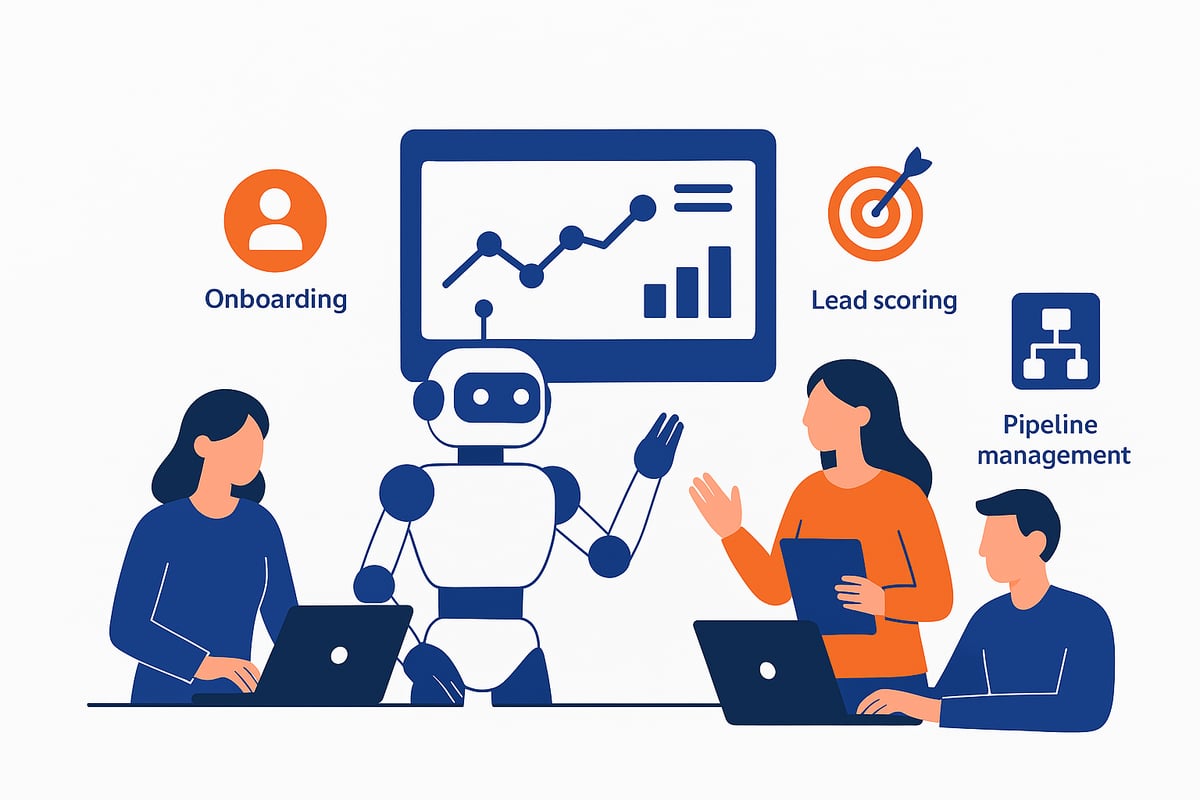
The Rise of Agentic Automation in 2026
Agentic AI goes beyond basic automation. These systems are goal-driven, adjusting strategies on the fly to unlock scale growth. For example, AI can automatically qualify leads, onboard customers, and predict pipeline shifts. According to Agentic AI's impact on SaaS, these technologies are transforming SaaS by turning repetitive tasks into seamless, data-powered workflows. Teams gain time to focus on strategic growth, not just manual tasks.
Integrating AI Across the GTM Stack
The true power of Agentic AI appears when it unifies product, marketing, and sales data. Imagine a GTM engine where conversational AI handles customer queries, content personalization adapts in real time, and customer segments update automatically. By 2026, Gartner predicts 80% of high-growth SaaS firms will have Agentic AI embedded in their GTM stack. This integration supports scale growth by creating a single source of truth, making every decision sharper and faster.
Operationalizing AI for Measurable Business Impact
Getting started with Agentic AI requires a clear roadmap. First, audit existing workflows for automation opportunities. Next, pilot AI in high-impact areas, such as pipeline management or onboarding. Then, scale what works. Best practices include upskilling your team and prioritizing change management. Companies that embrace Agentic Automation report higher ARR and significant cost savings, making scalable operations not just a vision, but a reality.
Financial and Organizational Readiness for Scale
Financial strategy is the backbone of successful scale growth. For B2B SaaS, funding sources like VC, PE, debt, or bootstrapping each offer unique advantages and risks. Effective cash flow management is critical, since "growth sucks cash" and rapid expansion can strain reserves. According to SaaS finance trends for 2026, expert-backed models favor flexible funding paired with disciplined spend. Consider:
| Funding Option | Pros | Cons |
|---|---|---|
| VC/PE | Fast capital, network | Dilution, pressure |
| Debt | Retain control | Repayment risk |
| Bootstrapping | Full ownership, autonomy | Slower scale growth |
Choose the right mix for your stage to ensure scale growth without losing control.
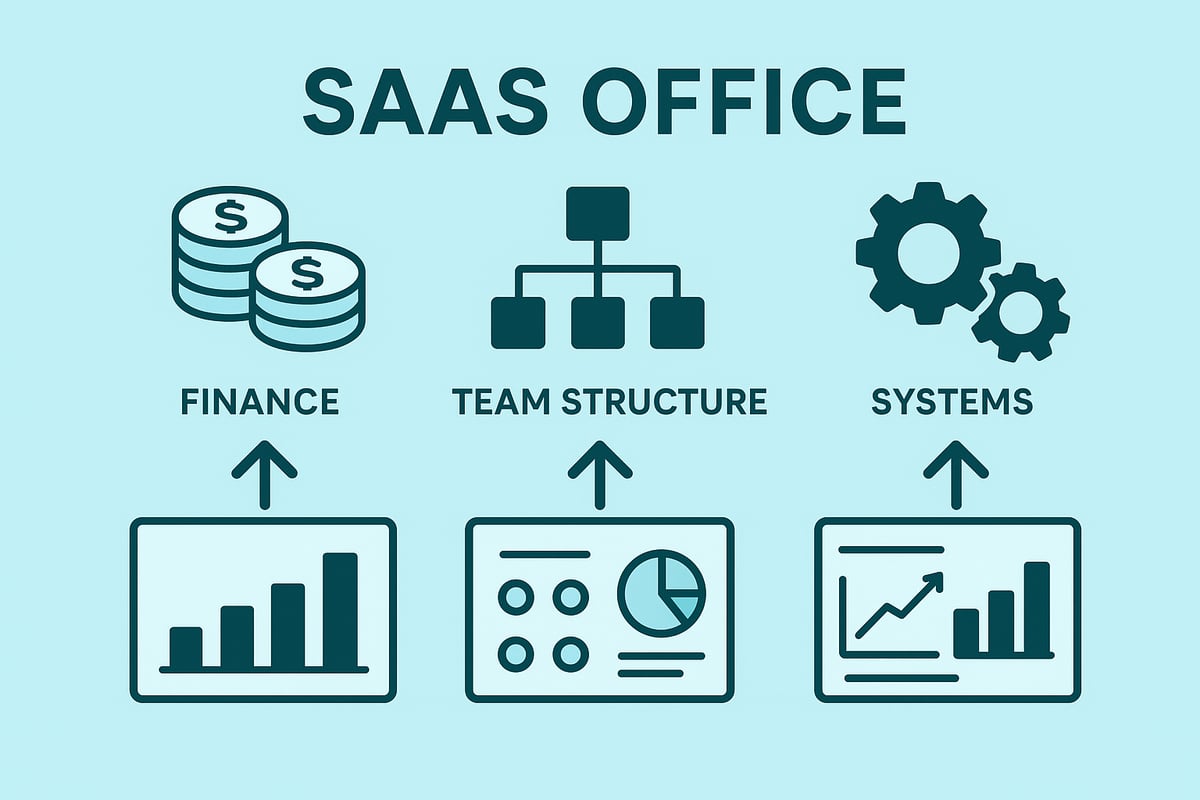
Structuring for Scalable Teams
As companies move from startup to scale-up, organizational evolution is essential for scale growth. Build future-state org charts, define clear roles, and prioritize hiring “A players.” Invest in succession planning and leadership development to prevent bottlenecks as you grow.
- Startups ($1M–$10M): Generalists, flat hierarchy
- Scale-ups ($10M–$50M): Specialized roles, clear reporting lines
- Enterprises ($50M+): Matrix structures, robust leadership pipelines
A forward-looking structure supports rapid adaptation and sustained scale growth.
Building Repeatable Systems and Processes
Repeatable systems are the foundation of operational excellence. Invest in robust platforms like ERP, CRM, and GTM operating systems (EOS, Scaling Up). Document processes, automate tasks, and review regularly for continuous improvement. Companies with strong systems avoid chaos, while those without often struggle to sustain momentum.
Market Expansion and Physical Scale: Strategies for 2026
Expanding into new markets is no longer optional for SaaS and enterprise software teams aiming for true scale growth. In 2026, leaders face a crossroads: Should you grow vertically into new industries, or reach further geographically? Each path comes with unique challenges and opportunities.
Vertical vs. Geographical Expansion:
| Expansion Type | Advantages | Challenges | Example |
|---|---|---|---|
| Vertical (New sector) | Easier market research, leverages existing tech | Complex compliance, new buyer personas | SaaS moving from FinTech to HealthTech |
| Geographical (New region) | Larger TAM, global brand, local partnerships | Localization, cultural barriers, legal differences | US SaaS launching in DACH |
Teams must also choose between physical scale—like opening offices or upgrading facilities—and digital-first scaling, which prioritizes remote work and distributed teams. Facility upgrades can boost credibility in new regions, but digital expansion allows rapid entry and lower overhead.
Best practices for 2026:
- Align market expansion with data-driven revenue projections.
- Use remote work enablement to access global talent.
- Build distributed teams for local expertise and faster customer support.
- Prioritize strategic partnerships and channel development to accelerate reach.
- Regularly revisit market research to refine your approach.
For a deeper dive on successful expansion, see Market scale approaches for 2026, which explores proven tactics for SaaS teams.
The most successful companies blend physical upgrades with digital agility, ensuring every step supports customer success and sustainable scale growth.
Measuring, Optimizing, and Sustaining Scalable Growth
Tracking the right metrics is the heartbeat of scale growth. SaaS leaders should focus on key indicators like CAC, LTV, pipeline velocity, churn, NRR, and product adoption rates. Leading indicators such as engagement and expansion pipeline predict future success, while lagging ones like revenue reflect past performance. Use real-time dashboards for instant visibility and to keep teams accountable for scale growth.
Key Metrics and Leading Indicators
- CAC (Customer Acquisition Cost)
- LTV (Lifetime Value)
- Pipeline velocity
- Churn rate
- NRR (Net Revenue Retention)
- Product adoption rates
Leaders should prioritize leading indicators for scale growth. Dashboards and regular reviews ensure accountability and fast course correction.
Continuous Optimization and Feedback Loops
Regular GTM reviews, agile experiments, and AI analytics drive ongoing improvements. By leveraging insights from growth marketing strategy tactics, teams can iterate quickly and refine their approach. Examples include quarterly business reviews, customer feedback integration, and OKR cycles to sustain momentum.
Avoiding Common Scaling Pitfalls
Common pitfalls can derail even the best scale growth plans. Overextending resources, misaligned teams, and chasing shiny objects lead to wasted effort. Focus and discipline, paired with scalable infrastructure, are essential. Take lessons from companies that grew too fast without readiness, and always ensure a strong operational foundation.
After reading through these strategies, you might be wondering how to put them into play for your own team. I’ve seen firsthand how aligning product, marketing, and sales—plus embracing the power of AI—can transform not just numbers on a dashboard, but the way founders and teams feel about their growth. If you’re ready to move past old habits and set your company up for real, sustainable scale in 2026, let’s chat about how we can map this journey together.
Book Your Personal Intro Call
and discover what’s possible for your SaaS story.

Latest From
The Blog
Go To Market Strategy Consulting Guide For 2025 Success

Go To Market Strategy McKinsey Guide For Success 2025
.jpg)
Crossing the Enterprise Chasm: A Practical Guide to Sales-Led Growth (SLG)

Let's Build The Future Together
