
Scale Strategy Guide: Unlocking Growth in 2026




The race to achieve scalable growth in B2B SaaS has never been more intense than it will be in 2026. With innovation cycles speeding up and competition multiplying, leaders face relentless pressure to adapt or fall behind.
This guide is built for ambitious teams ready to take on these challenges headfirst. You’ll discover how a modern scale strategy unlocks sustainable expansion, aligning product, marketing, and sales into a unified growth engine.
We’ll show you how Agentic AI is transforming automation and decision-making, why data-driven execution matters, and how to measure real ARR and pipeline impact. Ready to unlock your roadmap for scale? Let’s dive in.
The New Growth Imperative: Why Scale Strategy Matters in 2026
The B2B SaaS landscape in 2026 is transforming faster than ever. Innovation cycles are shrinking, competition is intensifying, and buyers expect seamless, intelligent solutions. To win, companies must rethink what it means to scale.
Consider this: the B2B SaaS market is projected to reach an astonishing $1.43 trillion by 2026, with customer acquisition costs climbing year over year. B2B SaaS market projected to reach $1.43 trillion by 2026 These shifts make an effective scale strategy not just an advantage, but a necessity.
Why do traditional siloed approaches fail in this environment? It comes down to disconnects:
- Product, marketing, and sales often chase different KPIs.
- Teams operate with fragmented data and priorities.
- Decision-making slows, and pipeline velocity suffers.
SaaS leaders who break these silos and unify their growth functions see exponential ARR growth. They leverage scale strategy frameworks that align every function, measure impact in real-time, and adapt quickly to change.
Agentic AI is now a game-changer. It automates complex processes, drives intelligent decisions, and empowers teams to focus on high-value work. Data-driven execution is the foundation for sustainable, repeatable growth in 2026.
The companies thriving today are those who align product, marketing, and sales around a unified, AI-augmented scale strategy—setting new standards for growth, efficiency, and customer impact.
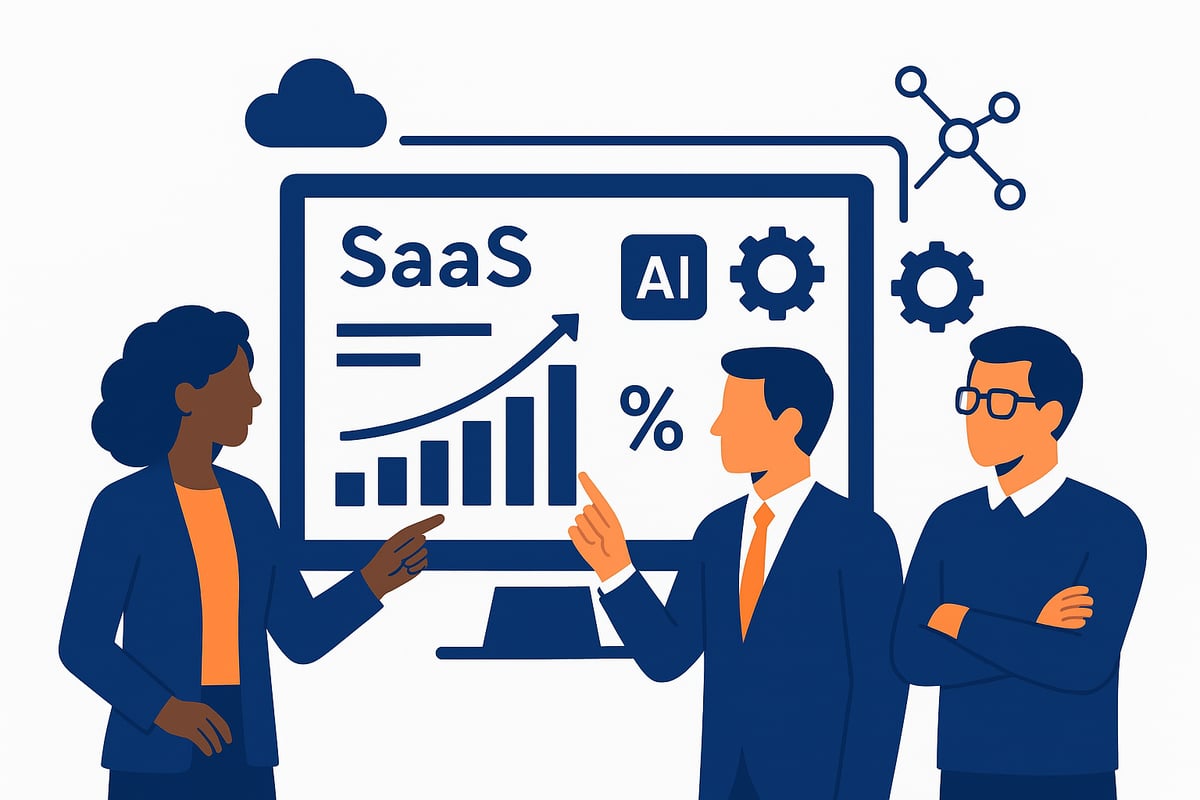
Step 1: Aligning Product, Marketing, and Sales for Unified Growth
In the race for B2B SaaS dominance, the strongest teams move as one. Too often, companies struggle to scale because their best people are working in silos, chasing different numbers, and missing shared goals. When KPIs compete, pipeline stalls and revenue targets slip out of reach.
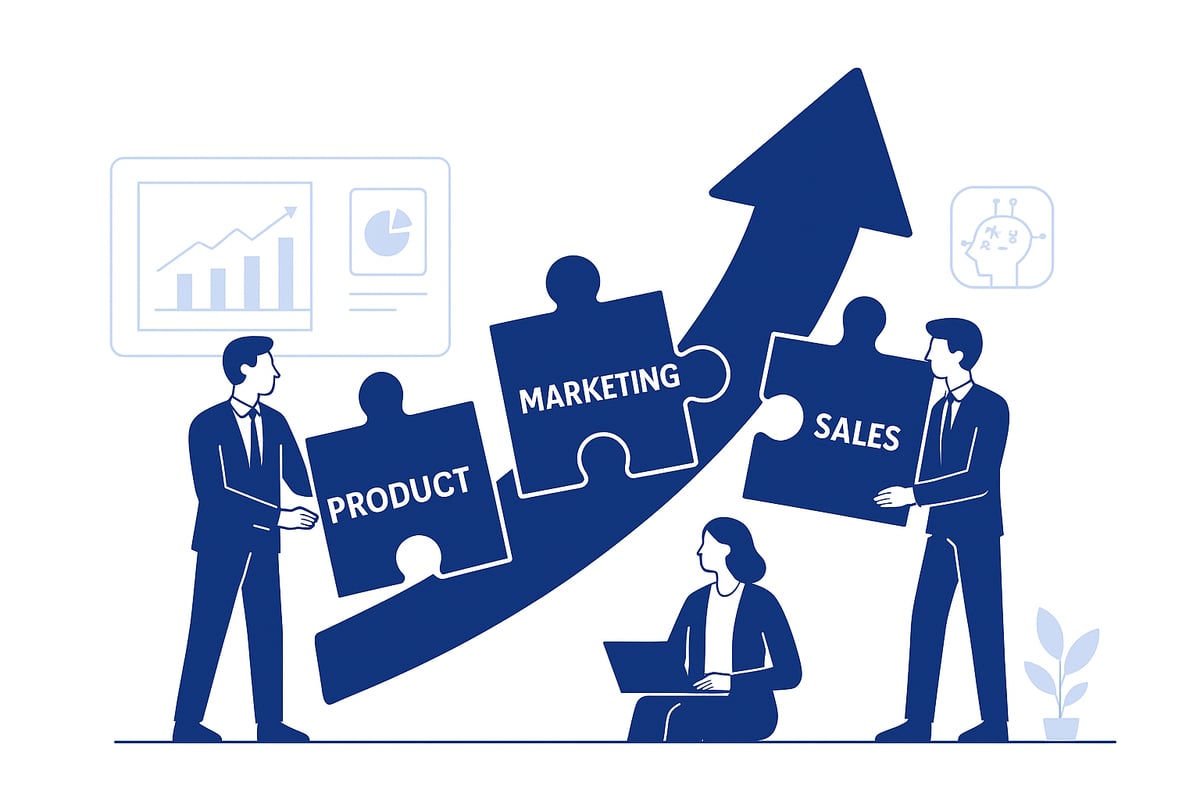
Breaking Down Silos: The Case for Alignment
Fragmented teams and disconnected KPIs are the silent killers of SaaS momentum. Imagine a product team focused on feature releases, marketing chasing MQLs, and sales pushing for quick closes. This lack of alignment derails even the best scale strategy.
- Missed handoffs lead to cold prospects.
- Messaging gets muddled, harming market positioning.
- Revenue targets are missed, creating frustration.
Unified revenue operations transform this chaos into clarity. With shared goals, pipeline velocity increases, win rates improve, and the company’s story resonates in the market. Alignment is the foundation of every winning scale strategy.
Building a Unified Growth Function
True scale demands a single execution engine where product, marketing, and sales work from the same playbook. Modern frameworks foster this unity, using cross-functional GTM playbooks and enablement tools to break down old barriers.
Consider SaaS leaders who moved from product-problem fit to repeatable enterprise growth. Their secret? Teams collaborating in real time, acting on shared insights, and continuously refining their approach. For practical steps, explore go-to-market strategy essentials that drive alignment at every stage.
Data-Driven Execution: Measuring Impact
Every activity must tie directly to pipeline and ARR. Operational dashboards and real-time analytics turn data into action, fueling a closed-loop system that measures what matters most. Companies that anchor their scale strategy in data-driven alignment see, on average, 20 percent higher revenue growth. With transparent metrics and regular feedback, teams spot friction early and optimize for sustainable, repeatable results.
Step 2: Leveraging Agentic AI for Scalable Automation
Agentic AI is revolutionizing the scale strategy playbook for B2B SaaS. In a world where automation is no longer enough, Agentic AI enables autonomous, goal-driven processes that can transform how companies capture and grow revenue. Let’s explore how this technology is reshaping go-to-market execution, driving measurable results, and making scalable automation a reality.
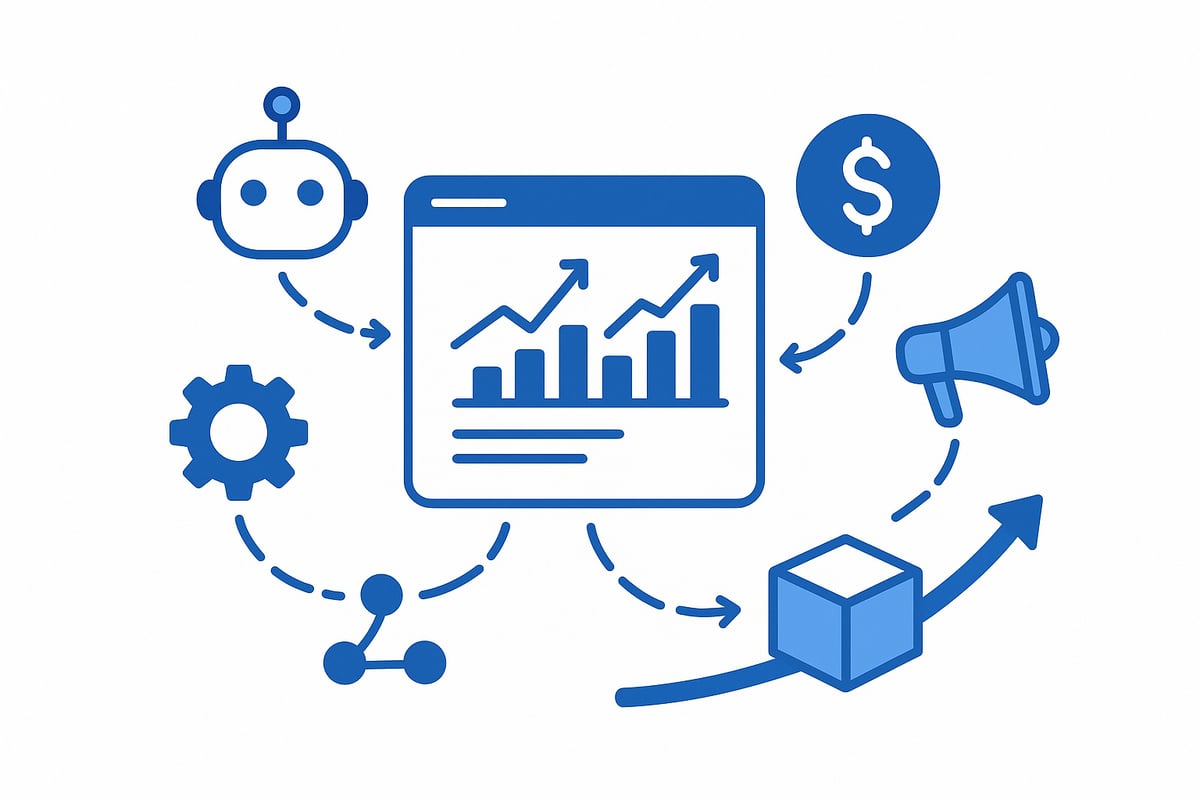
Understanding Agentic AI and Its Impact
Agentic AI, often called Agentic Automation, takes traditional automation a step further by empowering software agents to set goals, make decisions, and act independently. Unlike rule-based systems, these agents learn and adapt, optimizing for outcomes across the entire scale strategy. Recent projections suggest that by 2026, over 60% of enterprise SaaS providers will embed Agentic AI into their go-to-market operations, signaling a dramatic shift in how teams approach growth.
Practical Applications in GTM Strategy
Agentic AI is unlocking new frontiers in B2B SaaS, driving efficiency and accuracy in every phase of the go-to-market journey. Consider these real-world applications:
- AI-driven lead scoring that prioritizes prospects based on intent signals
- Automated prospect engagement, personalizing outreach at scale
- Dynamic pricing models adjusting to market demand in real time
- Pipeline forecasting with predictive analytics
For a deeper dive into real implementations and the future impact on revenue teams, explore Agentic AI in B2B sales: The next frontier. Companies leveraging Agentic AI for their scale strategy report shorter sales cycles and higher retention, as customer interactions become more relevant and timely.
Implementation Roadmap and Challenges
Successfully integrating Agentic AI into your scale strategy means following a clear roadmap:
- Assess data readiness and clean up sources for quality inputs.
- Identify GTM processes ripe for automation and set measurable goals.
- Select AI partners with proven, ethical frameworks.
- Pilot in one workflow, then expand based on results.
Common challenges include data silos, change resistance, and ethical concerns. Overcoming these requires transparent communication, ongoing enablement, and clear ROI benchmarks. With the right approach, Agentic AI becomes the cornerstone of a repeatable, scalable growth engine.
Step 3: Designing Scalable GTM Frameworks for 2026
In the race for B2B SaaS dominance, a robust scale strategy is more than a buzzword—it is the operational backbone for sustainable growth. Modern frameworks blend four core pillars: market positioning, demand generation, sales enablement, and customer success alignment. These pillars keep your business nimble, ready to pivot as markets shift and competitors advance.
Adaptability is crucial. Top-performing SaaS teams use proven models like the Value Proposition Canvas and Social Business Model Canvas to map value, identify risks, and ensure every initiative ladders up to the broader scale strategy. Each pillar reinforces the next, creating a flywheel for exponential growth.
Building Repeatable, Measurable Processes
Repeatability is the secret to scaling. Break down your go-to-market motions into structured playbooks and operational checklists. This ensures every team member knows their role and how their actions impact outcomes.
Institutionalize learning by creating feedback loops—use real-time data to test, iterate, and refine tactics. Agile experimentation lets you adapt quickly to market feedback. For example, a SaaS company moving from Seed to Series B used Building effective GTM frameworks to codify their processes, resulting in faster pipeline growth and reduced sales cycle times.
How GTM Consult Accelerates Scalable Growth
GTM Consult specializes in aligning product, marketing, and sales into a unified growth engine. Their expertise lies in building data-driven GTM frameworks, enablement playbooks, and operational dashboards that make a scale strategy actionable.
Clients see real results:
- Accelerated pipeline velocity
- Faster ARR growth
- Successful expansion into new markets
With a focus on measurable outcomes, GTM Consult empowers SaaS leaders to turn their scale strategy into a repeatable, data-driven advantage.
Step 4: Measuring, Optimizing, and Sustaining Scale
Scaling a SaaS business in 2026 requires more than ambition—it demands a scale strategy built on measurable outcomes and relentless optimization. Top-performing companies know that sustainable growth is rooted in tracking the right metrics, leveraging AI, and proactively removing barriers.
Key Metrics for Scalable Growth
To execute a winning scale strategy, focus on metrics that reveal true business health. The most critical KPIs for SaaS in 2026 are:
| KPI | Why It Matters |
|---|---|
| Pipeline Velocity | Tracks speed of deals through funnel |
| ARR | Measures recurring revenue growth |
| CAC | Monitors cost to acquire customers |
| CLTV | Assesses long-term customer value |
| Retention Rate | Signals product-market fit and loyalty |
Benchmark these KPIs using real-time dashboards. According to industry data, SaaS leaders who use a data-driven approach consistently outperform peers. For more on analytics-powered growth, explore data-driven marketing and growth.
Continuous Optimization with AI and Human Insight
Agentic AI supercharges scale strategy by automating A B testing, predicting churn, and personalizing engagement. Unlike static automation, Agentic AI adapts to changing buyer behaviors. Yet, human expertise remains essential for strategic pivots and interpreting qualitative feedback.
For example, a SaaS team used Agentic AI for lead scoring and saw a 30 percent faster sales cycle, but relied on human sales leaders to refine messaging. The best results come from blending AI-driven insights with human intuition, as highlighted in Agentic AI's role in optimizing B2B outcomes.
Overcoming Common Scale Barriers
Even the best scale strategy faces obstacles. Watch for:
- Process rigidity that slows adaptation
- Misaligned incentives across teams
- Tech debt that limits automation
Solutions include:
- Adopting flexible playbooks
- Fostering transparent communication
- Investing in continuous enablement
Case studies show that companies removing these barriers unlock breakthrough growth, accelerating ARR and improving market positioning.
Step 5: Future-Proofing Your Scale Strategy for 2026 and Beyond
The SaaS world in 2026 is a moving target. Markets shift overnight, buyer journeys evolve with every tech leap, and Agentic AI is rewriting the rules of scale strategy. To thrive, forward-thinking teams must anticipate change, not just react to it.
Emerging trends are reshaping the landscape:
- AI-powered growth loops that optimize every touchpoint
- Agentic automation ecosystems driving autonomous GTM execution
- Evolving buyer journeys demanding hyper-personalized engagement
Winning teams are building adaptability right into their scale strategy. They foster cultures of continuous experimentation, learning from each test, and pivoting fast when markets shift. For example, leading SaaS providers are running monthly strategy reviews, investing in Agentic AI, and rapidly upskilling teams to stay ahead.
Innovation goes hand in hand with resilience. Teams that encourage cross-functional collaboration and reward bold ideas are better equipped to weather disruption. SaaS leaders who integrate unified, data-driven, and AI-augmented growth engines are setting the new standard for success.
To future-proof your scale strategy:
- Schedule regular GTM strategy reviews
- Invest in AI and automation capabilities
- Prioritize team upskilling and agile learning
- Adopt frameworks from top SaaS growth strategies for scale
By embracing these principles, your organization can not only keep pace with 2026 but lead the way in scalable, sustainable SaaS growth.
As we’ve explored throughout this guide, scaling effectively in 2026 isn’t just about chasing new trends—it’s about weaving together your product, marketing, and sales into one unstoppable growth engine. Imagine what it would feel like to finally see every effort tied directly to real pipeline and ARR, with Agentic AI working by your side and every team member aligned around a common goal. If you’re ready to unlock that kind of growth story for your SaaS company, let’s start the conversation. Your next chapter could begin with a single step—Book Your Personal Intro Call.

Latest From
The Blog
Go To Market Strategy Consulting Guide For 2025 Success

Go To Market Strategy McKinsey Guide For Success 2025
.jpg)
Crossing the Enterprise Chasm: A Practical Guide to Sales-Led Growth (SLG)

Let's Build The Future Together
