
Essential Guide to B2B SaaS Sales Strategy for 2025 Success

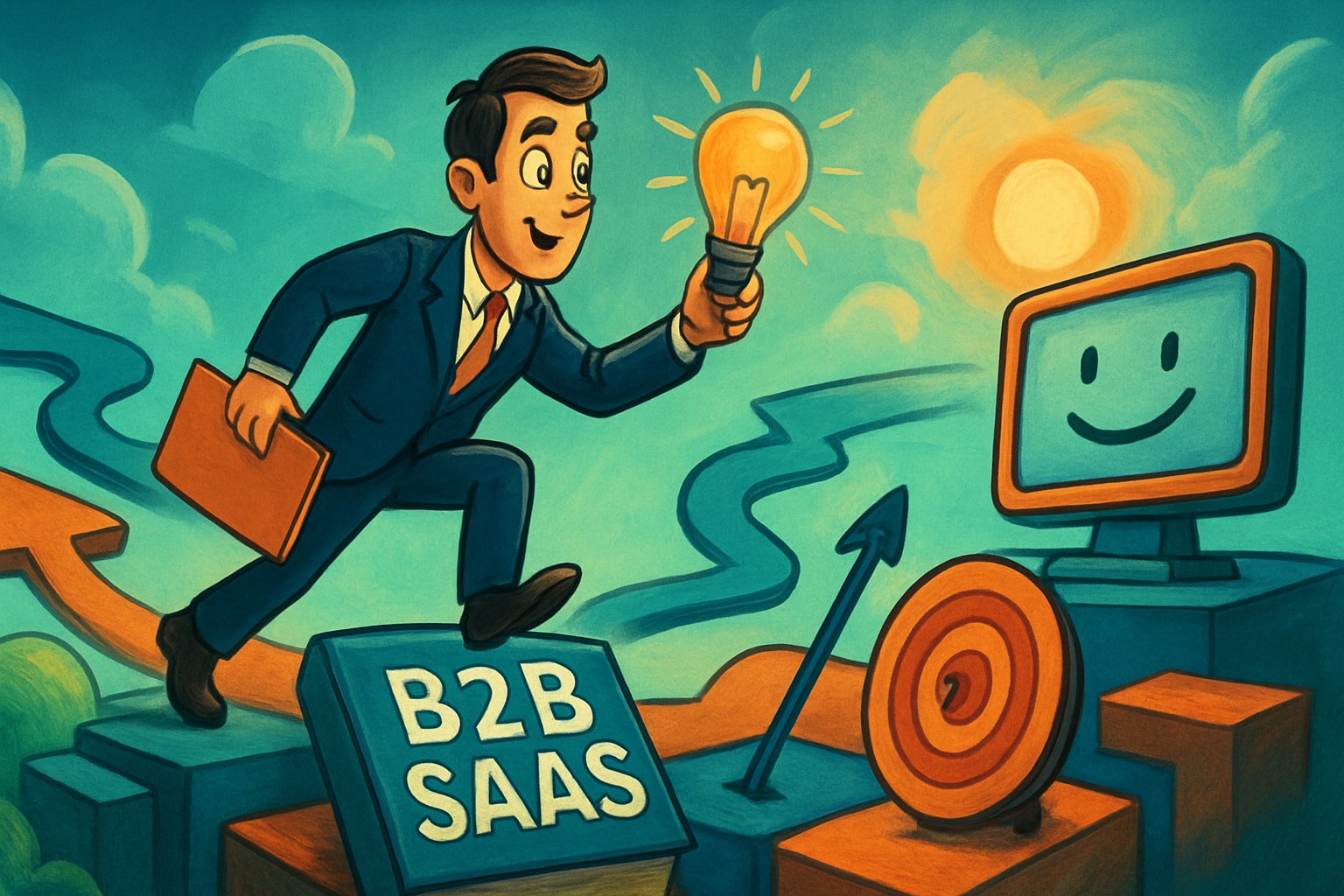


The B2B SaaS sales landscape is shifting faster than ever as we head into 2025. New competitors are emerging, buyer expectations are rising, and AI-driven automation is transforming every stage of the sales cycle. To thrive, leaders must rethink their b2b saas sales strategy or risk falling behind.
This expert guide is built for SaaS teams determined to grow ARR and pipeline in the face of rapid change. You’ll discover how to navigate market shifts, achieve go-to-market alignment, leverage data and Agentic AI, empower your sales team, and measure what matters.
Ready for practical steps and proven frameworks to drive real results? Let’s dive into the strategies that will define B2B SaaS success in 2025.
Navigating the 2025 B2B SaaS Sales Landscape
In 2025, the B2B SaaS sales landscape is a high-stakes arena where competition has never been fiercer. Buying cycles are stretching, and enterprise buyers now demand a hyper-personalized, consultative approach. According to recent studies, 80% of SaaS buyers expect tailored sales experiences. The shift from pure product-led tactics to hybrid sales-led and PLG models is accelerating, with companies chasing Rule of 40 and T2D3 benchmarks. High-growth SaaS firms are adapting their b2b saas sales strategy by building agile teams that can navigate complex stakeholder landscapes and enterprise deal structures.
AI is now a game-changer, especially Agentic Automation, which is transforming how sales teams operate. Market leaders are leveraging AI to automate multi-step sales processes, forecast with greater precision, and unlock new levels of pipeline growth. As highlighted by GTM Strategies in the Age of AI, AI-native companies are seeing higher conversion rates and faster sales cycles. To succeed, every b2b saas sales strategy must embrace agility, foster cross-team collaboration, and leave outdated playbooks behind.

Aligning Product, Marketing, and Sales for Unified Growth
In 2025, the most successful B2B SaaS sales strategy stories start with a single question: What happens when product, marketing, and sales finally pull in the same direction? Imagine a SaaS startup where teams once operated in silos, missing revenue targets and confusing prospects with mixed messages. After unifying their go-to-market function, aligning on shared KPIs, and establishing a single source of truth for pipeline data, they saw pipeline contribution jump 60% within two quarters. This transformation is no accident. Companies achieving T2D3 growth consistently align all GTM functions, using quarterly and monthly business reviews as guardrails. Cross-team OKRs and shared incentives keep everyone focused on expansion, especially when entering new markets like DACH or the US. For a deeper look at what this alignment looks like in practice, explore these go-to-market strategy frameworks.
Why GTM Alignment is Critical in B2B SaaS
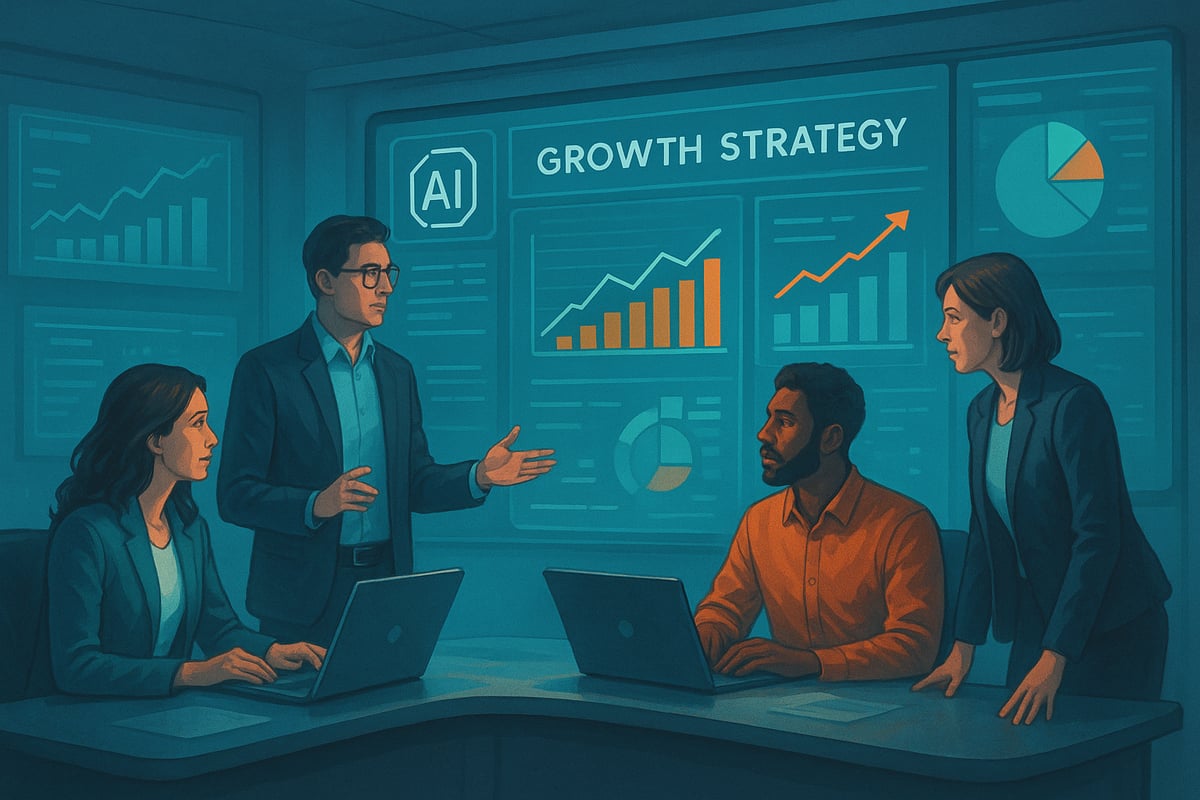
Siloed teams are a recipe for missed opportunities. When product, marketing, and sales operate independently, messaging becomes inconsistent, resources are wasted, and revenue targets slip through the cracks. A unified growth function is the backbone of any high-impact b2b saas sales strategy.
The most agile SaaS companies use shared KPIs and a single source of truth for pipeline and revenue data, which enables faster course corrections. For example, a startup that brought product, marketing, and sales together saw their pipeline contribution increase by 60%. Regular business reviews, both quarterly and monthly, keep teams accountable and aligned on goals. Cross-functional OKRs and shared rewards drive momentum, especially when expanding into new markets. This alignment is foundational for scaling ARR and strengthening market positioning.
Building a Data-Driven Execution Framework
A data-driven execution framework is the engine room of any effective b2b saas sales strategy. Replace disconnected KPIs with actionable, cross-functional dashboards that everyone can access. Integrated RevOps analysis uncovers bottlenecks, revealing exactly where leads stall or deals slow down.
Companies with unified GTM dashboards report sales cycles that are 25% faster, according to industry data. Actionable metrics should include lead flow, pipeline velocity, and cost per opportunity. Weekly, monthly, and quarterly performance reviews ensure ongoing optimization. By tracking these metrics and acting quickly on insights, teams can fine-tune their GTM execution and maximize both pipeline and ARR growth.
Leveraging AI and Agentic Automation in B2B SaaS Sales
Imagine a sales rep who never sleeps, learns from every interaction, and adapts in real time. This is no longer a fantasy in the 2025 b2b saas sales strategy landscape. Agentic AI, or Agentic Automation, is transforming how SaaS teams approach complex, multi-step sales workflows.
Agentic AI goes beyond simple automation. It orchestrates tasks like lead scoring, personalized outreach, and dynamic forecasting, learning from each result. For example, it can analyze signals across your CRM to prioritize the hottest leads, schedule demos at optimal times, and even generate tailored proposals. These tools are rapidly becoming essential, as companies using AI-powered sales solutions have improved MQL-to-SQL conversion rates by up to 30%. According to AI Adoption Driving ROI in B2B Sales, nearly two-thirds of B2B revenue leaders are now seeing ROI from AI within the first year.
The secret is not just the tech, but how humans use it. AI integrations with CRM and enablement platforms empower sales teams to spend less time on admin and more on building relationships. Still, oversight is crucial. AI should support, not replace, the consultative touch that wins enterprise deals.
As you build your b2b saas sales strategy, consider data privacy and ethics. Ongoing training is vital to keep AI aligned with evolving buyer expectations. By leveraging Agentic AI, your team can focus on what matters most: creating value and accelerating revenue growth.

Sales Enablement and Playbooks for Repeatable Success
Effective sales enablement is the backbone of any modern b2b saas sales strategy. In 2025, growth-focused teams rely on dynamic playbooks and continuous coaching to turn every rep into a consistent performer.

Creating High-Impact Sales Playbooks
A high-impact playbook is the anchor of a successful b2b saas sales strategy. The best teams define their ideal customer profile, messaging frameworks, objection handling tactics, and demo scripts in a digital, modular format.
Key components include:
- Clear ICP and segmentation
- Messaging matrices for each persona
- Objection handling libraries
- Demo and proof-of-value templates
Market leaders use modular playbooks that adapt quickly to feedback and evolving buyer needs. For example, one SaaS company reduced new rep onboarding time by 40% after digitizing their playbooks. Integration with enablement platforms and CRM ensures real-time access and easy updates. For more on adapting playbooks for enterprise sales, see Sales-led growth in enterprise SaaS.
Training, Coaching, and Performance Management
Ongoing training is essential for scaling a b2b saas sales strategy. Top-performing teams use peer coaching, role-playing, and microlearning modules to keep skills sharp and knowledge current.
Best practices include:
- Weekly peer role-plays and feedback sessions
- Microlearning for new product releases
- Structured coaching tied to performance dashboards
Teams with formal coaching programs see 15% higher quota attainment. Regular feedback loops between sales, product, and marketing help refine messaging and uncover skill gaps. Incentives should reward both new business and expansion, driving a culture of learning and accountability.
Measuring, Optimizing, and Scaling Revenue Operations
In a high-velocity b2b saas sales strategy, precise measurement and continuous optimization are non-negotiable. The best teams relentlessly track core KPIs, ensuring every decision accelerates pipeline and ARR growth. Let’s break down the essential metrics fueling success:
| KPI | What It Measures | Why It Matters |
|---|---|---|
| ARR | Annual recurring revenue | Revenue health |
| Pipeline Coverage | Pipeline vs. quota | Forecasting accuracy |
| CAC | Customer acquisition cost | Efficiency |
| Churn | Customer loss rate | Retention health |
| Expansion Revenue | Upsell/cross-sell growth | Account value maximization |
To identify where to focus, analytics like Bowler charts and Pareto analysis highlight which reps and motions drive the majority of bookings. Industry data shows up to 80% of bookings often come from just 20% of reps, so codifying and scaling top-performer tactics is vital.
For ongoing improvement, adopt a rhythm of:
- Monthly and quarterly business reviews
- Funnel conversion and campaign ROI analysis
- Win/loss interviews and customer feedback loops
Prioritize forecasting discipline and tightly integrate financial planning with your go-to-market engine. Align incentives and OKRs across all revenue teams to ensure unified execution. For more on scaling and optimizing SaaS growth, explore SaaS growth and revenue optimization. Consistent review and agile adjustments keep your b2b saas sales strategy ahead of the curve.
If you’ve ever felt your SaaS sales strategy was stuck in a maze of disconnected teams, shifting targets, and data that just doesn’t tell the full story, you’re not alone—I’ve seen so many founders and revenue leaders struggle with this very challenge. The good news? You don’t have to navigate this journey solo. At GTM Consult, we’ve helped startups and scaling SaaS companies like yours move from overwhelming uncertainty to clear, repeatable growth by uniting product, marketing, and sales into one high-performing team. If you’re ready to turn your 2025 strategy into measurable pipeline and ARR growth, let’s start with a conversation—Book Your Personal Intro Call.

Latest From
The Blog
Go To Market Strategy Consulting Guide For 2025 Success

Go To Market Strategy McKinsey Guide For Success 2025
.jpg)
Crossing the Enterprise Chasm: A Practical Guide to Sales-Led Growth (SLG)

Let's Build The Future Together
