
Demand Generation Consulting Guide: Strategies for 2026 Success

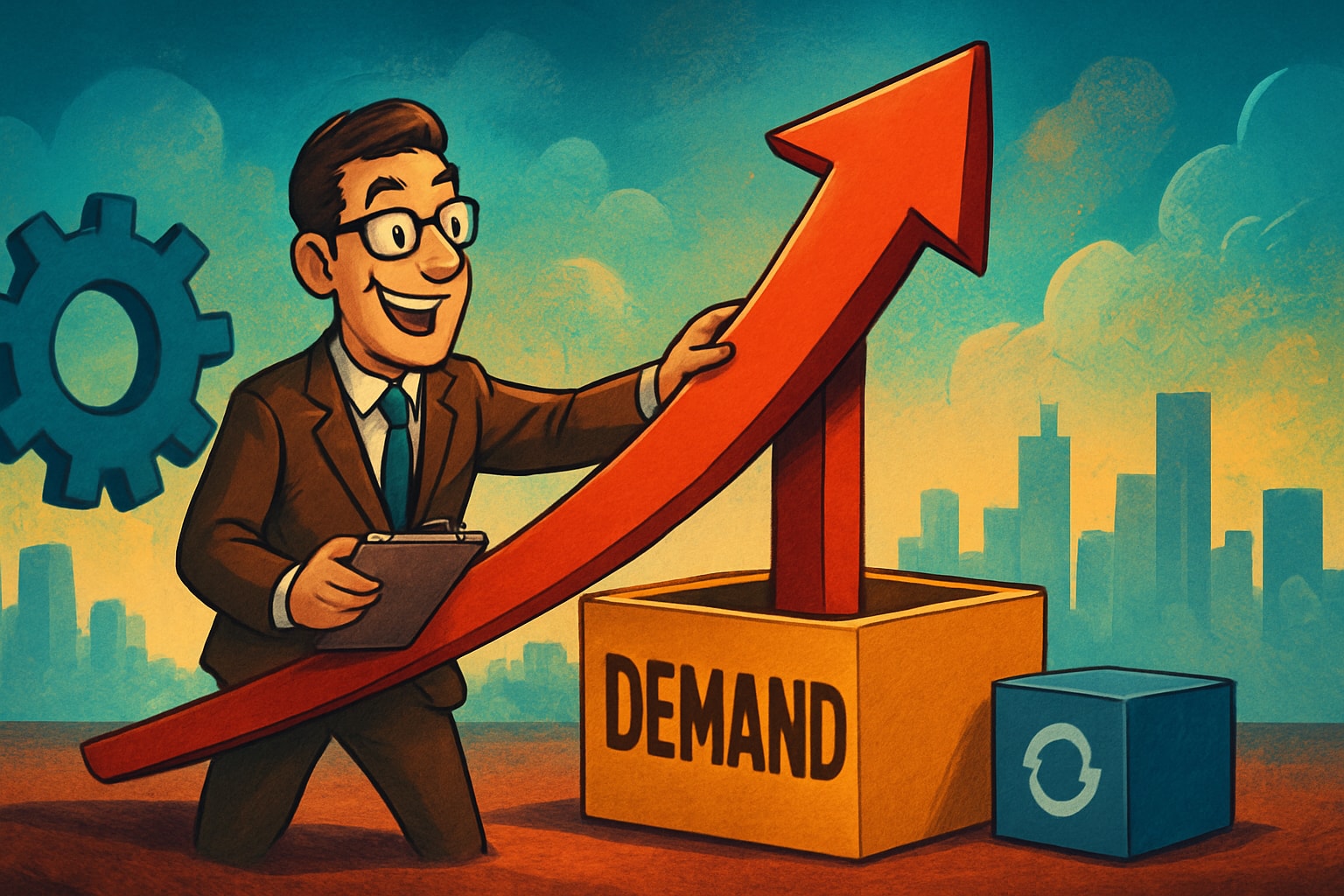


Demand generation consulting is poised to become the secret weapon for B2B SaaS growth in 2026. As buyer journeys grow more complex and data multiplies, companies face mounting pressure to deliver measurable ROI on every marketing dollar.
The stakes are high. Sales cycles are longer, buying committees are bigger, and the need for true alignment between product, marketing, and sales has never been greater. AI and Agentic Automation are rapidly reshaping how organizations engage prospects and scale pipeline.
This guide reveals actionable demand generation consulting strategies that drive real revenue impact. Discover the latest trends, frameworks, and AI innovations, along with a step-by-step consulting approach to help your SaaS business unlock scalable, measurable growth in 2026.
The Evolution of Demand Generation Consulting in 2026
The landscape of demand generation consulting is undergoing a dramatic transformation as B2B SaaS companies move from siloed marketing teams to unified growth functions that bring product, marketing, and sales together. This evolution is driven by the increasing complexity of buyer journeys, where longer sales cycles and larger buying committees demand seamless alignment across all revenue-facing teams.
Today’s enterprise software marketers face a new reality:
- Buying committees often consist of 6–10 stakeholders, each with unique priorities.
- Sales cycles have stretched, requiring more touchpoints and tailored engagement.
- Cross-functional collaboration is now essential for building trust and accelerating deals.
Data-driven demand generation consulting has become the norm, with full-funnel attribution models and operational dashboards providing real-time clarity on what drives pipeline and ARR. SaaS leaders are using these insights to optimize investments and prove measurable ROI.
AI and Agentic Automation are also reshaping the field. With 70% of B2B buyers expecting personalized engagement, consulting experts are leveraging agentic AI for campaign orchestration, adaptive lead nurturing, and content personalization. According to B2B marketers prioritizing AI tools for 2026, the majority of teams are doubling down on AI-powered solutions for scale and efficiency.
Leading SaaS companies are shifting away from simple lead-gen metrics and embracing revenue-centric KPIs. The most successful demand generation consulting engagements now center on aligning product, marketing, and sales with sophisticated technology, ensuring every action is tied directly to revenue impact.

Core Pillars of a Modern Demand Generation Strategy
Modern demand generation consulting is built on three core pillars that drive real revenue impact for B2B SaaS companies. By unifying product, marketing, and sales into a single growth engine, organizations can unlock scalable pipeline growth and measurable outcomes.

GTM Alignment: Unifying Product, Marketing, and Sales
Aligning teams around shared messaging, positioning, and KPIs is the foundation of demand generation consulting success. When product, marketing, and sales operate as one, pipeline efficiency increases and friction drops.
For example, SaaS firms with unified GTM teams report up to 36% faster revenue growth. This alignment uses frameworks like “Objectives and Key Results” and cross-functional sprints to ensure everyone moves toward the same goals.
Learn more about aligning your growth function with go-to-market strategy consulting frameworks that drive measurable impact.
Data-Driven Execution & Revenue Attribution
Connecting every marketing activity to pipeline and ARR is crucial for modern B2B SaaS. Operational dashboards and analytics provide real-time feedback, enabling teams to optimize campaigns on the fly.
Multi-touch attribution models help companies see which channels and tactics truly drive revenue. For instance, a SaaS provider might discover that combining webinars with targeted ABM emails delivers higher conversion rates than standalone tactics.
- Real-time dashboards for visibility
- Full-funnel attribution to measure impact
- Optimization loops based on data insights
AI & Agentic Automation in Demand Generation
Agentic AI is transforming demand generation consulting by orchestrating campaigns, scoring leads, and personalizing content at scale. These autonomous systems adapt to buyer behavior, freeing teams from manual tasks and accelerating growth.
Take the example of AI-powered chatbots and agentic workflows that can boost conversion rates by 25 percent. With demand generation consulting, companies leverage agentic automation for campaign management, adaptive learning, and hyper-personalized outreach.
- Campaign orchestration with agentic AI
- Dynamic lead scoring and nurturing
- Scalable personalization across channels
Step-by-Step Guide to Demand Generation Consulting Success
Achieving sustainable B2B SaaS growth in 2026 requires a disciplined, proven approach to demand generation consulting. Let’s walk through a step-by-step framework designed for enterprise software teams aiming to align product, marketing, and sales into a single growth engine.

Step 1: Market and ICP Definition
Start by defining and validating your ideal customer profiles (ICPs) using both data and qualitative insights. Modern demand generation consulting leverages AI-driven TAM analysis to identify high-fit segments quickly. For example, predictive analytics can surface niche verticals where your SaaS solution delivers outsized value.
- Interview top customers to refine personas.
- Use firmographic and technographic data for deeper segmentation.
- Apply intent signals to prioritize outreach.
Step 2: Messaging, Positioning, and Offer Development
Craft differentiated messaging that resonates with your ICPs. Value proposition workshops and competitive analysis help clarify what sets your product apart. In demand generation consulting, strategic storytelling is used to map benefits to specific pain points.
- Develop persona-based messaging matrices.
- Run workshops to align GTM teams on positioning.
- Leverage feedback loops from sales and customer success.
Step 3: Channel and Campaign Planning
Identify the right mix of inbound, outbound, ABM, content, and partner channels to engage buying committees. Combining inbound and outbound tactics increases pipeline velocity and conversion rates. For a deeper dive into B2B SaaS channels, see B2B SaaS lead generation tactics.
- Map channels to each stage of the buyer journey.
- Test multi-touch campaigns for higher engagement.
- Prioritize channels with measurable pipeline impact.
Step 4: Technology Stack and Agentic Automation Setup
Build a robust martech stack: CRM, marketing automation, AI platforms, and agentic orchestration layers. Agentic AI transforms campaign orchestration, lead scoring, and content personalization, reducing manual effort and scaling output.
- Integrate data sources for unified analytics.
- Automate repetitive workflows with Agentic AI.
- Avoid tech bloat by focusing on interoperability.
Step 5: Measurement, Optimization, and Enablement
Establish dashboards for real-time pipeline visibility and full-funnel attribution. Demand generation consulting success is measured by ARR, CAC, and pipeline contribution. Quarterly business reviews and continuous enablement ensure all teams stay aligned and agile.
- Track KPIs that reflect revenue impact.
- Use feedback loops for campaign optimization.
- Enable sales and marketing with actionable insights.
Following these steps enables SaaS teams to unlock scalable, predictable growth with demand generation consulting. By weaving together GTM alignment, Agentic Automation, and data-driven execution, your consulting efforts deliver measurable business value.
The Role of Consulting Partners in B2B SaaS Growth
In the high-stakes world of B2B SaaS, demand generation consulting partners are the catalysts for measurable pipeline growth and lasting market influence. Their expertise brings objectivity to GTM strategies, helping unify product, marketing, and sales into a single growth function.
Consulting partners accelerate transformation by bridging execution gaps that internal teams often struggle to close. They do more than advise, they roll up their sleeves to implement AI-powered workflows, Agentic Automation, and full-funnel attribution models. For example, one SaaS firm partnered with consultants and unlocked 300% lead growth by revamping their GTM approach and campaign orchestration.
Consulting models are flexible to fit different growth stages:
- Retainer: Ongoing strategic and execution support.
- Interim CMO: Short-term leadership for rapid change.
- Project-based: Targeted expertise for specific challenges.
With the global B2B demand generation market projected to hit $15B by 2033, demand generation consulting is more critical than ever. Consultants also help SaaS companies expand into new regions, like DACH or the US, by adapting playbooks and aligning local teams.
Ultimately, the right consulting partner delivers not just strategy, but hands-on enablement that drives ARR, sales velocity, and sustainable market positioning.

Technology Trends Shaping Demand Generation in 2026
The landscape of demand generation consulting is being reshaped by rapid technology innovation. In 2026, Agentic Automation stands at the forefront, enabling autonomous campaign management and real-time optimization across the entire buyer journey.
Key technology trends transforming demand generation consulting:
Agentic AI and Automation: Platforms now orchestrate campaigns, score leads, and adapt content on the fly. According to recent research, Agentic AI can reduce manual campaign management time by over 50 percent, unlocking new efficiency for SaaS teams. For a technical deep dive, see how Agentic AI in hyperpersonalized B2B advertising is driving hyperpersonalization at scale.
First-Party Data and Advanced Analytics: As privacy regulations evolve, the convergence of first-party data with advanced analytics empowers marketers to segment audiences and predict intent with greater accuracy. This shift fuels more precise targeting and adaptive lead nurturing.
AI Investment and ROI: The majority of B2B marketers are doubling down on AI. In fact, 85 percent plan to increase AI investment in 2026, and recent studies highlight that AI adoption is driving ROI for B2B teams, transforming pipeline results.
Composable Martech Stacks: Emerging tools like composable CDPs, orchestration hubs, and next-generation sales enablement tech are giving SaaS companies the flexibility to scale and unify product, marketing, and sales.
Early adopters of these trends in demand generation consulting are outpacing competitors in pipeline growth and measurable revenue impact. The future belongs to those who embrace Agentic Automation and data-driven innovation.
Measuring Success: KPIs and Revenue Impact
How do you know if your demand generation consulting efforts are truly moving the needle? In the 2026 SaaS landscape, measurement is no longer an afterthought. It's the compass guiding every go-to-market decision, revealing where growth is real and where it’s just noise.
Modern KPIs for B2B SaaS Growth
| KPI | What It Measures | Why It Matters |
|---|---|---|
| Pipeline Contribution | % of pipeline from demand gen | Links activity to real revenue opportunity |
| ARR (Annual Recurring Rev.) | Recurring revenue influenced | Proves long-term impact of campaigns |
| CAC (Customer Acquisition) | Cost to acquire new customers | Ensures efficient spend, sustainable scaling |
| Sales Velocity | Speed deals move through pipeline | Identifies bottlenecks, unlocks faster growth |
| Marketing-Sourced Revenue | Revenue directly from marketing | Shows direct business value of marketing |
The focus has shifted from vanity metrics like MQLs to revenue-centric outcomes. With longer buying cycles and larger committees, SaaS leaders rely on Agentic AI to connect every touchpoint to ARR. For instance, one SaaS firm implemented advanced attribution and saw 60% of their pipeline credited to demand gen within a year.
Dashboards now deliver full-funnel insights in real time, empowering teams to optimize on the fly. Feedback loops and quarterly reviews keep consulting strategies aligned with business goals.
To tie activity directly to ROI, use frameworks that connect marketing actions to revenue. Explore Growth marketing strategy frameworks for proven approaches that work in B2B SaaS.
Companies with advanced attribution models are seeing 30% higher marketing ROI. In 2026, the winners will be those who measure what actually matters.
After diving into the playbook for 2026 demand generation, you can probably imagine how game-changing it feels to have your product, marketing, and sales teams moving as one. I’ve seen founders and GTM leaders go from scattered KPIs to a single, humming growth engine—watching dashboards light up with real pipeline, not just vanity metrics. If you’re ready to write your own story of scalable, enterprise-grade growth, let’s connect and see how these frameworks could work for you. It all starts with a real conversation—book your Book Your Personal Intro Call and take the next step toward measurable results.

Latest From
The Blog
Go To Market Strategy Consulting Guide For 2025 Success

Go To Market Strategy McKinsey Guide For Success 2025
.jpg)
Crossing the Enterprise Chasm: A Practical Guide to Sales-Led Growth (SLG)

Let's Build The Future Together
