

Essential Guide to Leadership Marketing Success in 2026




Did you know the average CMO tenure in tech is now under 40 months, reflecting just how quickly market expectations are changing? For those in B2B SaaS and enterprise software, the pace is even faster. Every quarter, new technologies, shifting buyer habits, and increased competition challenge even the most experienced leaders.
Today, success in leadership marketing isn’t about mastering technical tools alone. It’s about aligning your entire organization, becoming fluent in AI and Agentic Automation, and driving measurable business outcomes across pipeline and revenue. The stakes have never been higher.
This guide is here to help. Inside, you’ll find a step-by-step, data-driven approach to excelling in 2026. We’ll cover strategic alignment, leveraging AI, operationalizing strategy, empowering teams, and proving your impact—giving you the blueprint for leadership marketing success.
The New Paradigm: Leadership Marketing in 2026
Leadership marketing in 2026 is defined by rapid digital transformation and the explosive growth of B2B SaaS and enterprise software. The role of marketing leaders has evolved, now demanding a blend of strategic vision, technical fluency, and business acumen. Unlike in the past, where campaigns and brand awareness were the primary focus, leadership marketing today centers on measurable business outcomes and unified growth.
Gone are the days of siloed departments. The shift is toward a unified growth function, where product, marketing, and sales operate as a single, aligned force. This evolution is backed by research revealing that only 15 percent of a CMO's impact is driven by technical skills, while 55 percent comes from leadership ability (CMO success driven by leadership skills). This means leadership marketing is less about tactical expertise and more about inspiring teams, influencing peers, and driving enterprise value.
At the core of this new paradigm is the Value Creation Zone, where the needs of customers and the business overlap. Bold examples—like Guinness under Diageo’s leadership during crisis, or PlayStation’s reinvention under Sony—show how decisive leadership marketing can drive innovation and turn challenges into growth. Today’s marketing leaders must influence upwards to executives, sideways to peers, and downwards to their teams, ensuring every function moves toward shared business goals.
The expectation is clear: leadership marketing is now directly accountable for pipeline growth, ARR, and revenue, not just brand sentiment. This is the era where cross-functional influence, operational agility, and a relentless focus on value creation define success.
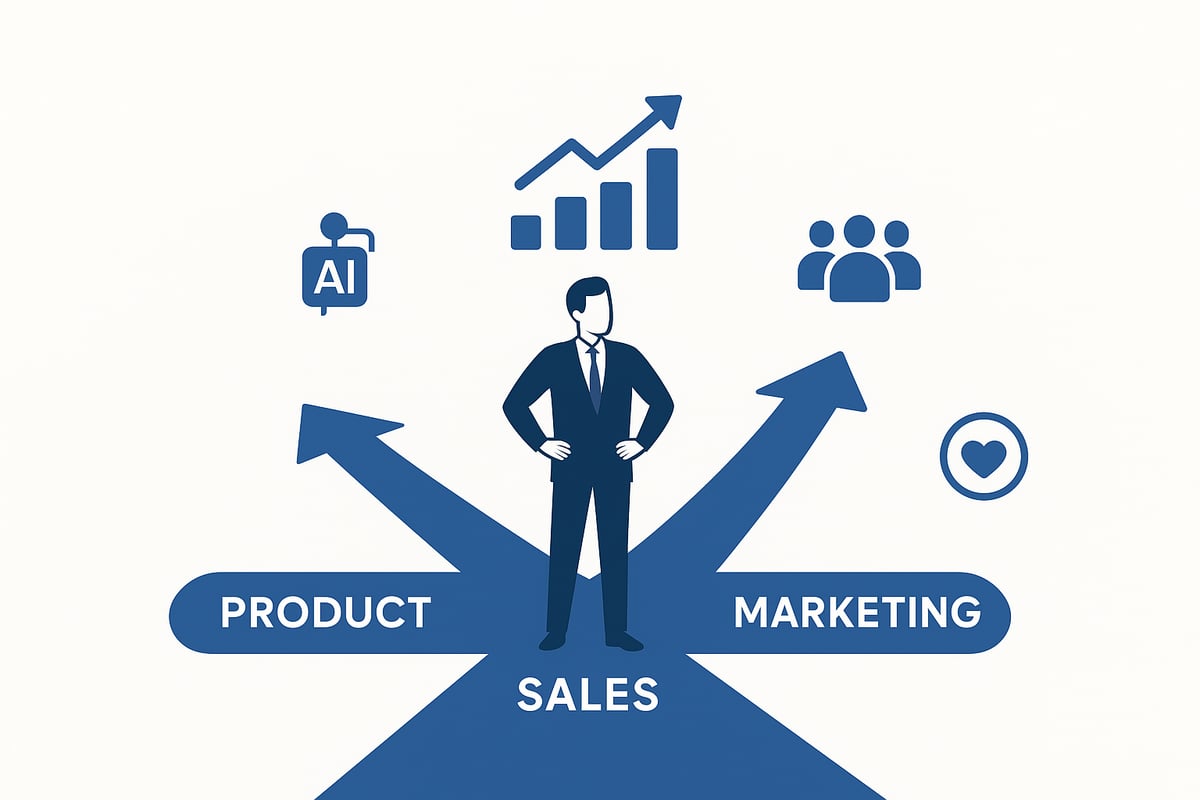
Step 1: Achieving Strategic Alignment Across Functions
In 2026, leadership marketing means more than just great campaigns. True growth in B2B SaaS and enterprise software starts with breaking silos and aligning product, marketing, and sales into one high-performing team. Imagine a company where these teams work together seamlessly—strategy turns into results, and leadership marketing drives growth across every function.

Alignment challenges often show up as power gaps. Product teams may chase features, while marketing pushes brand, and sales focuses on short-term deals. Competitor research shows these silos slow execution and limit impact.
The solution? Operational marketing plans that bridge vision and action. Cross-functional GTM sessions, shared dashboards, and unified KPIs keep everyone rowing in the same direction. According to Planful, companies with strong alignment are 67% more effective at closing deals.
- Joint GTM planning ensures every team understands the growth strategy.
- Shared dashboards provide real-time visibility into progress.
- Unified KPIs tie activities directly to pipeline and ARR.
Want to see how this works in practice? Explore how high-performing Cross-Functional Go-To-Market Teams build alignment for lasting success.
To put alignment into action:
- Create shared OKRs that connect back to business goals.
- Establish weekly growth councils for ongoing collaboration.
- Use transparent reporting tools so everyone sees the same data.
With these steps, leadership marketing powers not just brand awareness, but measurable revenue and stronger market positioning.
Step 2: Leveraging AI and Agentic Automation for Competitive Advantage
Adapting to Agentic AI is now a defining trait of leadership marketing in B2B SaaS and enterprise software. Agentic Automation goes beyond simple workflows, empowering marketing teams to delegate complex, multi-step decisions to intelligent systems. This shift means marketers can focus on strategy, while AI handles data analysis, campaign orchestration, and even predictive modeling.

What Is Agentic Automation in Leadership Marketing?
Agentic AI enables real-time decision-making by automating research, budget allocation, and go-to-market workflows. Imagine an AI assistant summarizing competitor moves, segmenting leads, and recommending personalized campaigns—all within minutes.
- AI-driven insights for campaign targeting
- Machine learning to optimize spend
- Autonomous orchestration of GTM activities
This level of automation unlocks agility, letting teams pivot faster as market dynamics change.
Real-World Impact: AI-Driven Growth and GTM Execution
The results speak for themselves. AI-led marketing teams experience up to 25 percent faster pipeline growth and 30 percent higher ROI, as supported by AI marketing statistics and ROI insights. For example, a SaaS company using agentic systems can automatically adjust spend based on pipeline velocity, ensuring resources are always working toward ARR goals.
- Automated reporting for real-time performance
- AI-powered attribution to connect tactics to revenue
- Faster experimentation with campaign variants
Overcoming Challenges and Building an AI-First Culture
To fully leverage leadership marketing with AI, leaders must address data quality, change management, and skills gaps. Upskilling teams ensures everyone can interpret AI insights and act decisively.
Key strategies include:
- Investing in AI operations and training
- Piloting agentic automation in campaign execution
- Creating a data-driven, collaborative team culture
Ultimately, leadership marketing success in 2026 depends on bold adoption of Agentic Automation and a commitment to measurable business outcomes.
Step 3: Operationalizing Strategy for Execution Excellence
Translating vision into results is where many leadership marketing initiatives stumble. The operational marketing gap—where strategy fails to become concrete action—remains a top challenge for B2B SaaS and enterprise software teams. According to Operationalizing Marketing Strategy, bridging this gap is essential to achieve measurable growth and pipeline impact.
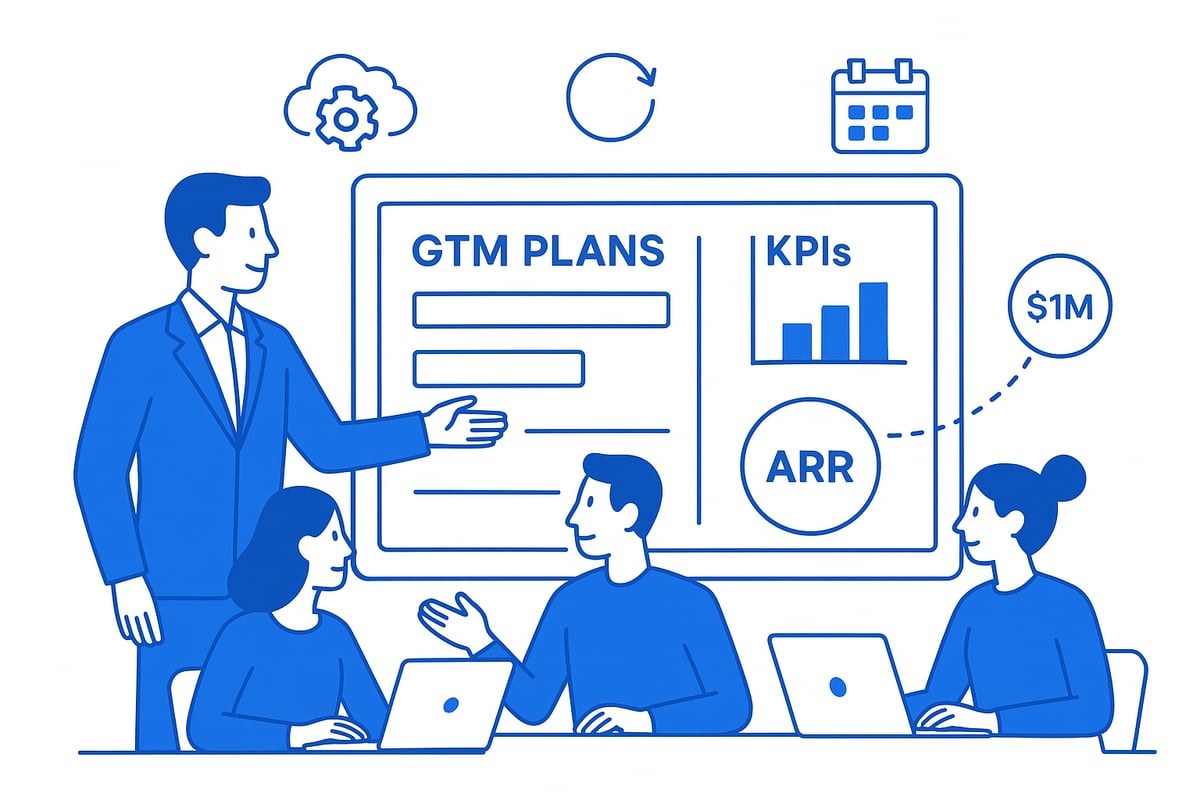
Bridging the Operational Gap
To operationalize leadership marketing strategy, start with regular cross-functional plan reviews. These sessions ensure everyone—from sales to product—stays aligned. Increase visibility with shared dashboards for real-time campaign performance and resource allocation.
Steps to close the gap:
- Hold weekly plan reviews with all GTM stakeholders.
- Use operational dashboards for transparency and quick pivots.
- Allocate resources dynamically based on live data, not static annual plans.
Steps to Execution Excellence
A practical example: One SaaS company used agile operational planning to cut budget waste by 20 percent within a quarter. Every tactic was mapped to pipeline and ARR outcomes. Teams held quarterly GTM retrospectives and real-time feedback loops to adapt quickly.
Best practices for execution excellence:
- Link every marketing action to revenue outcomes.
- Monitor performance with automated tools.
- Foster a culture of continuous improvement.
Ultimately, execution excellence in leadership marketing is built on agility, data-driven decisions, and a relentless focus on business impact.
Step 4: Empowering and Unifying Specialized Teams
In the world of B2B SaaS and enterprise software, hyper-specialized teams are now the norm. Yet, as these experts focus on their own niches, silos can quietly emerge, threatening the unified growth that leadership marketing demands. Imagine a scenario where product, content, and demand generation teams each chase their own targets. The result? Fragmented messaging, duplicated efforts, and missed opportunities to deliver value across the customer journey.
Breaking Down Silos in Specialized Teams
Great leadership marketing starts when leaders “zoom out” to unify specialist teams around shared goals that drive pipeline and ARR. Instead of isolated workstreams, successful companies create regular cross-team sprints, joint pipeline reviews, and shared enablement resources. This approach ensures that everyone is contributing to a single, measurable growth mission.
- Weekly all-hands to align priorities
- Transparent communication channels for feedback
- Rotating team leads to foster empathy and skill sharing
When teams collaborate, the impact is real. Industry data shows organizations with high collaboration experience 21 percent faster revenue growth. Leaders who prioritize unity ensure every specialist’s effort ladders up to business outcomes.
Building Collaboration and a Unified Culture
Empowering teams goes beyond process. It requires a culture where psychological safety and a growth mindset are foundational. Leaders must encourage open dialogue, celebrate experimentation, and make space for learning from failure. This is where Marketing Leadership Strategies come into play, offering proven ways to unify teams and drive measurable results.
By weaving leadership marketing into the fabric of your organization, you break down barriers and unlock innovation. Unified teams, equipped with Agentic Automation tools and a shared vision, become a force for sustainable growth in 2026.
Step 5: Measuring, Proving, and Communicating Business Impact
In 2026, leadership marketing is defined by its ability to connect every dollar spent to real business outcomes. CMOs and growth leaders face relentless pressure to prove their impact on pipeline, ARR, and revenue—not just brand metrics. This means shifting the focus from vanity numbers to full-funnel performance.
Measuring What Matters
To master leadership marketing, start by tracking the customer lifecycle from acquisition through retention. Use unified reporting platforms, automated attribution models, and operational dashboards to tie every tactic to pipeline and revenue. Benchmark your results against both industry peers and your previous quarters for context.
- Monitor pipeline velocity and ARR impact.
- Compare performance to top competitors regularly.
- Leverage frameworks from B2B SaaS Marketing Strategy for effective measurement.
Proving ROI with Data and Storytelling
Data alone is not enough. Only 39 percent of C-suite leaders feel marketing consistently demonstrates measurable ROI. Leadership marketing teams must translate numbers into stories that resonate with executive stakeholders. Explain not just what happened, but why it matters for growth and market position.
Communicating Impact to the Board
Use clear, concise language to connect marketing achievements to business terms like pipeline growth, ARR, and efficiency gains. Adopt tools that automate reporting and attribution, enabling regular impact reviews. Present results through a narrative lens, showing how leadership marketing drives sustainable enterprise value.
Future-Proofing Leadership Marketing Skills
To thrive in leadership marketing, future CMOs must focus on skills that drive organizational impact, not just technical expertise. Research shows that 55% of CMO effectiveness comes from leadership abilities, far outweighing the 15% attributed to technical knowledge.
Building a future-proof skillset means mastering four core areas:
- Leading upwards: Secure executive alignment and support.
- Leading sideways: Influence and collaborate across departments.
- Leading teams: Empower specialized groups to innovate and execute.
- Leading self: Cultivate resilience, purpose, and adaptability.
Continuous learning is vital. Upskill in AI, data analytics, and operational excellence. Collaborating with AI agents boosts productivity and sharpens team performance, making AI fluency a must-have for modern marketing leaders (Collaborating with AI agents boosts productivity).
Leadership marketing success is accessible to all—both men and women can develop these capabilities through feedback, mentorship, and hands-on experience. By embracing growth, seeking out cross-functional projects, and staying curious, leaders can meet the evolving demands of 2026 and drive enterprise growth.
As you’ve seen throughout this guide, leadership marketing in 2026 isn’t just about keeping up with the pace of change—it’s about stepping into the driver’s seat and uniting your team, your data, and your strategy around real business impact. I’ve worked with founders and marketing leaders who struggled with silos and scattered KPIs, and I’ve watched them transform their companies by building bridges between product, marketing, and sales. If you’re ready to write your own success story and want to talk through how to make it happen for your team, let’s connect—Book Your Personal Intro Call.

Latest From
The Blog
Go To Market Strategy Consulting Guide For 2025 Success

Go To Market Strategy McKinsey Guide For Success 2025
.jpg)
Crossing the Enterprise Chasm: A Practical Guide to Sales-Led Growth (SLG)

Let's Build The Future Together
