
Essential Guide to Market Entry Strategy for 2026 Success

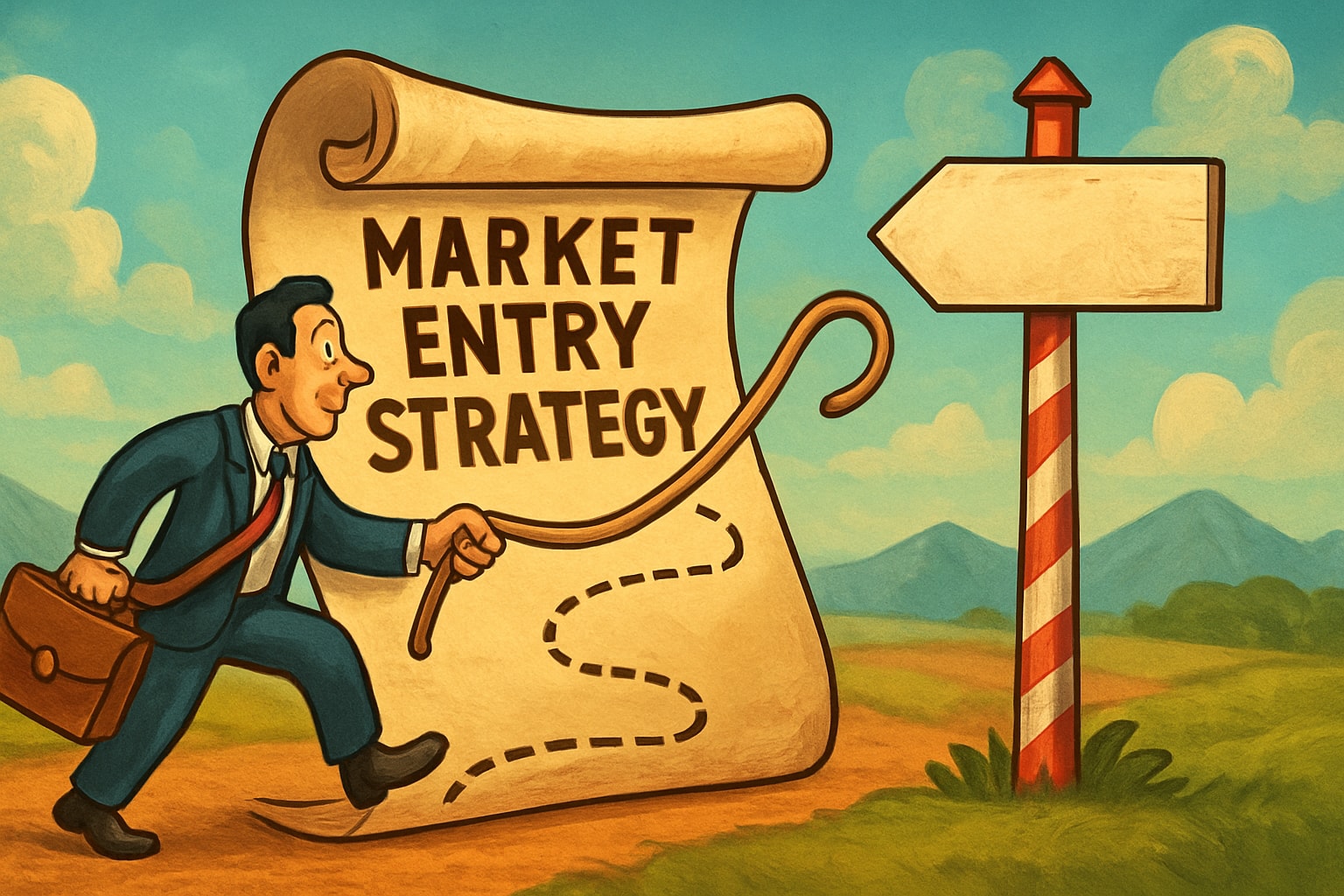


The year is 2026, and entering new markets has become a high-stakes game for B2B SaaS and enterprise software companies. Global rivals are moving faster than ever, AI-driven disruption is reshaping industries, and buyers expect seamless, personalized experiences across every touchpoint.
To thrive in this environment, you need a market entry strategy that is both data-driven and adaptable. This guide offers a practical framework to help you assess opportunity, align product, marketing, and sales, harness the power of AI and Agentic Automation, craft your GTM approach, and track the right KPIs for continuous success.
Ready to unlock measurable growth and lasting revenue? Follow this step-by-step roadmap to confidently navigate the market entry challenges of 2026.
Assessing Market Opportunities and Viability
In 2026, digital transformation, rapid AI adoption, and shifting buyer journeys are rewriting the rules for every market entry strategy. To compete, B2B SaaS leaders must dig into macro trends and emerging signals that will shape tomorrow's business landscape.

Start by evaluating market size, growth rates, and competitive intensity. Use frameworks like TAM, SAM, and SOM to quantify real opportunities. Look for signals in intent data to prioritize high-potential verticals, just as leading SaaS companies do to spot segments with the strongest buying intent.
AI-driven research tools and Agentic Automation now offer a decisive edge. These tools can rapidly scan regulatory landscapes, cultural nuances, and tech adoption barriers in new regions. For example, Agentic AI platforms can surface hidden patterns and emerging buying groups in days, not weeks.
Misaligned assessments can lead to wasted spend or slow ramp-up. According to Forrester and Gartner, integrating intent data and AI-powered insights into your market entry strategy accelerates decision-making and reduces risk. To ensure your approach is robust, explore market validation best practices before committing resources to a new region.
Every data point, AI insight, and validation step brings your team closer to a market entry strategy that delivers growth and sustainable revenue.
Aligning Product, Marketing, and Sales for Unified Execution
In today’s high-velocity B2B SaaS landscape, siloed teams can quietly erode your market entry strategy before it even launches. Imagine product, marketing, and sales each chasing different goals—misaligned messaging, missed handoffs, and pipeline gaps become inevitable. To win in 2026, unified execution is the engine that transforms intent into measurable revenue.

Why Unified Execution Matters
Misalignment is costly. Companies lacking cross-functional unity often face:
- Disconnected KPIs that obscure pipeline health and ARR impact.
- Friction during lead handoffs, leading to lost deals.
- Inconsistent buyer personas and messaging, eroding trust.
By contrast, unified teams that share goals and data see:
- Up to 60% pipeline contribution within 12 months.
- Faster sales cycles and increased win rates, as proven by recent B2B SaaS case studies.
- Clearer ownership of the market entry strategy across roles.
How to Achieve Alignment
Building alignment starts with a single source of truth for ICPs, personas, and messaging—no more guessing who the ideal buyer is. Regular GTM stand-ups and shared dashboards create transparency and accountability.
Key steps include:
- Define unified KPIs tied to pipeline velocity and ARR, not vanity metrics.
- Implement weekly GTM cadences for rapid feedback and iteration.
- Integrate Agentic AI to automate data sharing, campaign orchestration, and real-time segmentation.
- Encourage leadership buy-in to drive operational discipline and break down silos.
Challenges like miscommunication and goal drift are common. According to Why most go-to-market strategies fail, lack of alignment is a leading cause of GTM failure, underscoring the need for proactive, data-driven collaboration.
Unified execution is no longer optional for an effective market entry strategy. It is the bridge between intent and scalable growth.
Leveraging AI and Agentic Automation for Competitive Advantage
In 2026, leveraging AI is no longer a futuristic concept—it is the backbone of a winning market entry strategy. The rapid evolution of Agentic AI, which empowers autonomous agents to perform complex GTM tasks and adapt on the fly, is transforming how B2B SaaS companies approach new markets.

What is Agentic AI and Why It Matters
Agentic AI refers to intelligent systems capable of making autonomous decisions, optimizing GTM processes, and learning continuously. For a modern market entry strategy, Agentic AI acts as a digital teammate, streamlining research, segmentation, and campaign execution.
- AI agents analyze massive datasets in real time.
- They identify emerging buyer signals and competitive shifts.
- These agents adapt outreach and content based on live feedback.
By leveraging Agentic AI in go-to-market strategies, companies are unlocking new levels of speed and precision in execution.
Use Cases for Agentic Automation in GTM
Agentic Automation delivers measurable impact across every stage of market entry:
- AI-powered lead scoring prioritizes high-intent accounts.
- Predictive analytics forecast pipeline velocity and ARR impact.
- Hyper-personalized content reaches each buying committee member.
- Automated outreach ensures consistent, timely engagement.
For example, B2B SaaS teams using Agentic AI can map buying groups across channels and personalize touchpoints, reducing ramp time and boosting win rates.
Best Practices and Integration
To maximize results from Agentic Automation within your market entry strategy, integration is key:
- Connect Agentic AI tools with CRM, marketing automation, and sales enablement platforms.
- Establish a single source of truth for buyer personas and messaging.
- Run regular alignment stand-ups to ensure unified execution.
Top-performing teams use real-time dashboards and feedback loops to iterate quickly, ensuring every insight drives action.
Risks and Strategic Insights
While Agentic Automation fuels competitive advantage, it brings important risks:
- Data privacy and compliance must be enforced.
- Model bias can skew targeting and messaging.
- Human oversight is essential for ethical and effective AI use.
Adopting Agentic AI early positions your market entry strategy for 2026 success, enabling faster adaptation and sharper differentiation in crowded markets.
Designing a Data-Driven Go-to-Market (GTM) Strategy
Building a high-impact market entry strategy for 2026 demands precision, agility, and relentless data focus. Every decision, from identifying your audience to orchestrating your channel mix, must tie back to measurable business outcomes. Let’s break down the essential steps for an enterprise-ready go-to-market plan.

Defining Target Segments and ICPs
Success starts by sharpening your focus on the right accounts. Segment your audience using firmographics like company size, industry, and geography, then layer in technographics such as software stack and digital maturity. AI-powered intent data lets you pinpoint buying signals, helping you prioritize high-potential targets.
Collaborate with sales and marketing to iterate your Ideal Customer Profiles (ICPs). For example, only 5 percent of B2B buyers are actively in-market at any given time, so use competitive analysis and review platforms to benchmark your positioning. For more inspiration, see these Go-to-market strategy examples.
Crafting Value Propositions and Differentiated Messaging
Clearly articulate what makes your solution irresistible for 2026’s enterprise buyers. Map your value proposition to urgent pain points and industry trends, such as AI-enabled workflows or regulatory compliance. Align your messaging to each role in the buying committee, and develop content tailored to every stage of the buyer journey.
Consistency is key. Whether it’s an email sequence or an analyst briefing, ensure your brand story resonates across all channels. Use insights from Product-market strategy insights to refine your narrative and reinforce credibility.
Selecting Entry Modes and Channel Mix
Your market entry strategy should flex with your ambitions and resources. Assess direct versus indirect sales, partner alliances, and digital channels based on your target segment’s buying behaviors. Leverage Agentic AI to dynamically orchestrate channel mix, optimize ABM campaigns, and personalize outreach at scale.
Combine self-serve product-led growth motions with enterprise sales teams for maximum reach. Factor in localization, compliance, and resource allocation as you expand. By anchoring your choices to real-world data, you’ll accelerate pipeline growth and ARR impact.
Measuring Success: KPIs, Feedback Loops, and Continuous Optimization
To ensure your market entry strategy delivers measurable results in 2026, you need a rigorous approach to tracking success. The right KPIs and feedback systems transform guesswork into data-driven growth, giving every team a clear view of progress.
Critical KPIs for B2B SaaS market entry:
- Pipeline velocity: Measures how quickly leads move through your funnel.
- ARR growth: Tracks annual recurring revenue expansion.
- CAC payback: Calculates how fast you recover costs from new customers.
- Win rates: Reveals effectiveness of sales execution.
- Market share: Benchmarks your position versus competitors.
- Customer expansion and retention: Indicates long-term health and revenue potential.
Set up real-time dashboards to monitor both leading and lagging indicators. Integrate sales, marketing, and product data for a single source of truth. Use closed-loop feedback to quickly identify what works and where to pivot.
Leverage A/B testing, cohort analysis, and AI-driven insights to optimize campaigns and product features. According to Gartner, companies that balance brand building with demand generation see higher ROI over time. For example, teams that track both brand awareness and pipeline growth adapt faster to market shifts.
AI and Agentic Automation can supercharge your optimization process, enabling rapid course correction and deeper insight into buying signals. Staying ahead of AI adoption trends for 2026 ensures your market entry strategy remains agile and competitive.
Continuous improvement is not just a best practice, but a necessity for sustainable success in today's dynamic SaaS landscape.
After walking through the fast paced world of 2026 market entry together, I hope you’re starting to see how a unified approach—where product, marketing, and sales move as one—can spark not just growth, but real momentum for your business. Imagine your team using data driven insights and Agentic AI to unlock new markets, refine your message, and turn every effort into measurable revenue. If you’re ready to turn these strategies into your own success story, let’s connect. I’d love to learn about your goals and share how we can help you accelerate growth in the year ahead.
Book Your Personal Intro Call

Latest From
The Blog

Go To Market Strategy Consulting Guide For 2025 Success

Go To Market Strategy McKinsey Guide For Success 2025
.jpg)
Crossing the Enterprise Chasm: A Practical Guide to Sales-Led Growth (SLG)

Let's Build The Future Together
