
Marketing and Product Guide: Strategies for Success in 2026




2026 is shaping up to be a pivotal year for marketing and product leaders. The SaaS market is projected to surpass $400 billion, and AI adoption is accelerating, with 80% of enterprises integrating AI into their workflows. In this fast-changing landscape, thriving means embracing marketing and product strategies that unify every growth function—no more silos.
Imagine a world where go-to-market alignment, Agentic Automation, and customer-driven product innovation boost pipeline and ARR at scale. Proven frameworks and real-world examples show that integrated teams outperform the competition. Ready to future-proof your growth? Dive in to discover the strategies that will define sustainable success in 2026.
The New Rules of Marketing and Product Strategy in 2026
The landscape for marketing and product in B2B SaaS and enterprise software is shifting at breakneck speed. Digital transformation is no longer optional. By 2026, AI, and especially Agentic AI, will power everything from customer outreach to product iteration. Companies that move quickly to embrace these technologies are already outpacing their peers.
Unified go-to-market alignment is now essential. When marketing and product teams join forces with sales, growth accelerates. For example, organizations leveraging Agentic Automation to coordinate messaging and campaigns have seen pipeline and ARR soar. According to Gartner, more than 70% of B2B SaaS leaders will prioritize AI-driven GTM by 2026. If you want to see this in action, check out these go-to-market strategy examples for inspiration.
Success now depends on shifting from isolated KPIs to revenue-focused, integrated metrics. The real winners are those who adapt fast, foster cross-functional collaboration, and use marketing and product data to guide every decision. Companies that break down silos and embrace Agentic AI gain a clear edge in pipeline velocity, ARR growth, and long-term market relevance.

Building a Unified Go-to-Market (GTM) Function
In today's B2B SaaS world, success is no longer about isolated teams but about how well your marketing and product functions work together with sales. Imagine a company where product launches fall flat because marketing messages don't match what sales teams promise. Now picture another company, where every department shares a single vision, speaks the same language, and moves in sync. The difference is night and day, and it's where true growth begins.
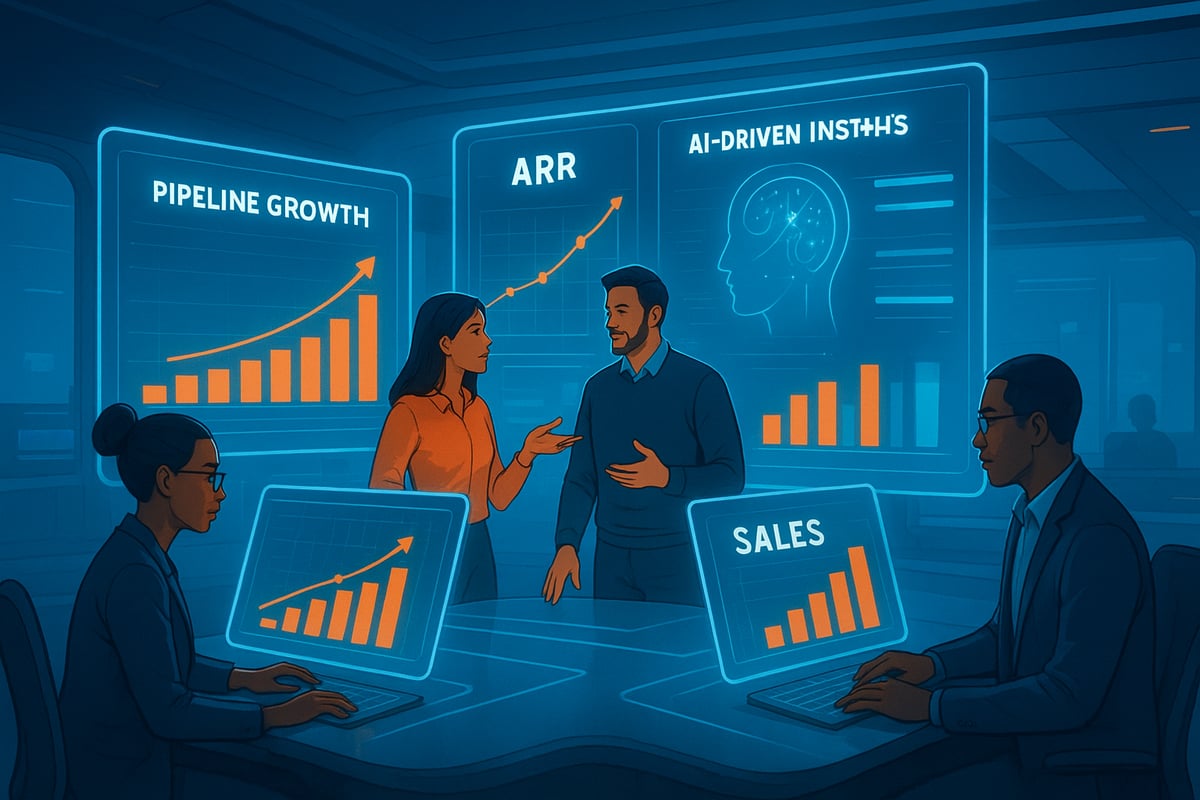
Why Alignment Between Product, Marketing, and Sales Drives Growth
When marketing and product teams operate in silos, growth stalls and confusion reigns. Disconnected goals lead to mixed messaging, off-target campaigns, and lost deals. Unified go-to-market functions break these barriers, aligning everyone on customer needs and revenue goals.
Consider these measurable outcomes:
- Companies with unified GTM see 25 to 60 percent pipeline growth.
- SaaS organizations with strong alignment experience 36 percent higher customer retention.
Operational dashboards are key, letting leaders track shared metrics in real time. For practical guidance, explore these growth marketing strategy tips to see how alignment delivers results. When marketing and product teams join forces with sales, the business moves faster, and wins more often.
Frameworks for Cross-Functional Execution
Building a unified GTM function starts with a clear framework. Begin with deep market research, then craft messaging and positioning that all teams buy into. Launches succeed when cross-functional enablement playbooks guide both marketing and product.
Here's a proven approach:
- Shared objectives set the tone for collaboration.
- Regular cross-team reviews keep everyone accountable.
- Enablement playbooks ensure every team member is ready for launch.
Picture launching a new B2B SaaS feature: marketing primes the market, product provides the expertise, and sales closes with confidence. This synchronized approach boosts ARR, accelerates sales velocity, and keeps customers engaged. Unified execution isn't just a framework—it's the foundation of modern SaaS growth.
Leveraging AI and Agentic Automation for Competitive Advantage
The landscape for marketing and product teams is transforming as Agentic AI takes center stage. In 2026, companies that harness AI not just for simple automation, but for orchestrating multi-step, decision-driven workflows, are finding new ways to outpace the competition. Imagine a world where campaign launches, customer feedback analysis, and product iteration happen almost seamlessly. Agentic AI is making this possible, and those who adapt early are reaping the rewards.

Understanding Agentic AI in Marketing and Product
Agentic AI represents a leap forward for marketing and product leaders, going beyond traditional automation by making intelligent, goal-driven decisions across complex workflows. Unlike basic automation tools, Agentic Automation can manage campaign orchestration, personalize onboarding, and even close feedback loops in real time. By 2026, IDC forecasts that over 60% of leading SaaS firms will deploy Agentic AI for their go-to-market execution.
Consider how Agentic AI segments customers, triggers personalized product journeys, and automatically manages pipeline follow-up. For example, a B2B SaaS company might use Agentic AI to launch new features based on user behavior and feedback, streamlining both marketing and product updates. Integrating these systems with existing tech stacks is not without challenges, requiring careful planning and robust data infrastructure. For a deeper dive into how Agentic AI is reshaping marketing and product execution, see this Agentic AI in Marketing resource.
Implementing AI-Driven Workflows for GTM Success
Adopting AI-powered tools in marketing and product workflows starts with high-quality data and strong integration practices. Teams should map out workflows, select tools that fit their GTM needs, and align on shared objectives. Best practices include:
- Conducting data audits to ensure accuracy and consistency
- Integrating AI with CRM, analytics, and product platforms
- Training teams on change management and AI oversight
Examples abound, from AI-enabled lead scoring that boosts MQL-to-SQL conversion, to content personalization that lifts engagement, and product analytics that surface usage trends. Companies see measurable results: faster pipeline velocity, reduced CAC, and higher NPS. Yet, while Agentic AI can transform marketing and product operations, human oversight remains critical to avoid errors and maintain customer trust.
Data-Driven Product Development and Customer Centricity
Harnessing actionable data is now the engine behind every successful marketing and product team. In fast-moving SaaS markets, the difference between winning and lagging often comes down to how well you capture, analyze, and act on user insights.

Data-Driven Product Development
Modern marketing and product strategies depend on real-time analytics. Teams use product usage data, customer interviews, and market trend analysis to prioritize features that keep users engaged and drive expansion.
For example, a SaaS company noticed a spike in churn among mid-size clients. By digging into cohort analysis and NPS feedback, they discovered an onboarding gap. Rapidly iterating a new onboarding flow, they saw retention jump by 15 percent. According to McKinsey, data-driven product development leads to twice as fast time-to-market.
Core methods include:
- Automated user behavior tracking and segmentation
- AI-powered feedback analysis
- Continuous A/B testing and rapid prototyping
For actionable frameworks, see this Product marketing strategy guide.
Customer Centricity in Action
Unifying marketing and product with a customer-centric mindset means integrating feedback loops across all touchpoints. Teams share NPS results, churn analytics, and product adoption metrics to inform both roadmap and go-to-market campaigns.
Key tools and tactics:
- Centralized dashboards for cross-team data sharing
- Agentic AI for real-time customer segmentation
- Automated triggers for personalized outreach and support
This approach transforms marketing and product from siloed functions into a unified growth engine. By relentlessly focusing on customer needs and leveraging data, SaaS leaders not only improve retention but also unlock new revenue streams.
Measuring Success: Metrics That Matter for ARR and Pipeline Growth
Success in the 2026 landscape demands that marketing and product teams measure what truly drives growth. Instead of tracking vanity metrics, leaders focus on indicators tied directly to ARR and pipeline. This shift enables teams to link every campaign, launch, and enablement effort to real revenue impact.
Here are the essential metrics every SaaS business should monitor:
| Metric | What It Measures | Why It Matters |
|---|---|---|
| ARR | Annual recurring revenue | Core indicator of predictable growth |
| Pipeline Velocity | Speed of deals through the funnel | Reveals sales execution strength |
| CAC | Customer acquisition cost | Assesses go-to-market efficiency |
| LTV | Lifetime value of a customer | Guides retention and expansion |
| Retention Rate | % of customers retained | Measures product-market fit |
| Product Adoption Rate | How quickly users embrace features | Signals product value |
| Sales Cycle Length | Time to close a deal | Impacts forecasting and cash flow |
Operational dashboards bring these metrics together, providing a unified view of marketing and product performance. For example, a dashboard might show lead sources, conversion rates, and expansion revenue in real time. According to SaaStr, SaaS companies using real-time analytics grow ARR 30% faster.
Best practices include:
- Linking every marketing and product activity to revenue outcomes
- Holding quarterly business reviews to optimize based on data
- Avoiding common pitfalls such as siloed reporting and tracking metrics that lack actionable insights
For a deeper dive into which metrics drive sustainable SaaS growth, explore SaaS growth and metrics insights.
Future-Proofing Your Marketing and Product Strategy for 2026 and Beyond
Rapid change is the new normal, and future-proofing your marketing and product strategy is essential for sustainable growth. As AI, Agentic Automation, privacy regulations, and empowered customers reshape the B2B SaaS landscape, adaptability becomes your greatest asset.
Emerging trends to watch in 2026:
- AI/Agentic AI evolution: AI is moving from experimental pilots to core operational engines in marketing and product, as detailed in AI Maturity: From Pilots to Operational Engines.
- Privacy regulations: Stricter data laws demand transparent, ethical data practices and customer-centric experiences.
- Customer empowerment: Buyers expect seamless, personalized journeys and rapid value realization.
- Agentic Automation: Integrated, cross-functional automation drives faster GTM execution.
To stay ahead, build GTM frameworks that scale and adapt. Regularly upskill teams across marketing and product, fostering a culture of experimentation and learning.
Test new technologies in low-risk environments and use scenario planning to anticipate disruptions. For example, some SaaS leaders quickly pivoted to AI-driven onboarding tools during market shifts, capturing new pipeline opportunities.
A future-ready strategy relies on continuous iteration, open feedback, and cross-functional collaboration, ensuring your marketing and product approach evolves with the market.
As you think about everything we’ve covered—aligning your teams, harnessing AI, letting data guide your product roadmap—imagine what your startup could achieve with all those pieces working in harmony. I’ve seen founders go from scattered, siloed efforts to unified, high-velocity growth by making just a few strategic shifts. It’s not just about adopting new tools; it’s about changing how you think about growth itself. If you’re ready to take the next step, let’s connect and talk through your unique challenges and ambitions. You can Book Your Personal Intro Call and we’ll start building your roadmap to success together.

Latest From
The Blog
Go To Market Strategy Consulting Guide For 2025 Success

Go To Market Strategy McKinsey Guide For Success 2025
.jpg)
Crossing the Enterprise Chasm: A Practical Guide to Sales-Led Growth (SLG)

Let's Build The Future Together
