

The Ultimate Guide to Marketing Leadership in 2025

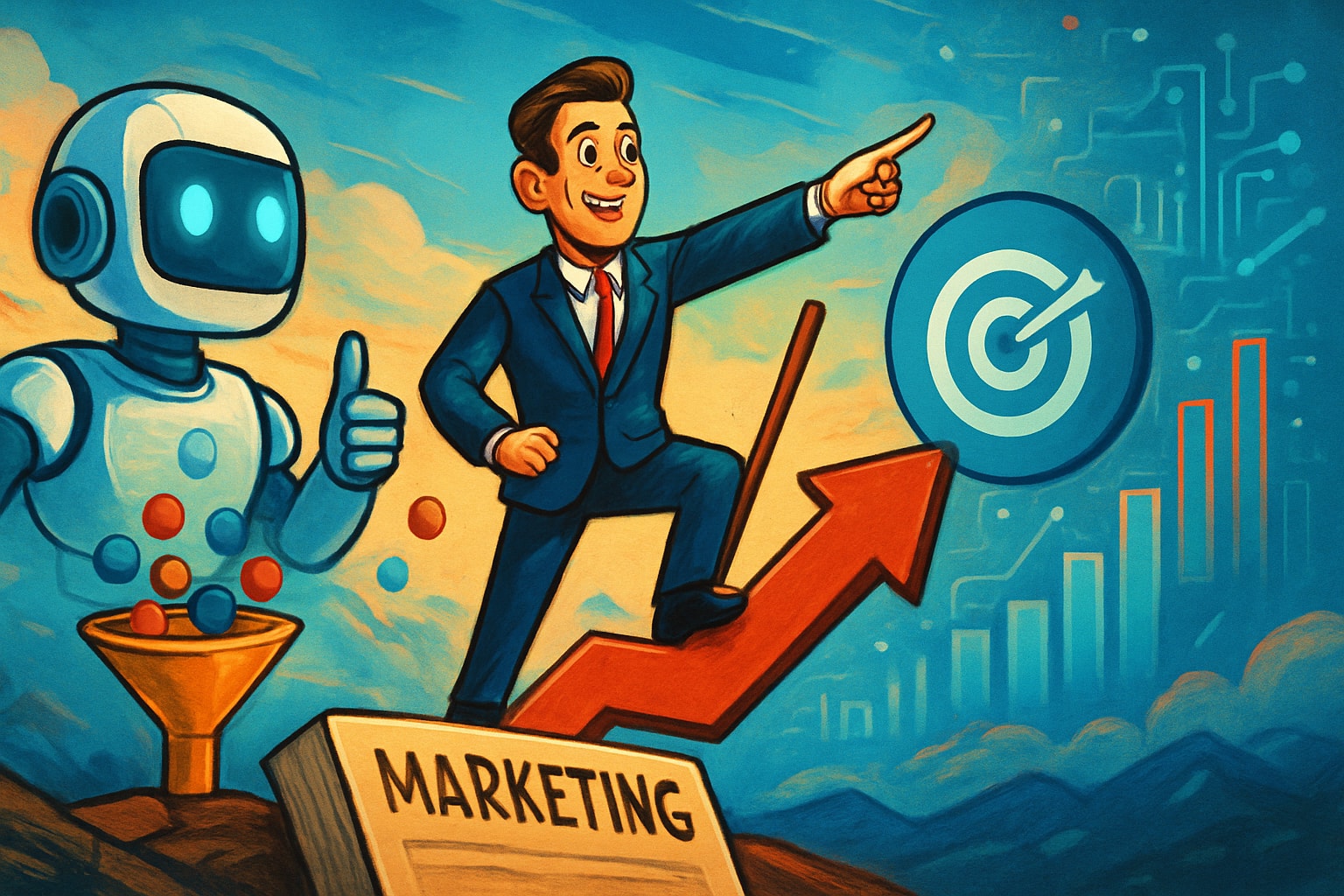


The pace of change in enterprise marketing is accelerating. In 2025, AI, data integration, and digital transformation are challenging every leader to rethink their approach.
Modern marketing leadership is no longer just about technical skills. Today, it demands a holistic mindset, cross-functional collaboration, and the ability to drive measurable growth at scale.
This guide is your roadmap to leading in this new era. Here’s what you’ll discover:
- How leadership roles are evolving beyond traditional boundaries
- Strategies for bridging organizational gaps and aligning product, marketing, and revenue teams
- The rise of Agentic AI and its impact on enterprise growth
- Actionable frameworks tailored for B2B SaaS and enterprise marketers
If you want to future-proof your organization and drive lasting results, dive in. The new era of marketing leadership starts now.
The Evolving Role of Marketing Leadership in 2025
In 2025, marketing leadership is at a turning point. Gone are the days when technical know-how alone drove impact. Today, only 15% of a CMO’s influence comes from technical skills, while a staggering 55% is rooted in leadership ability, according to Thomas Barta. This evolution means leaders must transcend the confines of campaign management and instead become architects of growth, orchestrating cross-functional teams to drive measurable outcomes.
The expectations for marketing leadership have never been higher. Enterprise and SaaS companies are seeing the rise of Chief Growth Officer and hybrid CMO/CRO roles, reflecting the demand for leaders who can unify product, marketing, and sales into a single growth engine. Navigating modern organizations requires bridging the Trust Gap, Power Gap, and Skills Gap, each of which can stall progress if left unaddressed.
Consider Guinness during the pandemic. Facing a crisis, their leadership focused on aligning customer needs with company objectives, leading to a record-breaking recovery. This approach exemplifies the Value Creation Zone, where strategic alignment between customer value and business goals sparks sustainable growth.
AI is now a defining pillar of marketing leadership. With rapid adoption of agentic automation, leaders are expected to champion data-driven decision-making. They must foster adaptability, resilience, and a culture of continuous learning. Those who master these competencies will unlock the full potential of unified growth functions. For a deeper dive into how this alignment drives enterprise success, see Aligning product, marketing, and sales.
- Key leadership traits for 2025:
- Adaptability to technological change
- Cross-functional collaboration
- Strategic vision and execution
- Commitment to measurable value creation
Marketing leadership in 2025 is defined by the ability to break silos, leverage AI, and inspire teams to thrive amid constant change.

Bridging Product, Marketing, and Sales: The Unified Growth Function
In the high-stakes world of enterprise software, silos are the silent killers of sustainable growth. When product, marketing, and sales teams operate in isolation, the result is a maze of disconnected KPIs and missed opportunities. Marketing leadership is no longer about managing campaigns in a vacuum. Instead, it’s about orchestrating a unified growth function that delivers predictable, pipeline-driven results.
Imagine three teams rowing in different directions. Revenue stalls, customer experience suffers, and market share slips away. SiriusDecisions found that companies with strong alignment achieve up to 208% higher marketing revenue contribution. That’s not a nice-to-have, it’s a must for B2B SaaS success.
How do you build this unified force?
- Establish shared KPIs focused on pipeline and ARR, not vanity metrics.
- Map the customer journey together, identifying friction and opportunity at every touchpoint.
- Enable cross-functional teams with regular joint planning, feedback, and rapid iteration.
Let’s look at PlayStation’s rise. Internal advocacy, clear communication, and relentless alignment between product and marketing teams powered their launch into a new growth era. The lesson? Advocacy and collaboration aren’t just buzzwords, they’re growth levers.
Agentic AI is now amplifying this transformation. In B2B SaaS, leading companies are deploying agentic automation to connect product signals, marketing intent, and sales actions in real time. This isn’t theory—it’s how organizations reduce CAC, accelerate pipeline velocity, and adapt instantly to market changes.
For actionable frameworks that bring product, marketing, and sales into lockstep, explore B2B SaaS lead generation frameworks. These strategies make alignment measurable, repeatable, and scalable.
Operational dashboards play a crucial role. They tie every activity, from product launches to outbound campaigns, directly to pipeline and ARR. With marketing leadership at the helm as growth architect, teams can break through cultural resistance and legacy processes.
The path forward demands resilience, data fluency, and a willingness to challenge the status quo. When alignment happens, growth is not just expected—it’s engineered.

Agentic AI and Automation: The New Frontier for Marketing Leaders
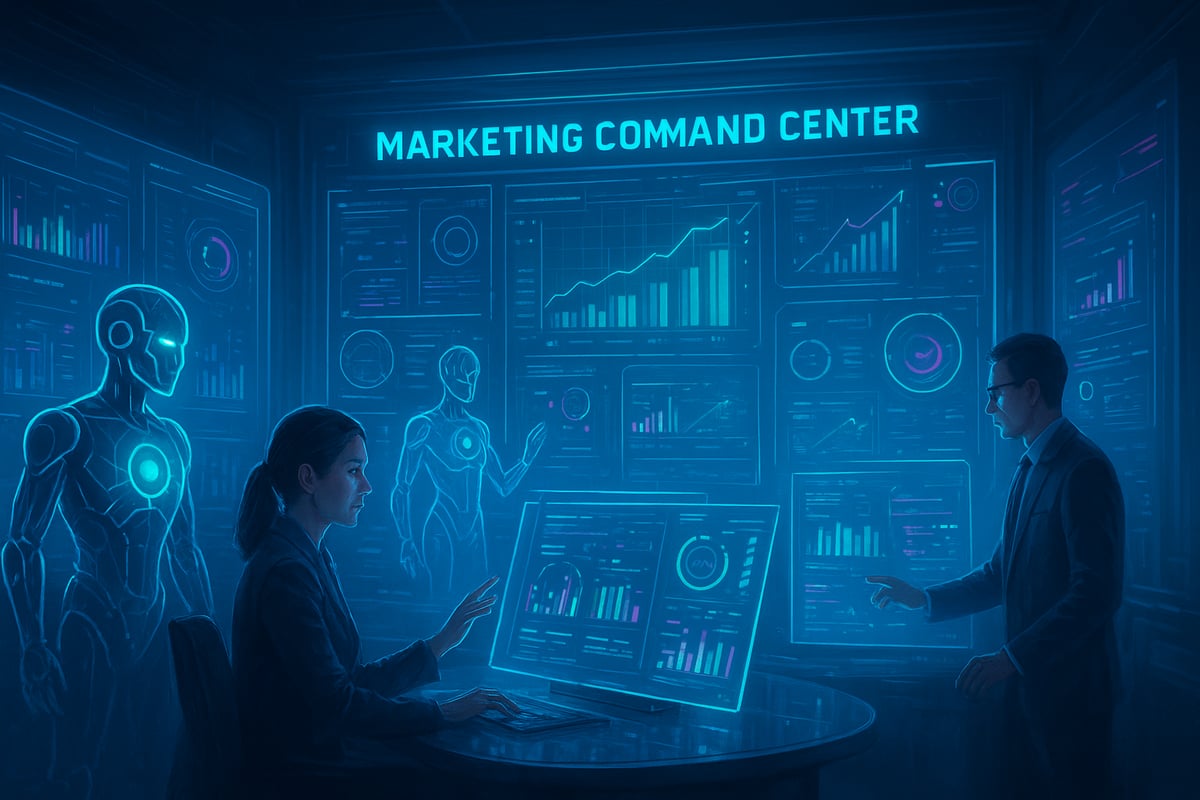
The next era of marketing leadership is being shaped by Agentic AI, a technology that is rewriting the rules for how teams operate, drive growth, and deliver measurable impact. In 2025, mastering this frontier is not optional—it is essential for B2B SaaS and enterprise leaders aiming to stay ahead.
Understanding Agentic AI and Its Impact
Agentic AI refers to autonomous, goal-driven systems that can optimize campaigns, generate content, and engage customers with minimal human intervention. For marketing leadership, this means shifting from manual orchestration to a future where AI acts as a strategic partner, continuously learning and adapting in real time.
According to Gartner, 61% of CMOs now cite AI as the primary driver of marketing transformation in 2025. Agentic AI automates tasks across the pipeline, from campaign management to personalized customer journeys. For example, B2B SaaS firms leveraging Agentic AI have reported up to 30% lower customer acquisition costs and faster pipeline velocity.
Key use cases include:
- Automated lead scoring that adapts to buyer intent signals
- Predictive content creation tailored to each segment
- Dynamic audience segmentation based on real-time data
- Campaign optimization with continuous feedback loops
However, the rise of Agentic AI brings new risks. Leaders must ensure transparency, robust data privacy, and ethical deployment of these systems. Governance frameworks are critical to maintain trust and avoid unintended consequences. For a deeper dive into the definition, benefits, and risks, see Agentic AI in Marketing: Definition, Benefits & Risks.
To maximize ROI, marketing leadership must invest in upskilling teams to collaborate effectively with AI agents. This includes:
- Developing AI fluency across all functions
- Fostering a culture of experimentation and learning
- Building cross-functional squads that blend human and AI strengths
Looking ahead, Agentic AI is set to become a foundational pillar of enterprise marketing leadership. Those who adapt quickly will unlock new levels of growth, efficiency, and customer relevance.
Leading Upwards, Sideways, and Teams: 360° Influence for Enterprise Growth
Modern marketing leadership is about more than managing campaigns. It requires influence in every direction, driving growth from the boardroom to the front lines. Leaders must master upward, sideways, and team-focused strategies to thrive in the enterprise landscape.

Leading Upwards: Boardroom Alignment
Effective marketing leadership starts with aligning the boardroom. Only 46% of CEOs feel marketing is in sync with company vision, making executive buy-in essential.
Bring customer insights directly to the C-suite. Use real-time data and clear ROI metrics to earn trust. Share stories of market wins and losses to humanize analytics.
- Present pipeline impact, not just campaign stats.
- Connect marketing investments to ARR and strategic growth.
- Translate customer feedback into actionable boardroom recommendations.
Alignment at the top accelerates decision-making and resource support for go-to-market strategy.
Leading Sideways: Cross-Departmental Mobilization
Break down silos by building coalitions across product, sales, and customer success. Marketing leadership depends on trust and influence, not just authority.
Walk the halls, whether virtually or in person. Share successes and challenges openly with peers. Use internal storytelling to rally teams around shared objectives.
- Map the unified customer journey together.
- Set shared KPIs with sales and product leaders.
- Host cross-functional sprints to solve pipeline bottlenecks.
This approach turns alignment into action, driving measurable revenue outcomes.
Leading Teams: Building High-Performance, AI-Augmented Teams
High-performing teams are the backbone of modern marketing leadership. Foster a culture of curiosity, experimentation, and psychological safety. Upskill teams for AI fluency and technical marketing.
SaaS teams that embrace cross-functional collaboration have seen up to 300% lead growth. For detailed strategies, explore Building high-performance marketing teams.
- Encourage rapid testing and learning from failure.
- Integrate Agentic AI to optimize workflows and personalization.
- Celebrate wins and reinforce a shared vision.
Empowered teams multiply the impact of marketing leadership across the organization.
Leading Self: Resilience and Continuous Growth
Personal leadership fuels enterprise transformation. Anchor your work in a clear sense of purpose. Adapt quickly, balancing long-term vision with hands-on execution.
Prioritize resilience by seeking feedback, learning from setbacks, and adjusting course. Nurture continuous growth to stay ahead in a rapidly changing B2B SaaS landscape.
A growth mindset ensures that leaders remain agile, inspiring teams and driving sustainable enterprise growth.
Data-Driven Decision Making and Measurable Outcomes
In today's enterprise landscape, marketing leadership hinges on a relentless commitment to data-driven decision making. Real-time analytics and closed-loop reporting are not just nice-to-haves—they are the backbone of predictable growth in B2B SaaS.
Operational dashboards are essential. They let marketing leaders connect every campaign and tactic directly to pipeline growth and ARR. For example, SaaS teams that map activities to metrics like CAC and LTV consistently accelerate product-market fit and expansion.
Here are the key metrics defining success in 2025:
| Metric | Why It Matters |
|---|---|
| CAC | Tracks efficiency of acquisition spend |
| LTV | Measures long-term revenue per customer |
| Pipeline Velocity | Gauges speed of deals through the funnel |
| Attribution Models | Links specific actions to revenue outcomes |
AI-driven insights are transforming how marketing leadership optimizes campaigns and sales enablement. By focusing on actionable data, not vanity metrics, leaders avoid analysis paralysis and drive real business outcomes.
For a deeper dive into data-driven marketing strategies, explore how analytics can align product, sales, and marketing for measurable impact.
Ultimately, marketing operations play a critical role in scaling measurement and accountability. The future belongs to marketing leadership teams who make every decision count—and can prove it.
Future-Proofing Your Marketing Leadership: Skills, Culture, and Professional Development
Staying ahead in marketing leadership means committing to continuous learning, especially as AI and go-to-market strategies rapidly evolve. Leaders must not only master MarTech and GTM trends but also foster cultures where innovation thrives across diverse, inclusive teams.
To future-proof your marketing leadership, focus on these pillars:
- AI and Agentic Automation Upskilling: Invest in programs that teach your teams how to collaborate with autonomous systems. Explore resources like Agentic AI in Marketing Explained to understand how AI shapes customer journeys and campaign impact.
- Succession Planning: Regularly mentor high-potential talent and create pathways for advancement.
- Peer Learning and Networking: Encourage team members to share insights and connect with industry peers.
- Risk-Taking and Learning from Failure: Normalize experimentation and turn setbacks into strategic pivots.
Organizations prioritizing AI upskilling and GTM readiness see 25 percent faster time to market. Support psychological safety, celebrate wins, and set clear goals so your marketing leadership not only adapts, but leads the market.
If reading this guide has you thinking about how your own journey as a marketing leader is set to evolve, you’re not alone. We’ve seen firsthand how aligning teams, embracing Agentic AI, and building a culture of resilience can turn a good company into a great one. Every founder, CMO, or CRO we’ve worked with has their own story—and their own unique challenges. If you’re ready to map out your next chapter and want a sounding board who’s been there, let’s connect.
Book Your Personal Intro Call
You don’t have to figure it all out on your own.

Latest From
The Blog
Go To Market Strategy Consulting Guide For 2025 Success

Go To Market Strategy McKinsey Guide For Success 2025
.jpg)
Crossing the Enterprise Chasm: A Practical Guide to Sales-Led Growth (SLG)

Let's Build The Future Together
