
SaaS Marketing Strategy Guide: Expert Insights for 2025

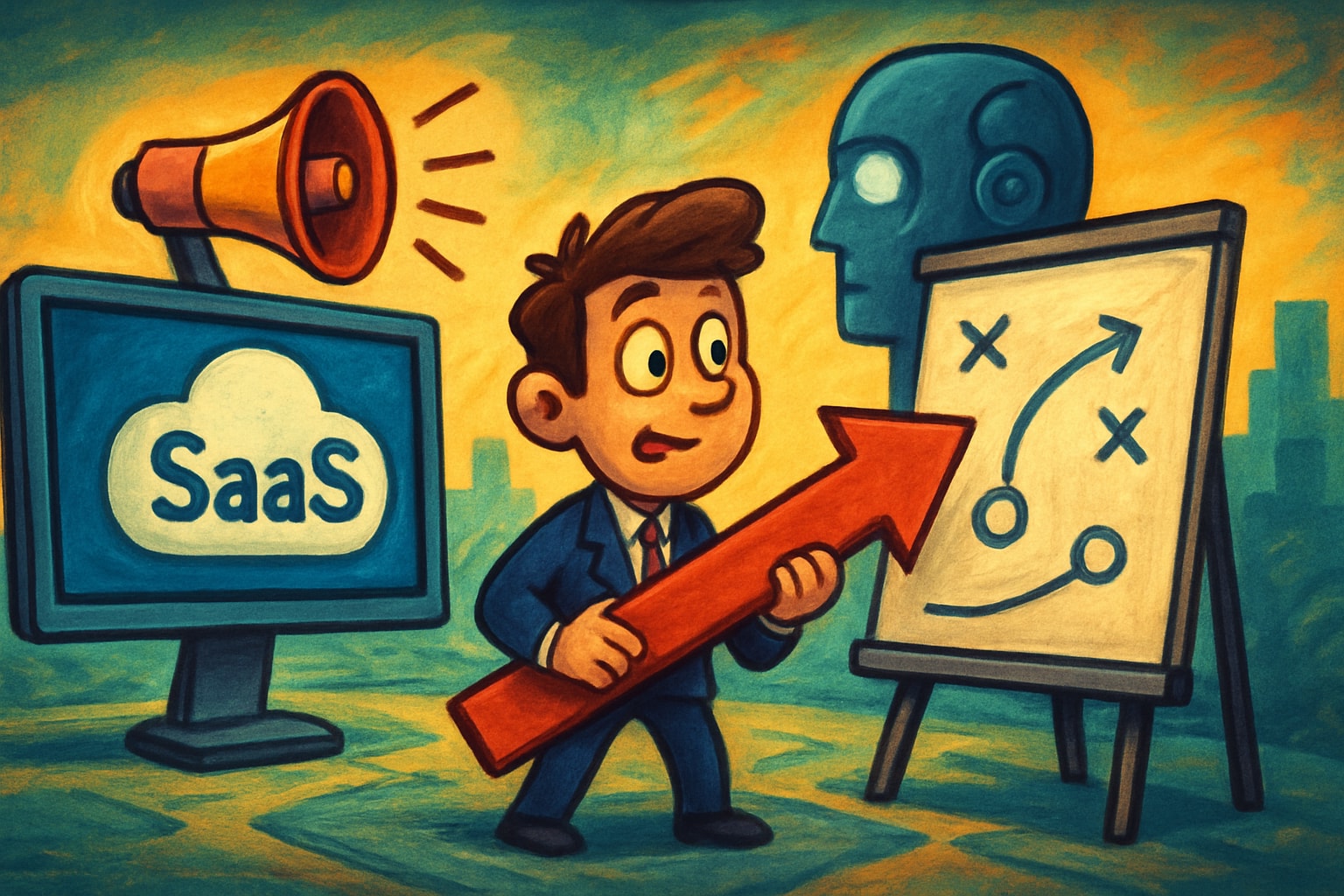


The SaaS landscape in 2025 is transforming faster than ever, fueled by the explosive rise of AI, agentic automation, and shifting buyer demands. Yet, many promising SaaS startups struggle or fail when their go-to-market teams operate in silos, missing the unified approach needed to drive real revenue.
To win, founders and revenue leaders must integrate product, marketing, and sales into one powerful growth engine. This guide offers expert-backed frameworks and proven tactics for building a scalable saas marketing strategy that grows ARR and pipeline.
Inside, you’ll find deep dives on market trends, GTM alignment, AI-powered automation, demand generation, metrics, and enterprise scaling. Get ready for actionable, data-driven insights that will help your SaaS business outperform in 2025.
SaaS Market Trends & Buyer Behavior in 2025
The SaaS market in 2025 is more competitive than ever, with ARR growth driving fierce innovation and the rise of specialized vertical SaaS platforms. According to recent research, the SaaS market is projected to hit $232 billion by 2025, underscoring the urgent need for an adaptive saas marketing strategy.
AI and Agentic Automation are now critical for product differentiation and scalable marketing. Leading platforms like Webflow have leveraged Agentic AI to personalize user experiences, while Zapier has streamlined self-serve onboarding and workflow automation to match evolving buyer journeys. These pioneers show how integrating automation into your saas marketing strategy can speed up sales cycles and unlock new sources of pipeline growth.
Buyer behavior is also shifting. Over 75% of B2B buyers prefer to self-educate digitally before talking to sales, seeking value-driven, consensus-based decisions. To succeed, SaaS teams must adopt agile GTM strategies, anticipate buyer needs, and embed automation at every funnel stage. The winners in 2025 will be those who evolve faster, align product and marketing, and use automation to deliver measurable outcomes.
Building a Unified Go-to-Market (GTM) Strategy
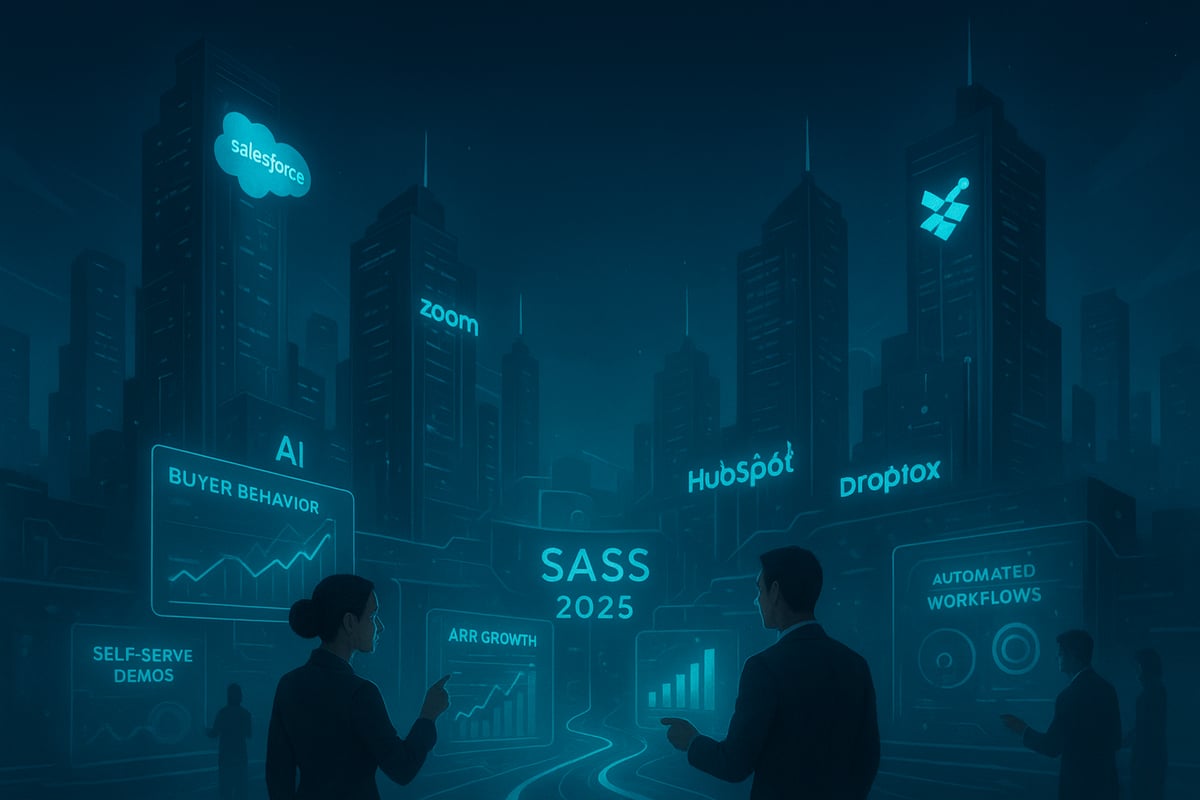
In the fast-paced world of B2B SaaS, a successful saas marketing strategy hinges on breaking down silos between product, marketing, and sales. Too often, teams chase disconnected KPIs, leading to missed opportunities and stalled growth.

Aligning Product, Marketing, and Sales for Growth
A unified GTM approach transforms these separate functions into a single growth engine. By aligning product, marketing, and sales under one vision, SaaS companies boost collaboration and accountability.
HubSpot’s journey offers a prime example. When they tore down departmental walls, shared OKRs and revenue dashboards became the norm. As a result, pipeline velocity increased by over 30 percent, and ARR accelerated dramatically.
Agentic AI now plays a pivotal role, automating cross-team workflows and surfacing real-time insights. This empowers teams to adapt quickly, ensuring that the saas marketing strategy remains agile and data-driven.
Frameworks and Leadership
Cross-functional alignment starts with the right frameworks:
- Shared OKRs: Set common objectives across teams.
- Revenue Dashboards: Visualize progress toward pipeline and ARR goals.
- Pipeline Attribution: Attribute wins accurately to joint efforts.
Leadership is crucial. CMOs, CGOs, and CROs must drive unified planning and regular GTM reviews.
Practical steps include:
- Joint planning sessions every quarter
- Consistent enablement resources for all teams
- Real-time feedback loops to adapt quickly
According to SaaS growth strategies, companies with unified GTM teams consistently outperform siloed competitors, scaling from product-market fit to enterprise growth with measurable results.
A truly unified saas marketing strategy is the foundation for sustainable ARR, rapid pipeline growth, and long-term market leadership.
Defining Your Ideal Customer Profile (ICP) & Market Positioning
Identifying your ideal customer profile is the first step in building a winning saas marketing strategy. Leading teams start by analyzing usage data, customer interviews, and feedback to spot high-LTV segments that drive the most value.
Precision matters. A well-defined ICP enables targeted messaging, personalized outreach, and focused resource allocation. To get it right, leverage proven frameworks like:
- Jobs-To-Be-Done interviews to uncover real pain points
- Value mapping to align product strengths with customer needs
- Competitive differentiation grids to position against rivals
For a deeper dive into these frameworks and best practices, explore this guide on product marketing strategy essentials.
Consider how ClickUp crafts use-case pages and tailored messaging for each vertical. This approach accelerates sales cycles and improves conversion rates.
In a crowded market of “me-too” SaaS solutions, clear and defensible positioning is crucial. Focused ICPs and strong positioning can raise win rates and lower CAC by up to 25 percent, according to recent SaaS benchmarks.
A modern saas marketing strategy that prioritizes ICP and positioning sets the foundation for scalable, revenue-driven growth.

Content, Demand Generation, and AI-Powered Distribution
A winning saas marketing strategy in 2025 starts with understanding the full customer journey. Content is no longer just about blogs, it is the fuel for awareness, activation, retention, and advocacy. Buyers expect value at every touchpoint, and leading SaaS brands are meeting those expectations with agile, AI-powered content engines.

Lifecycle Content Strategy & Agentic AI Integration
Each stage of the SaaS buyer journey demands its own content approach. Here’s how top brands map strategy to outcomes:
| Funnel Stage | Content Type | Example (2025) |
|---|---|---|
| Awareness | Use-case pages | Zapier’s integration hub |
| Activation | Product education | Semrush Academy |
| Retention | Case studies | Notion customer stories |
| Advocacy | Comparison pages | G2 reviews, webinars |
Modern SEO is foundational to any saas marketing strategy. Intent-based keyword research, topic clusters, and technical optimization ensure your content gets discovered by the right buyers. But in 2025, Agentic AI takes center stage. These autonomous systems now automate content production, personalize messaging for each segment, and distribute assets across channels at scale.
AI-driven chatbots nurture leads with tailored resources, while AI-powered content engines cut production time by 40% and boost engagement by 30%. For SaaS teams seeking pipeline growth, integrating B2B SaaS lead generation tactics with Agentic Automation delivers measurable results.
Ultimately, the most effective saas marketing strategy unites lifecycle content with intelligent automation. The outcome is scalable, high-impact demand generation that drives ARR, fuels pipeline, and keeps your brand ahead of the curve.
Revenue Operations: Measurement, Attribution, and Optimization
Revenue operations, or RevOps, is the backbone of any high-performing saas marketing strategy. In 2025, with GTM teams unified and Agentic AI driving automation, RevOps connects product, marketing, and sales into a single growth engine. This ensures every action is measured, attributed, and optimized for maximum revenue impact.
Key RevOps metrics that matter most for B2B SaaS include:
- Pipeline contribution
- Annual Recurring Revenue (ARR) growth
- CAC payback period
- LTV/CAC ratio
- Funnel conversion rates by stage
Modern RevOps relies on closed-loop attribution, linking every marketing and sales activity directly to pipeline and revenue. Real-time dashboards, such as those in HubSpot and Salesforce, surface actionable insights at every stage of your go-to-market motion. Agentic AI now automates reporting, cohort analysis, and predictive analytics, transforming how teams spot trends and optimize spend.
For example, leading SaaS organizations use RevOps to double down on high-ROI channels and eliminate wasted budget. To see how unified GTM and RevOps strategies drive measurable results, explore these go-to-market strategy examples.
Continuous improvement is vital. By running regular pipeline reviews, A/B testing new campaigns, and adapting quickly, your saas marketing strategy remains agile and effective. In 2025, the SaaS winners will be those who make data-driven decisions faster than the competition.
Scaling for Enterprise: GTM Playbooks, Enablement & International Expansion
Scaling a B2B SaaS business to the enterprise level means trading founder-led hustle for a rigorous, repeatable saas marketing strategy. The most successful teams implement robust GTM playbooks that standardize every stage of the customer journey.
These playbooks include:
- Sales enablement frameworks for onboarding new reps
- Objection handling scenarios tailored to ICPs
- Competitive positioning guides grounded in data
- Agentic AI automations that streamline pipeline management
Enterprise scaling demands more than just process. Onboarding and enablement must be continuous, with revenue teams trained to adapt as the market shifts. International expansion, especially into DACH or US markets, brings hurdles like localization, messaging, and complex regulatory requirements. For example, leading SaaS firms prioritize data privacy and compliance in SaaS to build trust and accelerate adoption abroad.
Companies like Hadean and xtype.io have shown that structured GTM execution, interim leadership, and a relentless focus on operational rigor can drive 300%+ lead growth. In 2025, a winning saas marketing strategy will blend automation with market expertise, ensuring scalable growth and measurable ARR impact.
If you’re reading this, chances are you’re already thinking about how to make your SaaS company stand out in 2025—maybe you’ve even tried aligning your teams or launching new campaigns, only to find the results falling short. I’ve seen founders and CMOs transform their businesses by shifting from siloed efforts to unified, data-driven growth strategies, just like we explored in this guide. If you’re ready to move beyond guesswork and start building predictable, scalable revenue, why not take the next step together? Book Your Personal Intro Call and let’s turn your strategy into real, measurable growth.

Latest From
The Blog
Go To Market Strategy Consulting Guide For 2025 Success

Go To Market Strategy McKinsey Guide For Success 2025
.jpg)
Crossing the Enterprise Chasm: A Practical Guide to Sales-Led Growth (SLG)

Let's Build The Future Together
