
SaaS Product Marketing Guide: Strategies for Success in 2026




Change is sweeping through the world of SaaS, and the pace is only accelerating. As 2026 approaches, leaders face new challenges where old playbooks no longer guarantee success. Customer expectations are rising, competitors are multiplying, and technology, especially AI, is reshaping every step of the journey.
This guide dives deep into the future of saas product marketing. Discover how unified go-to-market strategies, agentic AI, and data-driven execution can fuel B2B SaaS growth and revenue.
Ready to outpace the competition? Explore proven strategies and frameworks that will help your team lead the next wave of enterprise software innovation.
The Evolving SaaS Product Marketing Landscape in 2026
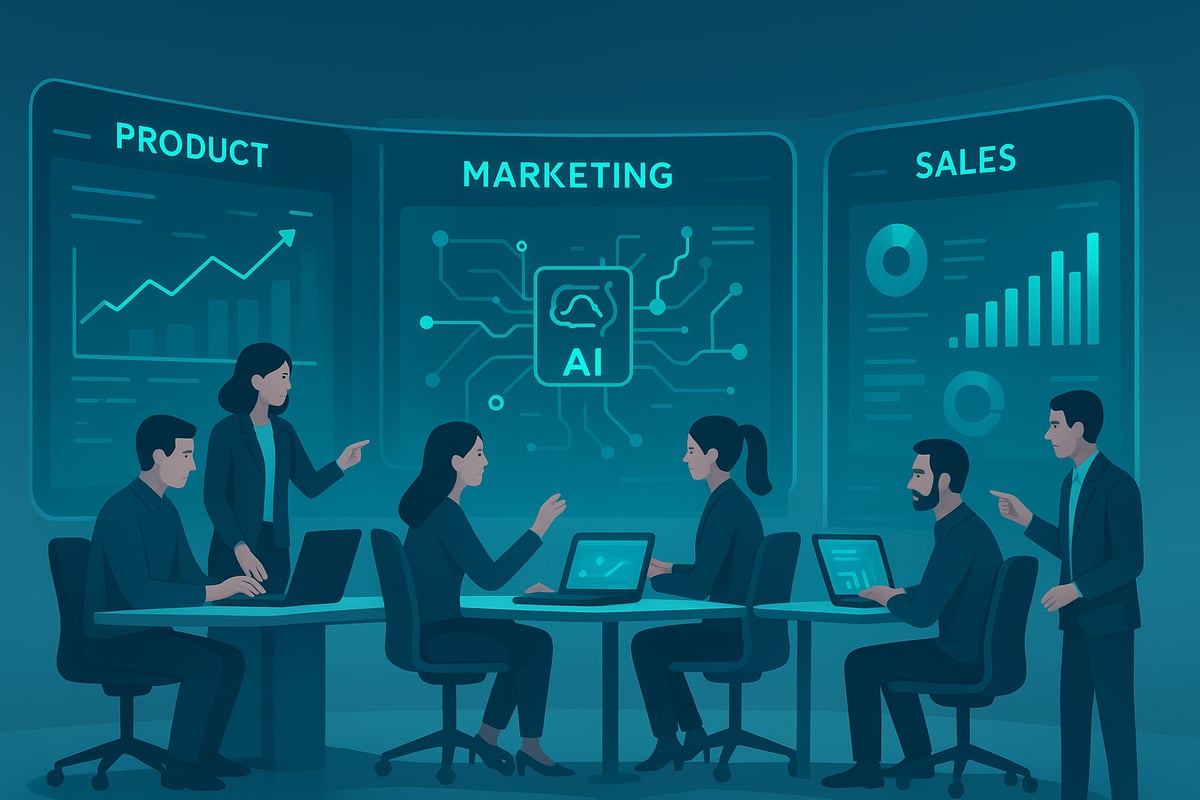
The world of saas product marketing is transforming rapidly as we approach 2026. Traditional tactics are giving way to unified go-to-market execution, where product, marketing, and sales teams operate as a single, coordinated growth engine.

- The SaaS market is expanding at an unprecedented pace, leading to more intense competition, shorter product cycles, and higher customer expectations.
- Companies are merging product-led and sales-led growth models, aiming for scalable revenue and rapid market adaptation.
- Marketing success is now measured by hard metrics like pipeline, annual recurring revenue (ARR), and retention—not vanity numbers.
- Agentic AI and automation are revolutionizing how teams engage customers, predict churn, and optimize every touchpoint.
In fact, 72% of SaaS leaders say that GTM alignment is the top driver of growth, according to Userpilot. Leading brands use AI-powered analytics to fine-tune their saas product marketing, driving both efficiency and measurable returns.
For a deeper dive into these shifts and how AI, automation, and unified teams are shaping the industry, see Top SaaS Trends to Watch in 2026.
To succeed in 2026, B2B SaaS companies must embrace a holistic, data-first approach—integrating advanced analytics and agentic automation at every stage of the marketing journey.
Building a Unified Go-To-Market (GTM) Strategy
A unified go-to-market strategy is now the backbone of high-performing saas product marketing. Without alignment, even the best products struggle to convert prospects into loyal customers. Imagine your product, marketing, and sales teams operating as one, each reinforcing the other, all driving toward faster revenue and market growth.
Why GTM Alignment Matters for SaaS Product Marketing
True GTM alignment breaks down silos. No more isolated messaging or missed handoffs. Instead, your teams map the buyer journey together, from awareness to customer expansion.
- Unified messaging ensures prospects get a consistent story, whether they are reading a blog, joining a webinar, or talking to sales.
- Cross-functional rituals, like weekly GTM syncs, keep everyone focused on shared goals.
- Measurable outcomes become the standard: pipeline growth, ARR, and retention, not just clicks or leads.
According to PMA, companies with unified GTM teams see 19% higher win rates. Leading B2B SaaS firms have achieved 30% faster time-to-revenue by aligning their GTM strategy. For a deep dive into best practices, explore Go-to-market team alignment.
Steps and Pitfalls in Unified GTM Execution
Start by mapping each stage of the buyer journey. Identify key touchpoints, then build a messaging and positioning framework that carries across every channel.
- Set revenue-centric KPIs for all GTM functions, from product to sales.
- Leverage operational dashboards to track progress and keep teams accountable.
- Use agentic AI for predictive analytics, helping prioritize high-impact activities.
However, beware of common pitfalls. Disconnected KPIs, lack of shared dashboards, and misaligned incentives can quickly derail even the best plans. The future of saas product marketing belongs to teams that operate as one growth engine, using data and AI to drive every decision.
Data-Driven Product Marketing Execution
Driving growth in 2026 means making every decision count. Modern saas product marketing is no longer guesswork, it’s a science powered by actionable data, real-time dashboards, and AI-driven insights. Teams that master this shift are the ones seeing measurable revenue impact.

Analytics and Dashboards: The New Marketing Engine
Every stage of the product marketing lifecycle, from awareness to expansion, is now mapped by data. High-performing SaaS teams rely on operational dashboards to track pipeline, ARR, and user engagement in real time.
- Set up dashboards that provide live snapshots of your growth levers.
- Use cohort analysis to monitor retention and feature adoption.
- Visualize funnel metrics to quickly identify drop-off points.
A leading SaaS company recently lifted trial-to-paid conversions by 25% after optimizing onboarding flows based on what their dashboards revealed.
Personalization, AI, and Experimentation
Segmentation and personalization are at the heart of modern saas product marketing. AI now enables teams to tailor messaging at scale, delivering the right content to the right persona at the right moment.
- Leverage AI to automate audience segmentation and campaign triggers.
- Run A/B tests on onboarding, activation, and feature launches.
- Use predictive analytics to anticipate churn and upsell opportunities.
According to Userpilot, 68% of SaaS marketers say actionable analytics is their biggest growth lever. For a deeper dive, explore this Data-driven marketing and positioning guide.
Revenue-Focused Execution: Metrics Over Vanity
In 2026, execution frameworks that tie marketing activity directly to revenue will outpace traditional, activity-based approaches.
- Prioritize metrics like pipeline contribution, ARR, and retention over clicks or shares.
- Build feedback loops between product, marketing, and sales for unified progress.
- Replace vanity metrics with outcome-based KPIs visible to all GTM teams.
The most successful organizations are leaving behind outdated reporting and embracing a culture that values impact above all.
Leveraging Agentic AI and Automation in SaaS Marketing
Agentic AI is transforming saas product marketing by enabling software to act autonomously, handling complex workflows that once required human intervention. This new wave of automation is not just about speed, it is about intelligence and adaptability. According to PMA, 60% of SaaS organizations are preparing to deploy Agentic AI for marketing by the end of 2026.

What Is Agentic AI?
Agentic AI refers to systems capable of making independent decisions and executing multi-step tasks across marketing and sales. Unlike traditional automation, Agentic AI continuously learns, adapts, and optimizes, making it a game changer for saas product marketing. Major players like AWS are investing in Agentic AI's Role in Enterprise Automation, signaling its growing importance for SaaS growth strategies.
Practical Applications for SaaS Product Marketing
SaaS teams now use Agentic AI to automate vital marketing and sales processes, including:
- Automated lead nurturing that adapts messaging based on real-time engagement
- Intelligent customer segmentation for hyper-personalized outreach
- In-product guidance that drives feature adoption and customer success
By embedding Agentic AI, companies streamline operations and create tailored experiences that directly impact pipeline and ARR.
Integrating Agentic AI with GTM Execution
Forward-thinking SaaS companies are connecting Agentic AI with their go-to-market systems. For example, one enterprise SaaS provider integrated Agentic Automation to predict pipeline health and churn risk, ultimately reducing sales cycle times by 40%. This integration ensures that every step of the buyer journey is measurable and optimized, making saas product marketing more effective and accountable.
Best Practices for SaaS Teams
To maximize value, focus on:
- Ensuring transparency in AI-driven decisions
- Maintaining high data quality and clean training sets
- Keeping humans in the loop for oversight and strategic pivots
Agentic AI should amplify, not replace, your GTM teams' expertise and creativity.
The Competitive Edge of Early Adoption
Early adopters of Agentic AI gain a sustained competitive advantage. Continuous learning and adaptation allow SaaS teams to stay ahead, respond to market shifts, and accelerate revenue growth. In 2026, the winners will be those who harness Agentic AI to orchestrate seamless, data-driven saas product marketing.
Orchestrating Seamless Product, Marketing, and Sales Enablement
In the fast-paced world of saas product marketing, true growth comes when product, marketing, and sales teams move as one. Imagine a SaaS company where new sales reps are ramped up in half the usual time, equipped with unified messaging, and instantly able to translate product features into customer value. This is not a distant vision, but the reality for firms that prioritize enablement as a strategic function.
What Makes an Effective Enablement Playbook?
A robust enablement playbook sits at the heart of every high-performing saas product marketing operation. It bridges knowledge gaps and aligns teams for consistent execution. Key elements include:
- Unified product positioning and messaging mapped to the buyer journey
- Role-based training for both technical and non-technical team members
- Step-by-step onboarding guides that leverage AI-driven personalization
- Real-time access to sales collateral, competitive intel, and objection handling
- Clear KPIs tied directly to revenue and customer success
For a deeper dive into frameworks that power these playbooks, explore this product marketing strategy guide.
Dashboards, AI, and Continuous Upskilling
Operational dashboards turn enablement from a static event into a living process. Teams can monitor progress toward shared revenue goals, track activation rates, and surface insights from user engagement data. Agentic AI now plays a pivotal role, automating onboarding steps and surfacing personalized learning paths for team members.
Regular upskilling is essential. As automation and analytics tools evolve, so must your people. High-growth SaaS companies invest in ongoing training to ensure their teams can harness the latest in AI and Agentic Automation, driving measurable impact on pipeline and ARR.
Enablement as an Ongoing Growth Engine
Enablement is not a one-off project. It is a continuous feedback loop, refining go-to-market strategies as the market shifts. 74% of high-growth SaaS firms now cite enablement as a key driver of ARR growth (Userpilot, 2025). By treating enablement as an active, evolving function, saas product marketing leaders create faster market feedback loops and accelerate both product adoption and revenue.
Measuring Success: Metrics and KPIs for 2026 SaaS Product Marketing
Success in saas product marketing in 2026 is defined by measurable outcomes. High-performing teams track the right mix of revenue, product, and marketing metrics to drive growth and stay aligned across product, marketing, and sales.
To capture the full impact of your go-to-market strategy, focus on these essential KPIs:
| Metric | What It Measures | Why It Matters |
|---|---|---|
| Pipeline Contribution | Leads and opportunities created | Direct revenue impact |
| ARR Impact | Annual recurring revenue growth | Business sustainability |
| CAC/LTV | Cost to acquire vs. customer value | Efficiency and profitability |
| Activation & Retention | User onboarding and loyalty | Product adoption and stickiness |
| SQLs & MQLs | Lead quality and conversion | Marketing performance |
| AI-Driven Metrics | Predictive scoring, churn risk | Proactive growth strategies |
Operational dashboards let teams visualize the journey from prospect to loyal customer. Unified KPIs across functions create transparency and double forecasting accuracy, as shown by Userpilot's 2025 data.
Embracing Agentic AI helps automate tracking and predictive analytics, so GTM teams can focus on action. For more insights on applying metrics to accelerate growth, explore these SaaS growth strategies.
Outcome-based measurement is now the gold standard. In today's saas product marketing landscape, dashboards and AI-driven insights empower teams to win faster and smarter.
We’ve covered a lot together—from embracing unified go to market strategies to letting agentic AI become your team’s silent superpower. I’ve seen firsthand how founders and SaaS leaders who break through the noise are the ones willing to adapt, align, and act on real data. If you’re ready to move beyond guesswork and want a partner who’s walked this path with countless startups, let’s chat. Your journey to repeatable, scalable growth doesn’t have to be a solo adventure. Book your own personal intro call with us today and let’s see how we can help you write your 2026 success story.
Book Your Personal Intro Call

Latest From
The Blog
Go To Market Strategy Consulting Guide For 2025 Success

Go To Market Strategy McKinsey Guide For Success 2025
.jpg)
Crossing the Enterprise Chasm: A Practical Guide to Sales-Led Growth (SLG)

Let's Build The Future Together
