
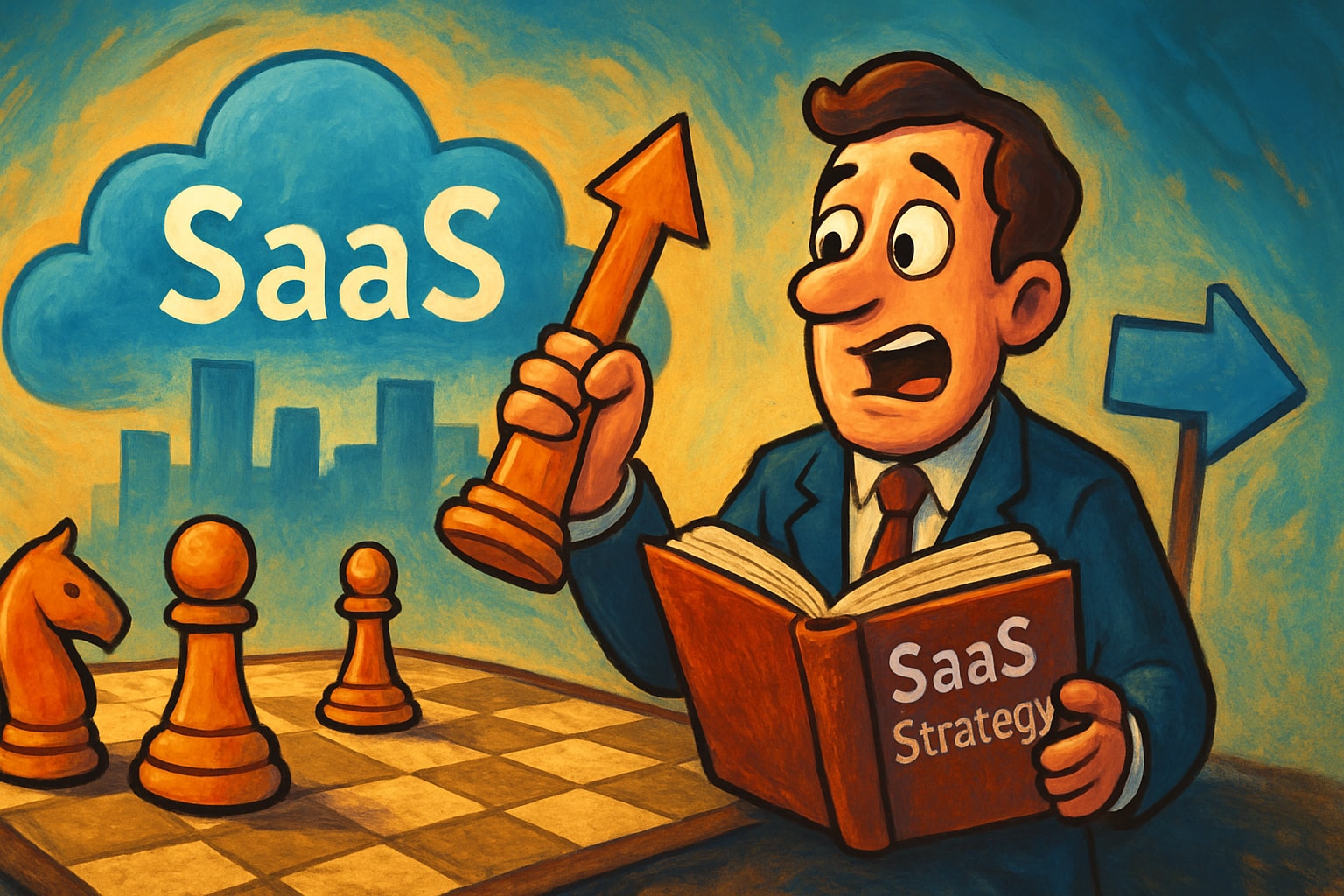
SaaS Strategy Guide: Essential Insights for 2025 Success



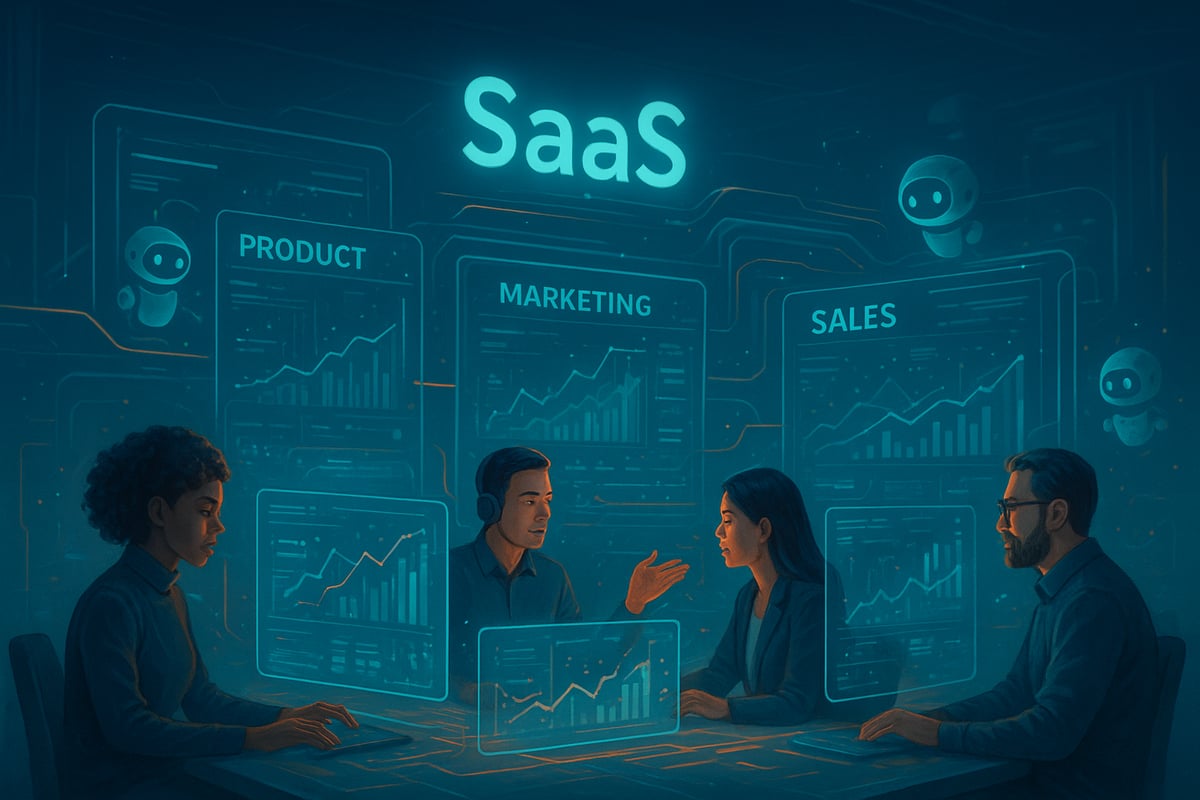
The SaaS world is moving faster than ever, leaving yesterday’s playbooks behind. In this shifting landscape, how can you ensure your company thrives?
Success in 2025 depends on a unified, data-driven saas strategy that brings product, marketing, and sales together. Teams that align around a single vision outpace competitors and create measurable growth.
This guide dives deep into the essentials: from AI-driven innovation and agentic automation to GTM alignment, revenue operations, and market positioning. You’ll find real examples, proven frameworks, and actionable steps.
Ready to outperform the competition? Let’s uncover the strategic clarity your saas strategy needs for the coming year.
The State of SaaS in 2025: Trends and Market Forces
The saas strategy landscape is undergoing a seismic shift in 2025. AI adoption, led by Agentic AI, is transforming how SaaS companies build, deliver, and optimize their products. Automation now drives everything from onboarding to customer support, giving rise to new workflows and smarter decision-making.
Key trends shaping the market:
- Agentic AI and Automation: SaaS platforms are embedding AI agents for autonomous task execution, workflow orchestration, and personalized experiences.
- Market Consolidation and Competition: Mergers and acquisitions are increasing, making sharper positioning and faster time to market essential for any saas strategy.
- Customer Expectations: Users now demand unified, seamless experiences across their entire SaaS stack, pushing vendors to deliver true integration.
- Growth Model Evolution: Product-led growth (PLG) continues to expand, often blended with sales-led (SLG) models for broader reach.
- Data Privacy and Security: Enterprises focus on compliance, privacy, and robust security as top buying criteria.
- Real-Time Analytics: Demand for actionable insights is rising, driving investment in analytics and feedback loops.
Success stories highlight these trends in action. Slack’s bottom-up approach continues to win over both startups and enterprises. HubSpot, known for its inbound engine, grew its customer base from 8,200 in 2012 to over 205,000 by 2023, proving the power of scalable, modern growth models.
For a deeper exploration of these trends and how to apply them, see SaaS growth strategies.

Building a Unified SaaS Growth Engine: Aligning Product, Marketing, and Sales
Achieving sustainable growth in SaaS depends on uniting product, marketing, and sales teams into a single, agile growth engine. Fragmented efforts slow down progress, while alignment fuels measurable outcomes and market leadership.
Why Alignment Matters for SaaS GTM Success
When teams operate in silos, customer experiences become inconsistent and revenue opportunities slip through the cracks. A unified saas strategy ensures everyone works toward the same goals, boosting speed to market and accountability.
Consider Slack, where product, marketing, and sales aligned around a bottom-up approach. This unity helped drive rapid user adoption, as every function contributed to a cohesive customer journey.
Frameworks for Cross-Functional Alignment
Operational frameworks are essential to maintain focus and consistency. Start by defining shared KPIs that tie directly to pipeline and ARR, not just surface metrics.
- Build real-time dashboards for transparency across all functions.
- Use enablement playbooks to standardize messaging and execution.
- Align on a single value proposition for the entire team.
Pipedrive’s sales-centric design is a strong example, enabling all departments to rally around one clear value. For deeper insights on orchestrating these efforts, explore product marketing strategy insights.
Data-Driven Execution and Feedback Loops
Data is the heartbeat of a modern saas strategy. Analytics platforms empower teams to test, learn, and iterate quickly. By connecting product usage data with marketing and sales campaigns, organizations close the loop and drive continuous improvement.
Loom’s viral growth, powered by analytics-informed product enhancements, proves the value of a feedback-driven culture. Unified data keeps every team accountable and responsive to real customer needs.
Harnessing AI and Agentic Automation for Competitive Advantage
AI is transforming the saas strategy landscape, giving companies new tools to automate, personalize, and scale their go-to-market efforts. As we step into 2025, Agentic AI stands out as a game-changer, enabling SaaS teams to operate with greater precision and speed.

The Rise of Agentic AI in SaaS
Agentic AI is redefining what’s possible with saas strategy by allowing software to execute tasks, orchestrate workflows, and make autonomous decisions. This shift is not just theoretical—companies like Amplitude are already using AI Agents to speed up analytics and product insights. The momentum is clear, with Anthropic's $3 Billion Revenue Milestone highlighting how AI-driven innovation is fueling SaaS growth at an unprecedented pace.
- AI agents handle onboarding and support
- Workflow orchestration reduces manual effort
- Rapid insights help product teams iterate faster
Practical Applications: From Personalization to Revenue Operations
Today’s most effective saas strategy leverages AI for both user experience and business operations. AI-driven segmentation enables hyper-personalized onboarding, while automated experimentation powers faster A/B testing and feature rollouts. Sales teams benefit from AI-powered lead scoring and predictive pipeline management, as seen with Userpilot’s contextual in-app prompts and adoption flows.
- Personalized onboarding journeys
- Automated experimentation and guidance
- Predictive analytics streamline sales enablement
Risks and Strategic Considerations
While Agentic AI unlocks new levels of efficiency, leaders must balance automation with human oversight. Black box decision-making can erode trust, so clear governance is crucial. Data privacy and compliance are top concerns, especially in enterprise SaaS. Teams will also need to upskill, adapting their workflows to maximize the benefits of AI-driven automation.
- Prioritize data governance and transparency
- Invest in team training and change management
- Ensure compliance with evolving regulations
Go-to-Market Strategy Steps for 2025: A Chronological Guide
Navigating a successful saas strategy in 2025 demands a precise, step-by-step approach. Each stage builds on the last, aligning product, marketing, and sales for unified growth. Let’s break down the essential GTM steps that drive pipeline, ARR, and lasting market impact.
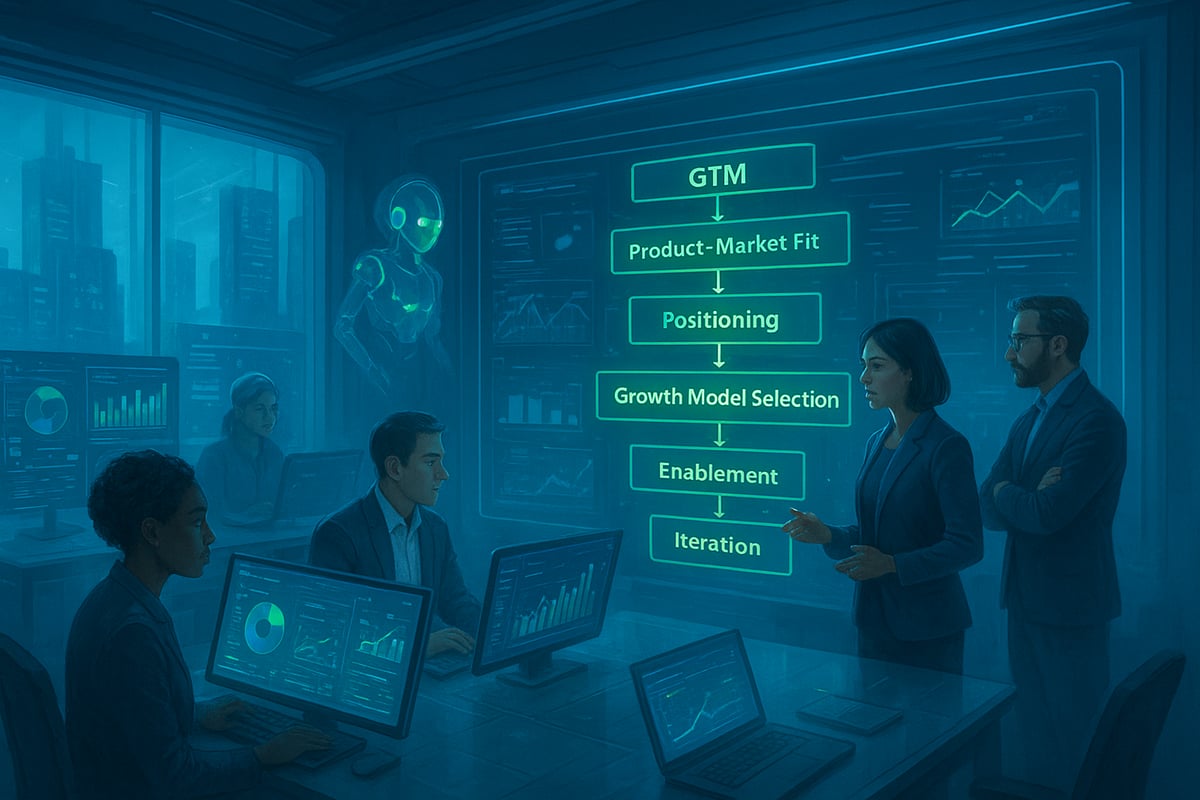
1. Define Product-Market Fit and Ideal Customer Profiles
Begin your saas strategy by validating product-market fit. Gather real customer feedback and usage data to confirm your solution solves a critical need. For example, Pipedrive’s focus on sales teams led to a product that resonated deeply with its primary users.
- Interview early adopters for honest insights
- Analyze usage patterns for feature adoption
- Adjust your ICP as new market data emerges
A strong foundation here accelerates every GTM move that follows.
2. Craft Differentiated Positioning and Messaging
Stand out by creating positioning that addresses distinct pain points in your chosen verticals. Use customer language in messaging for authenticity. Every piece of collateral, from website to sales deck, should reinforce your unique value.
- Map key differentiators against competitors
- Use proof points and customer stories
- Tailor messaging for each decision maker
HubSpot’s clarity around inbound marketing fueled its global expansion.
3. Select and Integrate Growth Models (PLG, SLG, Hybrid)
Choose the growth model that best aligns with your market and product strengths. Many leading companies blend product-led and sales-led tactics for maximum reach. Zoom’s freemium plus viral onboarding is a classic example.
- Evaluate PLG for self-serve adoption
- Use SLG for high-touch enterprise deals
- Consider hybrid models to unlock new segments
For more practical go-to-market strategy examples, explore proven approaches from top SaaS brands.
4. Build Data-Driven Enablement and Operational Playbooks
Operationalize your saas strategy with clear playbooks and real-time dashboards. Align marketing, sales, and product teams around shared KPIs. Enablement tools ensure everyone delivers a consistent experience.
- Develop onboarding and sales playbooks
- Set up dashboards for pipeline and retention
- Create feedback loops for rapid learning
This step is critical for maintaining alignment as you scale.
5. Launch, Measure, and Iterate Rapidly
Put your plan into action, then obsessively track performance. Use analytics to monitor activation, adoption, and retention. Iterate quickly based on what the data reveals.
- A/B test onboarding flows and pricing
- Gather NPS and user feedback at key touchpoints
- Refine GTM tactics to boost conversion
Slack’s explosive early growth was driven by real-time feedback and constant iteration. In 2025, the winning saas strategy is never static—it evolves with every user insight.
Revenue Operations: Driving Pipeline and ARR with Precision
Revenue operations is now the backbone of any effective saas strategy. By centralizing data, forecasting, and execution, SaaS companies can break down silos that often slow growth. When product, marketing, and sales work as one, measurable results follow.
Today’s leading SaaS organizations use AI and Agentic Automation to:
- Score leads and prioritize sales outreach with predictive accuracy
- Optimize funnel performance by surfacing real-time insights
- Predict churn and automate retention campaigns
For example, HubSpot’s unified CRM and marketing automation tools create a single source of truth. This empowers teams to track the full customer journey, from first touch to renewal, and measure ARR impact with precision.
According to 2025 SaaS Management Index Insights, companies with robust revenue operations see better financial outcomes, including up to 36% higher customer retention. Operational dashboards make it easy to spot trends and pivot quickly.
| Benefit | Impact on SaaS Growth |
|---|---|
| Unified data & forecasting | Faster GTM decisions |
| AI-driven automation | Improved pipeline efficiency |
| End-to-end visibility | Higher ARR and retention |
Focusing on lifecycle value, not just acquisition, helps SaaS teams build lasting customer relationships. As AI and automation evolve, revenue operations will remain central to any winning saas strategy.
Winning in 2025: Metrics, Measurement, and Continuous Optimization
Success in 2025 hinges on a relentless focus on measurement and optimization. Modern SaaS teams can no longer rely on old playbooks. Instead, they must build a culture where data, experimentation, and rapid iteration drive every decision. Winning SaaS strategy means knowing not just what to measure, but how to act on it.
| Key Metric | Why It Matters |
|---|---|
| Activation Rate | Reveals onboarding effectiveness and time-to-value for new users |
| Product Adoption | Tracks feature usage and signals depth of engagement |
| Retention | Indicates customer satisfaction and long-term value |
| Expansion Revenue | Measures upsell/cross-sell success and customer growth |
| ARR Growth | Shows overall business momentum and market traction |
Top-performing SaaS organizations use cohort analysis and segmentation to uncover actionable insights. By leveraging AI-powered analytics, teams can spot patterns, predict churn, and identify the next best actions faster than ever. Recent forecasts suggest that global AI adoption will drive IT spending beyond $5.4 trillion in 2025, underscoring the critical role of data-driven tools in modern SaaS strategy.
A culture of experimentation is vital. Companies like Userpilot run continuous A/B tests, gather in-app feedback, and use analytics to refine both product and go-to-market execution. This approach allows for rapid adaptation, ensuring that every tactic is aligned with evolving customer needs.
Ultimately, the best SaaS strategy is agile. Teams who build robust feedback loops and adapt quickly to market shifts outperform peers in growth and retention. In 2025, measurement is not just a practice—it is the competitive advantage.
As you reflect on the evolving SaaS landscape and the real stories of companies like Slack and HubSpot, you might be wondering how to translate these insights into action for your own business. Maybe you feel like your teams are running in different directions, or that your growth could be more predictable. That’s exactly where we come in. At GTM Consult, we’ve helped founders and revenue leaders like you move from product problem fit to enterprise growth with clarity and confidence. If you’re ready to align your product, marketing, and sales for measurable results in 2025, let’s talk—Book Your Personal Intro Call.

Latest From
The Blog
Go To Market Strategy Consulting Guide For 2025 Success

Go To Market Strategy McKinsey Guide For Success 2025
.jpg)
Crossing the Enterprise Chasm: A Practical Guide to Sales-Led Growth (SLG)

Let's Build The Future Together
