

GTM Leadership: Building Revenue Engines That Scale




Most B2B SaaS companies scaling past $10M ARR hit the same wall. Pipeline coverage drops below 3x, conversion rates stagnate, and regional expansion efforts fail to replicate success. The root cause isn't your product or market fit. It's the absence of genuine gtm leadership that can architect and execute a repeatable revenue engine. PE partners and boards recognize this gap immediately during diligence, yet founders often confuse hiring a VP of Sales or CMO with solving the leadership vacuum.
What Separates GTM Leadership From Functional Executives
Real gtm leadership operates across the entire revenue architecture, not within departmental silos. A CRO owns sales execution. A CMO drives demand generation. But gtm leadership orchestrates how these functions integrate with product, customer success, and data systems to create predictable outcomes.
Here's the distinction that matters:
- Functional leaders optimize their domain and hit quarterly targets
- GTM leaders design the operating system that connects strategy to execution across all revenue functions
- Functional leaders react to pipeline gaps with tactical campaigns
- GTM leaders build the feedback loops and metrics infrastructure that prevent gaps before they appear
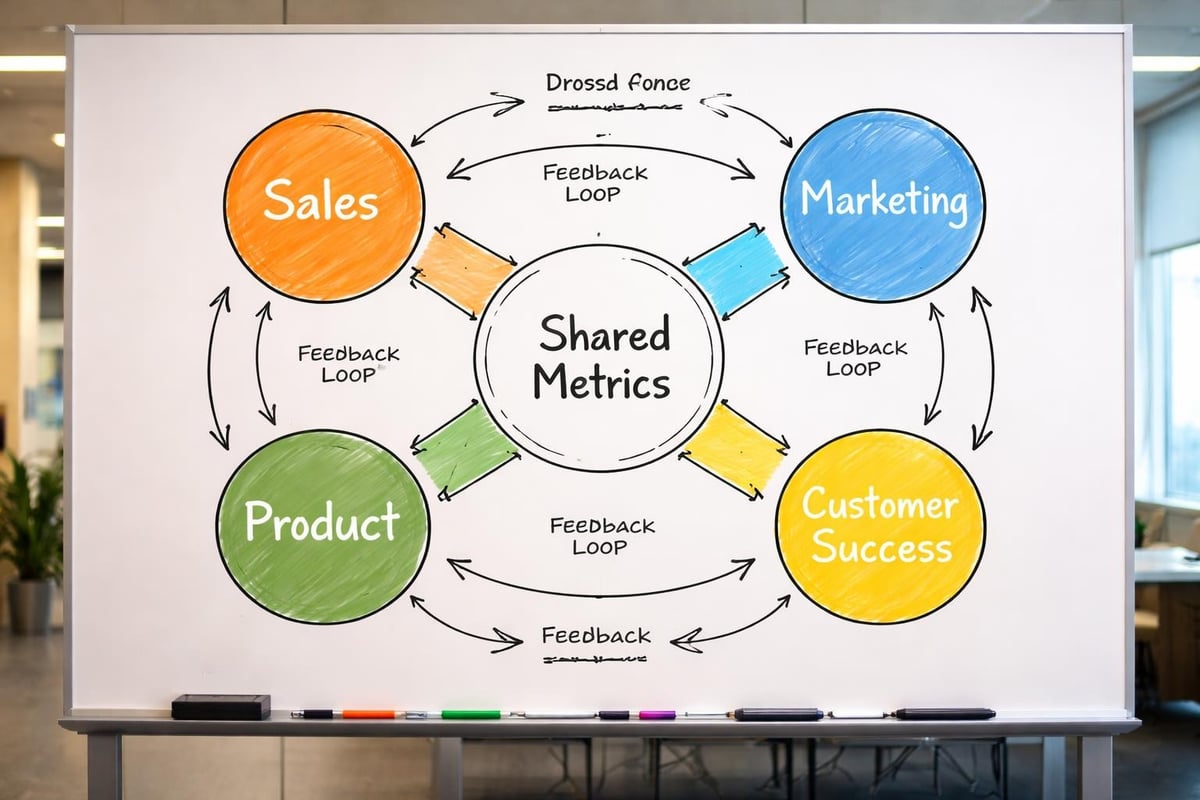
The companies achieving 3-5x pipeline coverage and conversion rates 20-40% above category benchmarks have leaders who understand this difference viscerally. They've built revenue engines in multiple markets and know which levers drive leverage versus which create theater.
The GTM Leadership Competency Stack
When PE firms or boards evaluate gtm leadership capabilities, they assess four non-negotiable competencies that separate operators from resume builders.
| Competency | What It Delivers | Measurement |
|---|---|---|
| Revenue Architecture | Integrated system design across acquisition, expansion, retention | Pipeline coverage ratio, CAC:LTV equilibrium |
| Cross-Regional Execution | Repeatable playbooks adapted for US, EMEA, DACH nuances | Time-to-productivity in new markets, regional conversion parity |
| Data-Driven Decision Frameworks | AI-enhanced metrics that predict rather than report | Forecast accuracy, leading indicator correlation |
| Team & Operating Rhythm | Execution discipline that compounds quarterly | Plan attainment consistency, cross-functional NPS |
Most interim executives bring one or two of these. Genuine gtm leadership delivers all four simultaneously because they understand the interdependencies. You can't scale DACH with US playbooks. You can't optimize CAC without aligning sales and marketing compensation. You can't forecast accurately without instrumentation that captures signal at every funnel stage.
The strategic vision required comes from pattern recognition across dozens of scaling scenarios, not theoretical frameworks taught in business school.
Building The GTM Operating System
At $3M ARR, you can power through with founder-led sales and scrappy marketing. By $15M, you need systems. By $30M, those systems either compound or collapse under their own complexity. This inflection point is where gtm leadership becomes existential.
The operating system includes five interconnected layers:
Market Segmentation & ICP Precision
Stop selling to "mid-market B2B." Define the specific firmographic, technographic, and behavioral signals that predict deal velocity and expansion potential. Your ICP should be precise enough that sales can disqualify 60% of inbound leads in under two minutes.
Unified Revenue Metrics
CAC, LTV, pipeline coverage, conversion rates, sales cycle length, NRR, logo retention. These aren't marketing metrics or sales metrics. They're business metrics that gtm leadership owns end-to-end. The trap is measuring these in isolation rather than as a connected system.
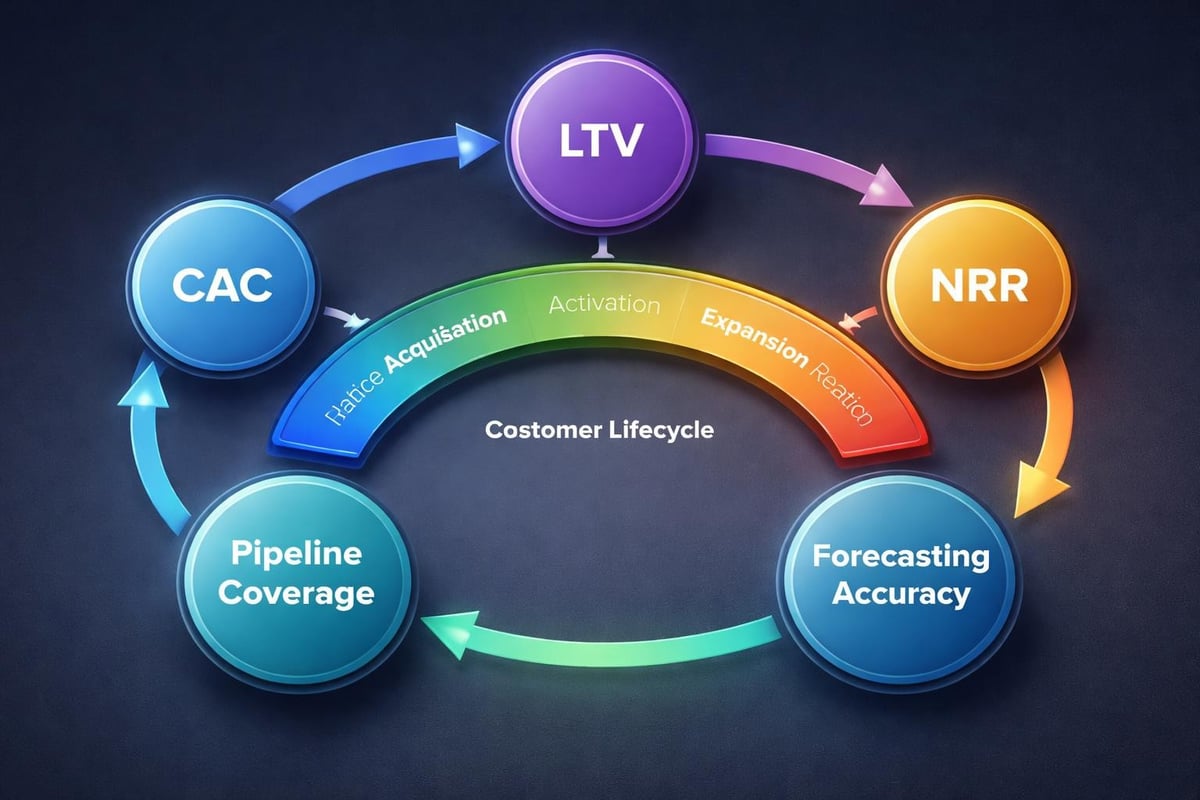
Build dashboards that show metric relationships, not just absolute values. When CAC rises 15%, does LTV rise proportionally? When pipeline coverage hits 4x, do conversion rates accelerate or dilute? These patterns reveal system health that individual KPIs obscure.
Go-to-Market Motion Alignment
PLG companies adding enterprise sales motion fail because they bolt sales onto product infrastructure designed for self-service. SLG companies attempting PLG fail because they underinvest in product-led instrumentation. Effective gtm leadership doesn't pick sides. It architects hybrid motions where each reinforces the other.
If you're expanding from sales-led to product-led growth, your compensation, metrics, team structure, and technology stack all need redesign simultaneously. Partial transitions create organizational whiplash that destroys momentum for eighteen months.
Cross-Regional Playbook Development
The go-to-market strategies that work in Silicon Valley stumble in Frankfurt and London. DACH buyers expect deep technical validation and relationship investment before committing. EMEA procurement cycles involve stakeholders US founders never anticipate. Regional GTM isn't about translation. It's about adaptation.
Many scaling SaaS companies treat regional expansion as a hiring problem rather than a leadership challenge. They place a regional VP in market and wonder why execution stalls. The issue is that successful GTM Services require designing market-specific playbooks while maintaining global operational consistency, a balance that demands experience across all three theaters.

Strong gtm leadership maps the differences that matter versus cosmetic localization. Pricing models, contract structures, channel partnerships, and sales methodologies all require thoughtful regional calibration without fragmenting your core value proposition.
The Fractional GTM Leadership Model
PE-backed companies between funding rounds or bootstrapped SaaS businesses past product-market fit face a common dilemma. They need executive-level gtm leadership but can't justify or attract a full-time Chief Revenue Officer at their current scale. The gap between what a $200K fractional expert delivers versus a $400K full-time executive with equity often favors the former.
Fractional leadership works when the executive brings pattern recognition from multiple scaling scenarios and can compress years of trial-and-error into months of deliberate execution. It fails when companies hire consultants who advise rather than operators who execute.
The companies achieving breakthrough results work with leaders who embed with the team three days weekly, own specific revenue outcomes, and build systems that persist after their engagement ends. This isn't consulting. It's interim execution with knowledge transfer built into every deliverable.
The GTM Leadership Diagnostic
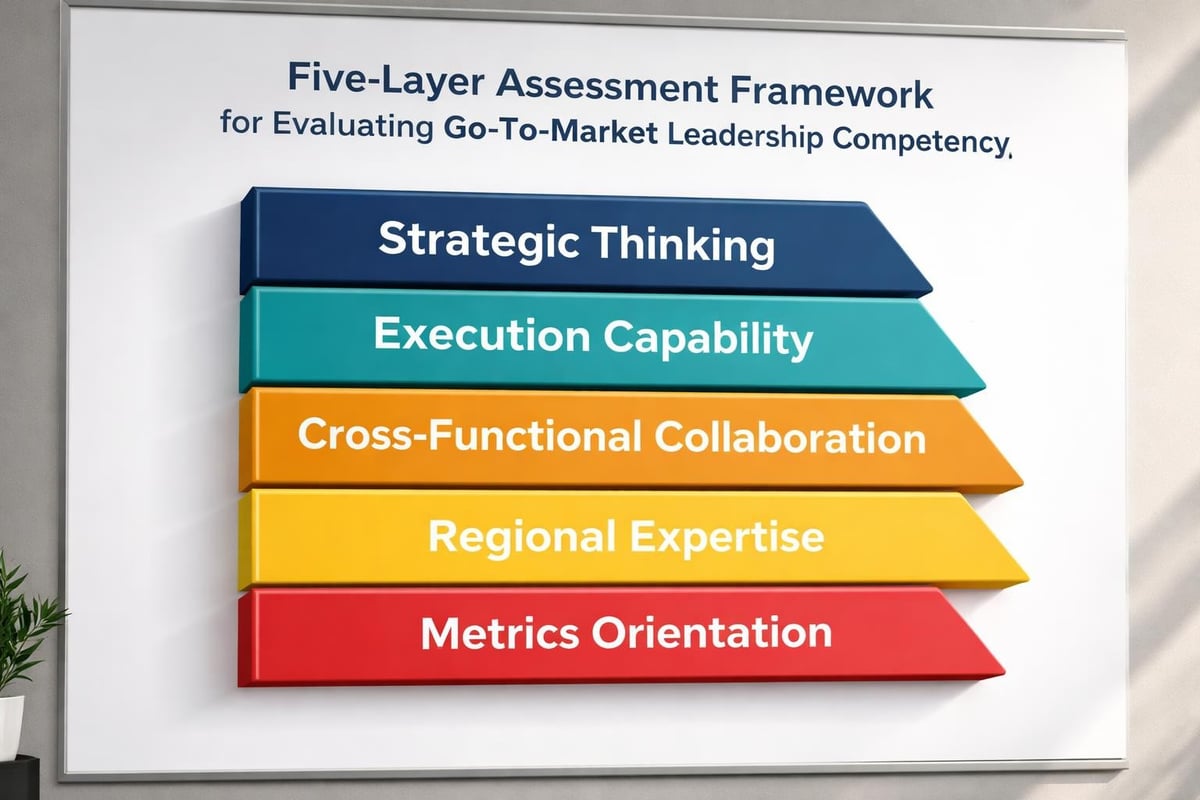
Before hiring or promoting into gtm leadership roles, run this five-question diagnostic:
Strategic Layer:
- Can they articulate how market segmentation, pricing strategy, and sales methodology interconnect?
- Do they reference specific metrics thresholds that trigger operating model changes?
Execution Layer:
- Have they built pipeline generation systems that delivered 3x+ coverage sustainably?
- Can they describe failed experiments and what the data revealed?
Cross-Functional Layer:
- How do they resolve sales-marketing conflicts without declaring winners?
Companies scaling B2B SaaS lead generation and conversion need leaders who've diagnosed and fixed broken revenue engines multiple times. Theory doesn't compound. Scar tissue and pattern recognition do.
Metrics That Reveal GTM Leadership Effectiveness
Measuring leadership impact requires looking beyond lagging indicators. Revenue growth reflects product-market fit as much as GTM execution. Instead, track these leading indicators:
| Metric | Benchmark | What It Reveals |
|---|---|---|
| Pipeline Coverage Ratio | 3-5x for early stage, 4-6x for growth stage | System's ability to absorb deals slipping and still hit targets |
| Forecast Accuracy (90-day) | Within 10% variance | Quality of instrumentation and sales discipline |
| Cross-Functional Meeting Efficiency | <30% of leadership time in alignment meetings | How well the operating system runs without constant intervention |
| Time to Productivity (New Reps) | 90 days to first deal, 120 days to quota productivity | Onboarding systems and playbook clarity |
| Regional Performance Parity | <15% conversion variance across US/EMEA/DACH | Playbook adaptation effectiveness |
Strong gtm leadership improves these metrics quarter-over-quarter without heroic individual efforts. The system gets better because the feedback loops and instrumentation compound learning across the organization.
When evaluating candidates or assessing your current leadership bench, ask them to walk through how they've moved these specific metrics in previous roles. Vague answers about "building alignment" or "driving strategy" indicate limited operating experience.
The difference between companies that scale smoothly and those that stumble through growth inflections almost always traces back to gtm leadership quality. Your board and investors know this. The question is whether you're addressing it with the same rigor you apply to product development and technology architecture.
Building scalable go-to-market engines requires leadership that bridges strategy and execution across regions, functions, and growth stages. GTM Consult works with B2B SaaS companies from $3M to $75M ARR to architect and implement the revenue systems that deliver predictable outcomes. Led by Ralf Paschen with over twenty years of hands-on experience across US, EMEA, and DACH markets, we don't just advise-we execute alongside your team to deliver measurable improvements in pipeline coverage, conversion rates, and cross-regional performance. If your revenue engine needs systematic improvement rather than tactical fixes, explore how GTM Consult can help.

Latest From
The Blog

Go To Market Strategy Consulting Guide For 2025 Success


Go To Market Strategy McKinsey Guide For Success 2025
.jpg)
Crossing the Enterprise Chasm: A Practical Guide to Sales-Led Growth (SLG)

Let's Build The Future Together
