
The Essential Guide to Building a Market Team in 2026




The way we build a high-performing market team is changing fast as 2026 approaches. New technologies, shifting buyer expectations, and the rise of Agentic AI are transforming go-to-market strategies for B2B SaaS and enterprise software.
Companies that align product, marketing, and sales into one powerful growth engine consistently outperform those stuck in silos. This unified approach turns every team member into a driver of pipeline and ARR, not just a participant.
This guide delivers practical insights for founders, CMOs, and revenue leaders who want to architect a market team built for scalable, measurable growth. You'll learn how to use data, automation, and cross-functional alignment to outpace the competition.
Ready to future-proof your market team? Dive in to discover the essential roles, skills, structures, and technologies that will help you win in 2026.
The Fundamentals of a Market Team in 2026
Building a high-performing market team in 2026 means rethinking the old boundaries between sales, marketing, and product. Instead of isolated departments, leading SaaS companies are merging these functions into one unified growth engine.
A modern market team focuses on aligning strategy, execution, and measurement across the entire buyer journey. This shift is crucial because B2B buyer journeys are now non-linear, influenced by multiple channels and touchpoints. Success depends on cross-functional teams working in sync, not in silos.
Key trends shaping the market team of the future include:
| Trend | Description |
|---|---|
| Agentic AI | Autonomous campaign management, smart insights |
| Automation | Streamlined workflows, reduced manual tasks |
| Remote/Hybrid Collaboration | Distributed teams, virtual alignment |
| Data-Driven Decision Making | Real-time analytics, unified KPIs |
Unified, revenue-centric frameworks are replacing disconnected KPIs. According to Bain & Google, mature marketers are four times more likely to achieve business goals. For example, leaders like HubSpot and Snowflake have adopted integrated structures that drive pipeline, ARR, and growth.
Successful market teams share these traits:
- Full alignment between product, marketing, and sales
- Continuous use of Agentic AI for efficiency
- Strong adaptability and a culture of ongoing learning
To learn more about building a unified and scalable team, see this detailed Building a Go-To-Market Team guide.

Critical Roles and Skills for the 2026 Market Team
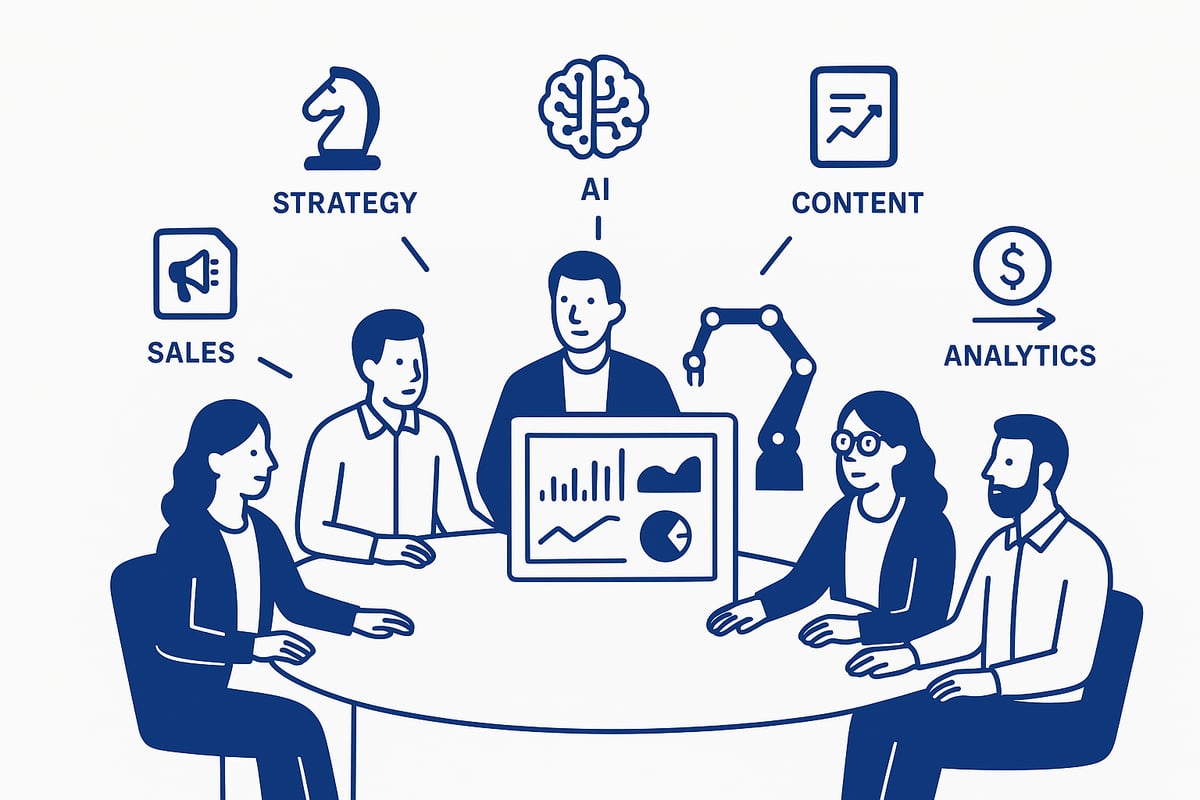
Building a high-performing market team in 2026 means assembling the right mix of leadership, core roles, and future-proof skills. The evolving B2B SaaS landscape demands teams that can drive collaboration, leverage Agentic AI, and deliver measurable pipeline and ARR growth. Let’s break down the essential people and capabilities your market team needs to win.
Senior Leadership: GTM Manager, Product Marketer, and Revenue Operations Lead
Senior leaders are the architects of your market team. Their core responsibilities include:
- Defining strategy and aligning product, marketing, and sales
- Owning pipeline accountability and revenue goals
- Making data-driven decisions in real time
A strong market team needs leaders who can break down silos and unify execution. For example, product marketing managers now lead go-to-market strategy from ideation through launch. To learn more about effective leadership structures that unify teams, see Marketing Leadership in SaaS.
Core Team Roles: Demand Generation, Content, Sales, and Customer Success
The backbone of every market team is its core roles, each driving growth at different stages:
- Demand Generation: Owns inbound and outbound campaigns, optimizes the funnel
- Content & SEO: Content managers, writers, and SEO experts grow authority and organic traffic
- Sales & SDRs: Account executives and SDRs focus on consultative, data-powered selling
- Customer Success: Ensures retention, expansion, and post-sale advocacy
A balanced market team structure enables seamless handoffs and maximizes every opportunity.
Essential Skills for 2026
To thrive, your market team must master a blend of technical and human skills:
- Data literacy, AI fluency, and analytics
- Creativity and adaptability to respond to rapid market shifts
- Leadership, collaboration, and strong communication across distributed teams
The World Economic Forum now ranks creativity as the most important job skill, reflecting the need for innovation and resilience in every market team member.
Leveraging Agentic AI and Automation in Market Teams
Agentic AI is redefining how every market team operates, enabling businesses to move from manual processes to intelligent, autonomous go-to-market execution. In 2026, Agentic Automation is not just a buzzword—it is the engine powering scalable growth and smarter decision-making.
What is Agentic AI?
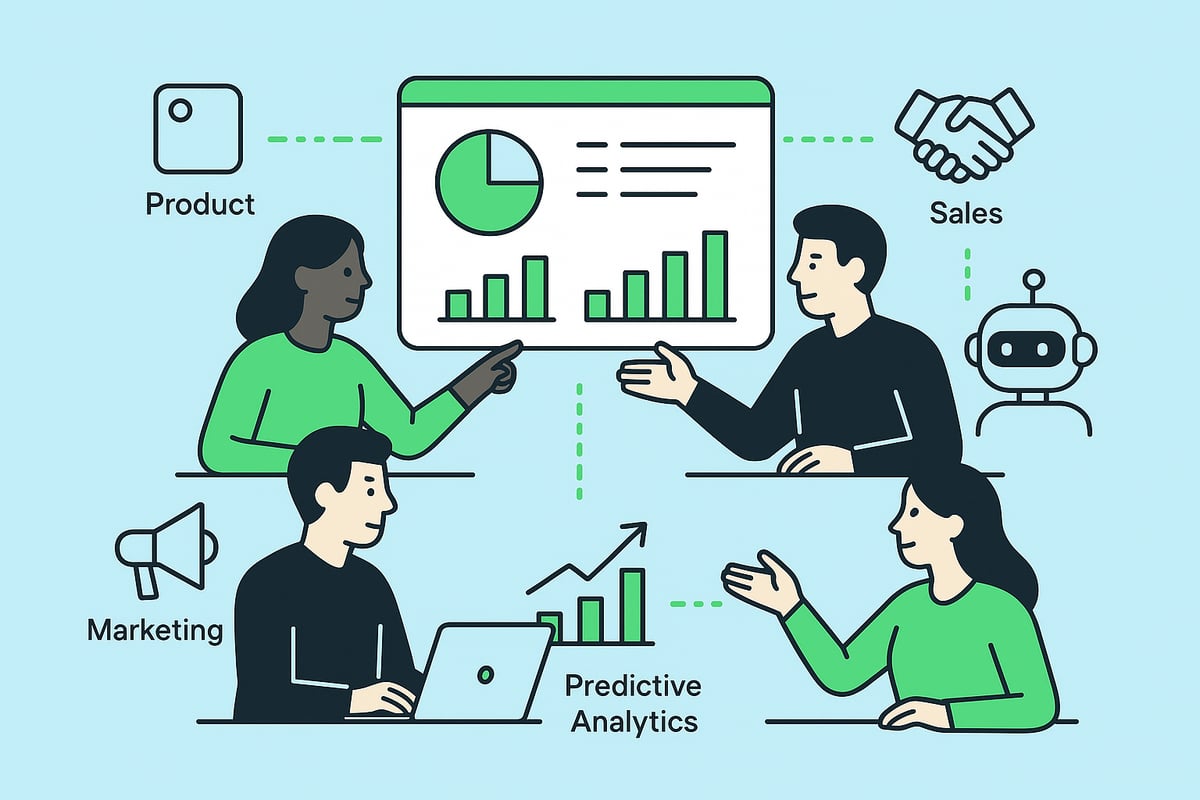
Agentic AI refers to autonomous systems that can make decisions, execute campaigns, score leads, and generate content with little human intervention. For modern B2B SaaS, this means market teams can launch, optimize, and personalize go-to-market efforts faster than ever.
Real-World Applications:
- AI-driven interview platforms streamline candidate screening for market team roles.
- Automated dashboards provide real-time analytics, surfacing pipeline risks and opportunities.
- Predictive AI forecasts sales outcomes, enabling proactive pipeline management.
- Agentic Automation tools autonomously manage and optimize multi-channel campaigns.
For a deeper dive into how Agentic AI is transforming GTM strategy, see Agentic AI in Go-To-Market.
Challenges and Tips:
- Data quality remains critical—AI is only as good as the data it learns from.
- Change management and continuous upskilling are essential for team adoption.
- Start small: pilot Agentic Automation in targeted campaigns before scaling across your market team.
Companies embracing Agentic AI are seeing over 60 percent pipeline contribution and 300 percent lead growth. Future-proof your market team by integrating these technologies and building a culture of adaptability and learning.
Step-by-Step Guide to Building a Market Team in 2026
Building a high-performing market team in 2026 is a journey that requires vision, precision, and adaptability. By following these five actionable steps, founders, CMOs, and revenue leaders can architect a team that thrives in the fast-evolving B2B SaaS landscape.

Step 1: Define Team Structure and Growth Objectives
Start by assessing your current go-to-market maturity. Pinpoint gaps in leadership, specialization, and team size. Align the market team structure with your business objectives, ARR targets, and overall market positioning. Prioritize which roles will have the biggest impact on pipeline generation and growth for your stage, whether you’re at Seed or Series B. For a deeper dive into structuring your team, refer to the B2B SaaS Marketing Team Structure Guide, which outlines proven frameworks for scalable success.
Step 2: Identify and Recruit Top Talent
Craft job descriptions that reflect your vision and company culture. Use diverse talent pools, including job boards, niche platforms, and DEI-focused channels, to source candidates. Consider AI-powered screening tools to streamline evaluation and reduce bias. The right market team is built on talent that brings both technical skills and creative thinking to the table.
Step 3: Enable Cross-Functional Alignment and Onboarding
Develop onboarding frameworks that break down silos between product, marketing, and sales. Provide enablement playbooks and operational dashboards so everyone operates from the same playbook. Real-world examples show that SaaS companies using structured onboarding and GTM playbooks see measurable pipeline and revenue growth.
Step 4: Integrate Data and Automation from Day One
Deploy Agentic AI for campaign management, analytics, and sales enablement right from the start. Set up real-time dashboards to track KPIs tied directly to pipeline and ARR. Train your team to use these tools for data-driven decision making and continuous improvement.
Step 5: Foster a Culture of Adaptability and Continuous Learning
Encourage experimentation with new tactics and channels. Invest in ongoing upskilling, especially in AI and automation. Celebrate wins tied to cross-functional collaboration and measurable outcomes. A resilient market team thrives by learning, iterating, and adapting as markets and technologies evolve.
By following these steps, you’ll be positioned to build a market team that not only meets the challenges of 2026 but also drives lasting business growth.
Best Practices and Pitfalls to Avoid in 2026 Market Team Building
Building a high-performing market team in 2026 means embracing both proven strategies and emerging innovations. The most successful teams unify their goals, processes, and technology to maximize pipeline growth and ARR impact.
Best Practices for a Future-Ready Market Team:
- Unify KPIs across product, marketing, and sales for shared accountability.
- Leverage Agentic AI in Marketing Explained to automate campaigns, personalize outreach, and accelerate decision-making.
- Prioritize cross-functional communication and collaboration.
- Use operational dashboards for real-time transparency.
- Foster adaptability with a culture of rapid experimentation and continuous learning.
- Invest in diversity, equity, and inclusion to drive creativity and resilience.
Pitfalls That Undermine Market Team Performance:
- Siloed teams with disconnected goals and metrics.
- Underinvestment in automation or slow adoption of AI.
- Poor onboarding that stifles cross-functional alignment.
- Ignoring feedback loops, leading to stagnation instead of growth.
Consider the contrast: companies that failed to align their market team functions struggled with fragmented execution, while those that reorganized around unified GTM achieved over 25% pipeline growth. Interim leadership or external advisors can accelerate transformation, ensuring the market team stays agile and competitive.
Regularly review structures, processes, and outcomes to keep your market team future-proof and responsive to changing market dynamics.
Data-Driven Measurement and Optimization for Market Teams
A high-performing market team relies on precise, data-driven measurement to drive predictable revenue growth. Start by tracking essential metrics like:
- Pipeline contribution
- Annual recurring revenue (ARR)
- Lead generation growth
- Retention and expansion rates
Integrated analytics platforms help your market team monitor every stage of the buyer journey. To level up, use AI-powered tools for real-time reporting, predictive forecasting, and campaign optimization. For example, platforms that harness Agentic AI for Marketing: Automating Campaigns and Customer Insights can reveal instant insights and opportunities.
Consider these results:
| Company | Pipeline Contribution (12 mo) | Lead Growth |
|---|---|---|
| xtype.io | 60% | - |
| Hadean | - | 300%+ |
Establish feedback loops for rapid iteration, and share results transparently to keep your market team aligned and motivated. Always align measurement with your overall GTM strategy for maximum impact.
After walking through the evolving landscape of building high-performing market teams, it’s clear that aligning product, marketing, and sales is more than just a strategy—it’s a journey. Imagine the difference it makes when every team member is rowing in the same direction, empowered by data and Agentic AI, and supported by a culture that celebrates learning and growth. If you’re ready to move from theory to action and want a trusted guide by your side, let’s connect. I’d love to hear your story, understand your unique challenges, and help you shape a market team built for the future. Book Your Personal Intro Call

Latest From
The Blog

Go To Market Strategy Consulting Guide For 2025 Success


Go To Market Strategy McKinsey Guide For Success 2025
.jpg)
Crossing the Enterprise Chasm: A Practical Guide to Sales-Led Growth (SLG)

Let's Build The Future Together
