
Guide to Marketing Strategy in Marketing for 2026 Success

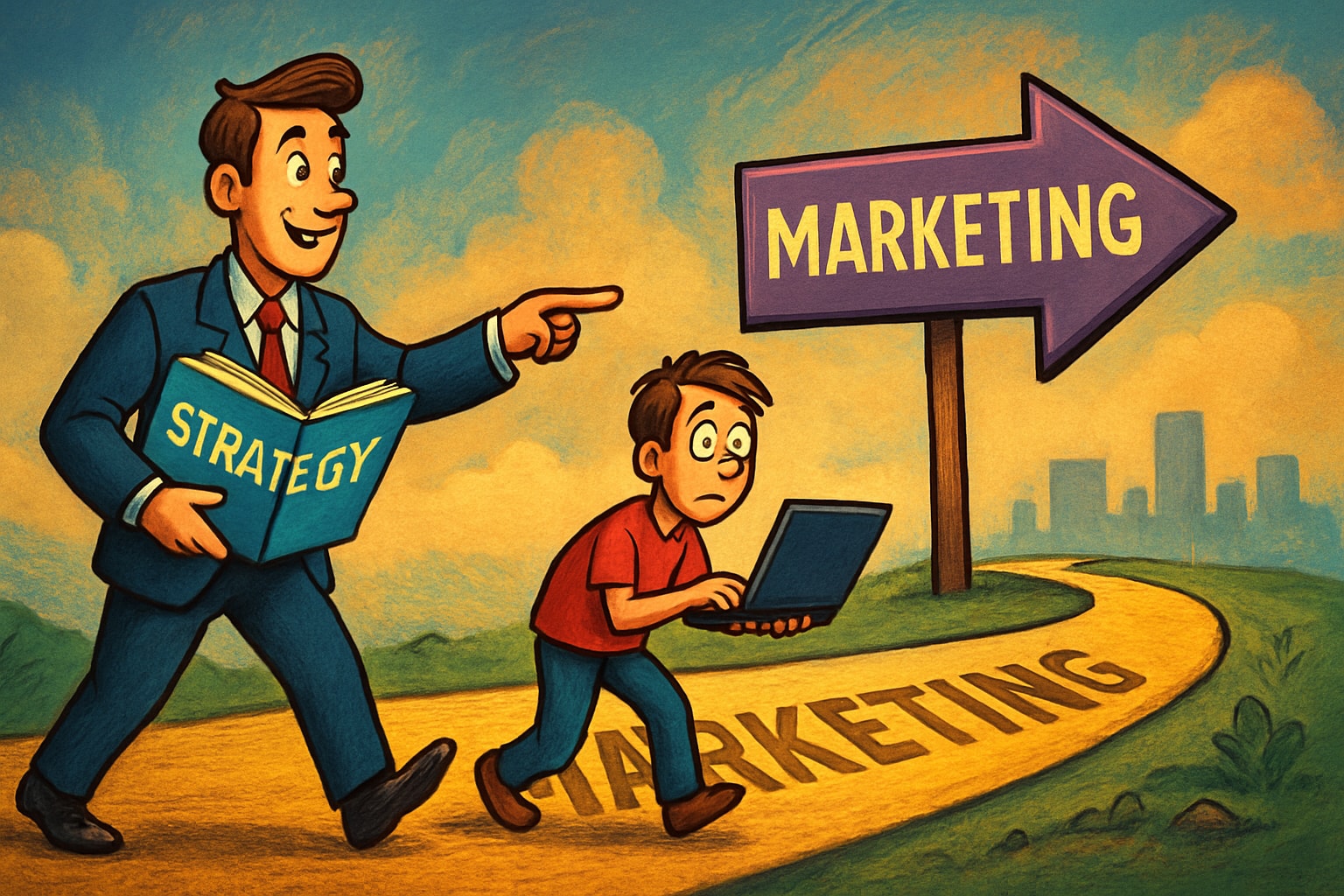


As the world races toward 2026, the rapid evolution of technology and buyer expectations is rewriting the rules of success. Only those who master a dynamic marketing strategy in marketing will turn disruption into growth.
This guide is your roadmap to building a future-proof approach that aligns product, marketing, and sales into a single, unified growth engine. You will discover how the marketing strategy in marketing is evolving, explore step-by-step frameworks, and learn how AI and Agentic Automation are redefining what’s possible for B2B SaaS and enterprise software.
Get ready for expert-backed insights, actionable tactics, and the latest trends that will help you capture attention, drive measurable pipeline growth, and accelerate revenue—all by staying one step ahead.
The Evolution of Marketing Strategy: 2026 and Beyond
The pace of change in marketing strategy in marketing has surged as we approach 2026. No longer can companies rely solely on product features or legacy brand equity to fuel sustainable growth.
Today’s landscape demands a shift from product-centric models to customer-centric and data-driven approaches. Businesses must deeply understand shifting buyer needs, using data to anticipate and respond to evolving expectations.
Upstream activities like product innovation and distribution are increasingly commoditized, making downstream value creation essential. Digital transformation and the rise of AI, especially Agentic Automation, are redefining what competitive advantage means. With Agentic AI, marketing teams now deploy autonomous agents that optimize campaign spend, orchestrate GTM workflows, and generate insights in real time.
Consider Coca-Cola and Facebook. Coca-Cola leverages its downstream distribution and brand experience, while Facebook’s network effects keep users engaged, illustrating how downstream advantage drives growth. B2B SaaS leaders mirror this by constantly adapting their marketing strategy in marketing to shifting customer criteria.
Recent reports show digital marketing spend in B2B SaaS is projected to grow over 15% annually through 2026. AI adoption rates are soaring, with over 70% of B2B marketers planning to integrate advanced tools into their strategies. For a closer look at these trends, see B2B Marketing Trends for 2026.
Ultimately, the strategic question—what else can we do for our customers—has become the new core driver for teams determined to win in the future.
Core Components of a Modern Marketing Strategy
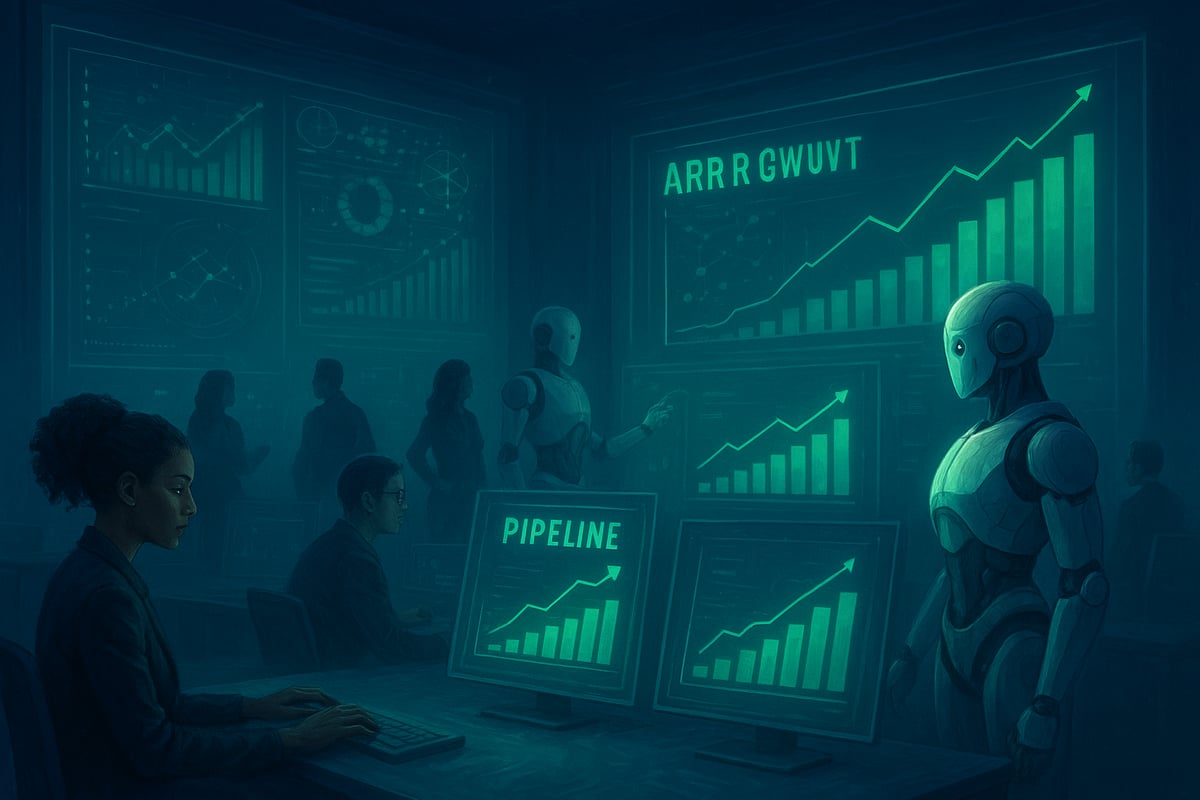
Building a future-ready marketing strategy in marketing demands three tightly integrated pillars: precise segmentation, compelling positioning, and unified go-to-market execution. Each pillar empowers B2B SaaS and enterprise software companies to drive measurable growth in a rapidly evolving landscape.
Customer Segmentation and Targeting
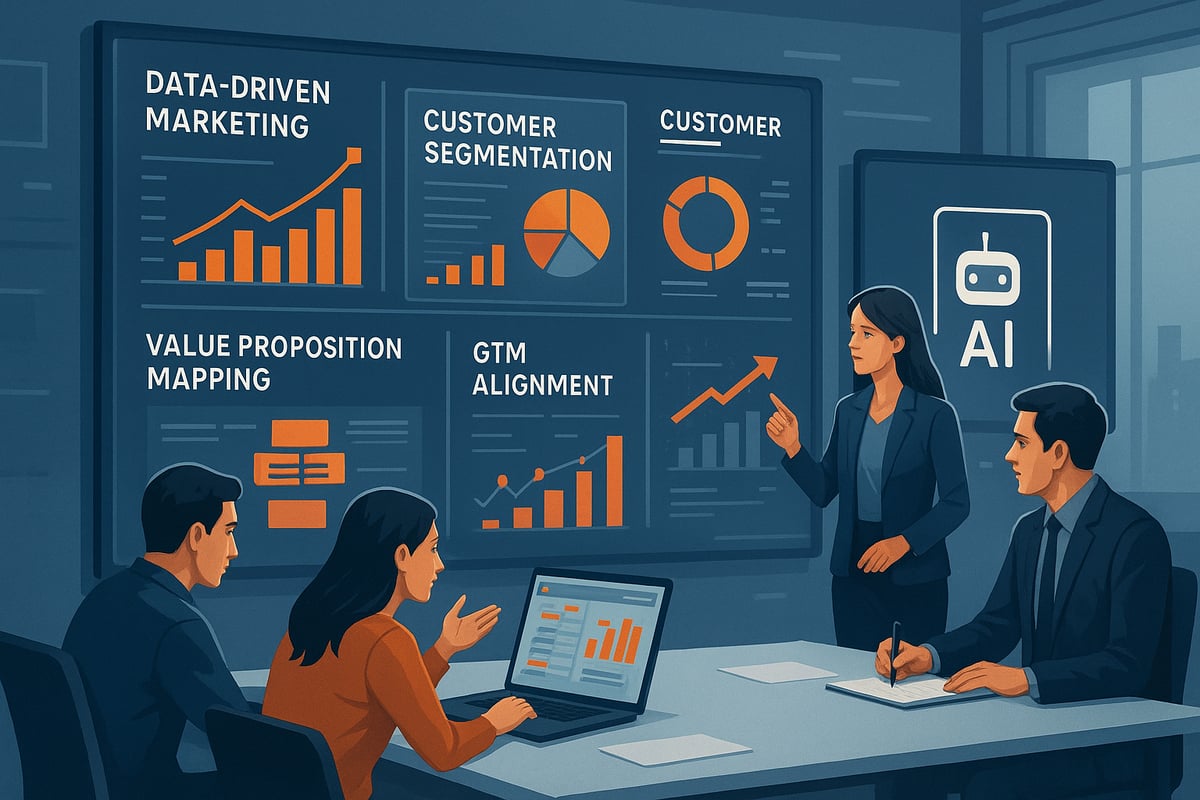
Effective marketing strategy in marketing starts with granular segmentation. Top-performing B2B SaaS firms segment audiences by:
- Industry and vertical market
- Company size and firmographics
- Buying roles and decision-maker profiles
- Behavioral signals and digital intent data
AI-driven analytics now uncover high-value segments by analyzing engagement patterns, churn risk, and readiness to buy. For example, fast-growth SaaS companies use intent data to pinpoint accounts actively researching solutions, allowing for hyper-targeted outreach. Tailored messaging, based on these insights, drives better pipeline quality and conversion rates.
Value Proposition and Positioning
A winning marketing strategy in marketing hinges on a differentiated value proposition. In crowded SaaS markets, companies move beyond listing features to focus on customer outcomes. For instance, firms shift messaging from technical specs to business impact, echoing Volvo’s iconic emphasis on safety over horsepower.
Consider these positioning tactics:
- Map product strengths to pressing customer challenges
- Highlight unique outcomes or ROI delivered
- Ensure messaging consistency across digital, sales, and customer success channels
Leading SaaS brands regularly audit and refine their positioning to stay relevant as buyer criteria evolve.
Unified Go-to-Market (GTM) Alignment
True growth accelerates when product, marketing, and sales act as one. Siloed efforts cause missed opportunities and misaligned messaging. Instead, organizations create a unified growth function by:
- Aligning KPIs like pipeline velocity and ARR across all teams
- Building shared enablement playbooks and operational dashboards
- Holding regular cross-functional reviews to adapt to market signals
Real-world examples show that companies leveraging go-to-market alignment frameworks consistently outperform peers in both pipeline creation and ARR growth. Avoiding silos and fostering collaboration is now a baseline requirement for success in B2B SaaS.
Step-by-Step Framework for Building a 2026-Ready Marketing Strategy
Building a future-proof marketing strategy in marketing means more than setting goals. It requires a repeatable, data-driven process that aligns every function around customer value and measurable growth. Here’s a proven, five-step framework for B2B SaaS and enterprise software success.
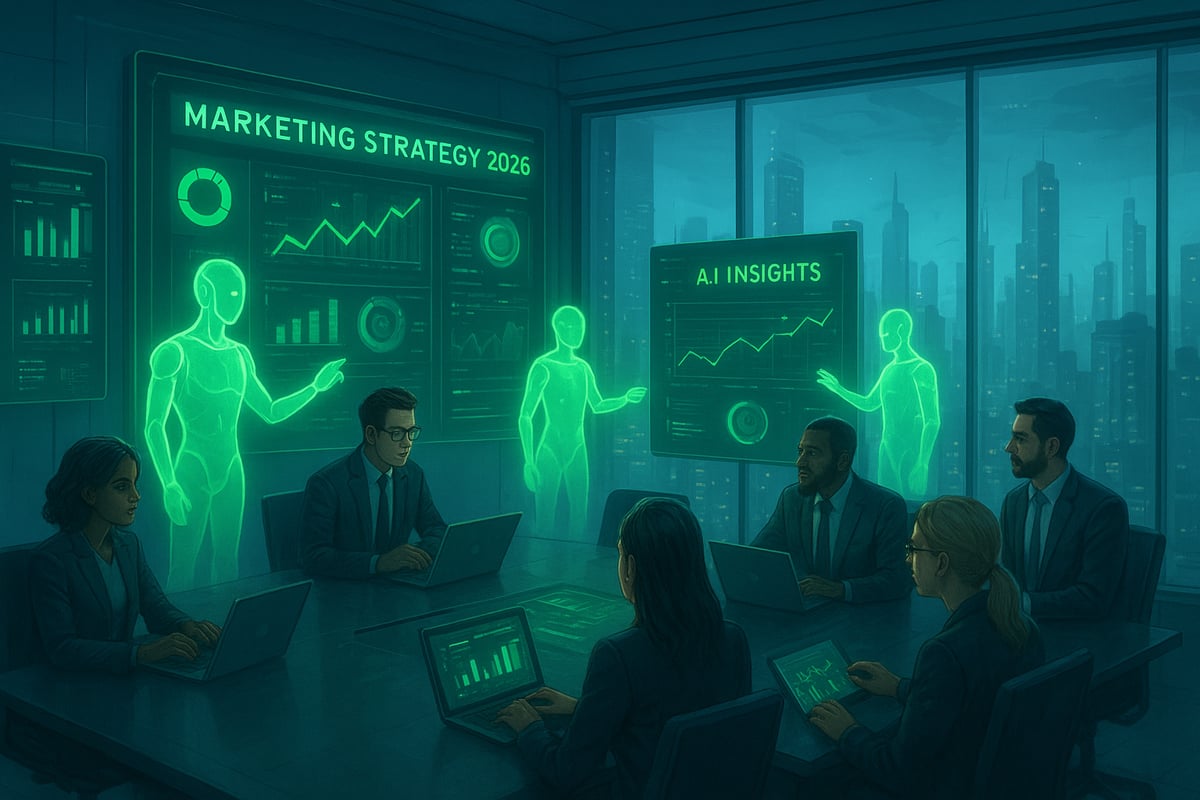
Step 1: Market Intelligence and Opportunity Analysis
Start with deep market intelligence. Gather data on customer needs, emerging competitors, and industry trends. Use Agentic AI for predictive analytics, revealing untapped opportunities and risks.
- Analyze competitor movements and whitespace
- Identify customer pain points via intent signals
- Size the market using AI-driven forecasting
This step ensures your marketing strategy in marketing is grounded in facts, not assumptions.
Step 2: Strategic Segmentation and Persona Development
Segment your audience by industry, firm size, buying role, and behavioral triggers. Build data-driven personas that reflect real-world challenges and motivations.
- Use AI to spot high-intent segments
- Map buyer journeys for each persona
- Prioritize segments with the greatest revenue potential
Fast-growth SaaS firms excel by letting segmentation drive precise targeting, ensuring their marketing strategy in marketing delivers relevant value.
Step 3: Value Proposition Design and Differentiation
Translate product features into customer outcomes. Define what sets you apart in a crowded market, focusing on benefits that align with 2026 buyer demands.
- Shift from feature-led to outcome-led messaging
- Ensure consistency across all channels
- Use case studies to validate positioning
For inspiration, explore modern marketing strategy examples that have redefined competitive advantage through differentiation.
Step 4: GTM Planning and Cross-Functional Alignment
Break down silos between product, marketing, and sales. Set shared KPIs, develop enablement resources, and build dashboards for real-time collaboration.
- Align on pipeline, ARR, and customer success metrics
- Enable teams with unified playbooks
- Monitor progress with operational dashboards
Organizations that integrate GTM functions see stronger pipeline growth and ARR impact.
Step 5: Execution, Measurement, and Iteration
Launch coordinated campaigns and sales motions. Track pipeline velocity, conversion rates, and ARR.
- Use closed-loop feedback for rapid optimization
- Let AI surface anomalies and growth opportunities
- Iterate based on real-time data
Continuous measurement ensures your marketing strategy in marketing stays agile and effective as markets evolve.
The Impact of AI and Agentic Automation on Marketing Strategy
The marketing strategy in marketing is undergoing a seismic shift, driven by the rise of AI and Agentic Automation. As B2B SaaS and enterprise software companies race to outperform, the ability to leverage autonomous AI agents is quickly becoming a critical differentiator. Businesses that align product, marketing, and sales as a single growth engine are poised to see measurable gains in pipeline velocity and ARR.

Rise of Agentic AI in B2B Marketing
Agentic Automation, also known as Agentic AI, marks the next evolution in automation for marketing strategy in marketing. Unlike traditional rule-based tools, these AI agents operate autonomously, learning from real-time data and making decisions without human intervention.
Picture a SaaS company deploying an AI agent to optimize campaign budgets and route leads to the best-fit sales reps instantly. This shift enables teams to focus on high-value strategy while AI handles the heavy lifting.
- AI agents can:
- Adjust ad spend by channel in real time
- Personalize outreach based on buyer signals
- Automate lead assignment and follow-up
Data-Driven Personalization and Predictive Analytics
Personalization is at the heart of a successful marketing strategy in marketing, and AI is turning this into a science. Predictive analytics powered by Agentic AI uncovers patterns in buyer behavior, enabling hyper-targeted messaging and content at scale.
According to AI's Impact on B2B Marketing, B2B marketers are rapidly prioritizing AI tools to boost ROI and forecast sales more accurately. Imagine predicting which accounts are ready to buy and customizing every touchpoint for them.
Table: AI-Driven Personalization Benefits
| Benefit | Impact on GTM Teams |
|---|---|
| Higher engagement | Increased pipeline growth |
| Better lead scoring | Faster sales cycles |
| Accurate forecasting | Improved ARR predictability |
Operational Efficiency and Revenue Acceleration
With Agentic Automation, companies streamline repetitive tasks and orchestrate complex go-to-market workflows with unmatched efficiency. AI integrates across product, marketing, and sales, ensuring every action is tied to revenue outcomes.
For example, SaaS firms using AI have cut customer acquisition costs and improved retention by analyzing customer journeys and automating tailored follow-ups. This results in faster pipeline movement and stronger market positioning.
Teams that adopt Agentic AI are not just keeping up; they are setting the pace for what a future-ready marketing strategy in marketing looks like.
Measuring Success: KPIs and Metrics for 2026 Marketing Strategy
Measuring the impact of your marketing strategy in marketing is no longer just about tracking leads or website visits. In 2026, success is defined by how tightly you connect every marketing and sales action to revenue outcomes. This shift demands a data-driven mindset, with KPIs tailored to B2B SaaS and enterprise software growth.
Core KPIs for a future-ready marketing strategy in marketing:
- Pipeline growth
- Annual Recurring Revenue (ARR)
- Customer Acquisition Cost (CAC)
- Customer Lifetime Value (CLV)
- Marketing-sourced revenue
- Sales velocity
| KPI | Definition | 2026 Benchmark Example |
|---|---|---|
| ARR | Annual recurring revenue from contracts | $5M+ for mid-market SaaS |
| CAC | Cost to acquire a customer | $1.1 for every $1 of CLV |
| Pipeline Growth | % increase in qualified leads | 30% YoY for top quartile firms |
| Marketing-Sourced Rev. | Revenue directly from marketing efforts | 40%+ of total new revenue |
AI and Agentic Automation are transforming how these KPIs are tracked and optimized. Modern dashboards use real-time data, AI-driven anomaly detection, and closed-loop feedback, allowing teams to spot trends and pivot fast. Companies leveraging SaaS marketing strategy best practices see measurable pipeline acceleration and improved attribution accuracy.
For example, a leading enterprise SaaS provider unified product, marketing, and sales KPIs, enabling AI-powered attribution models. This alignment cut CAC by 18 percent and boosted ARR by 25 percent within a year. As AI in B2B marketing matures, expect even deeper insights and faster course corrections for your marketing strategy in marketing.
Future-Proofing Your Strategy: Continuous Innovation and Adaptation
In 2026, success depends on how well you future-proof your marketing strategy in marketing. The most resilient B2B SaaS and enterprise teams do not just react; they anticipate shifts in buyer needs, market conditions, and technology.
Building a culture of continuous innovation means:
- Listening actively to market signals and customer feedback.
- Regularly reviewing buyer criteria and re-mapping your competitive landscape.
- Leveraging Agentic Automation and AI to experiment with new channels and optimize touchpoints.
- Re-segmenting audiences as industries evolve, just as leading SaaS firms have done to unlock new growth.
- Fostering collaboration across product, marketing, and sales for unified, agile execution.
For example, one enterprise software leader redefined its target segments after analyzing fresh intent data, resulting in a 15% boost in pipeline quality.
To stay ahead, explore B2B SaaS marketing strategies that align innovation with measurable outcomes like ARR and market share.
Future-proofing is not a one-time initiative, it is a mindset. Invest in data, nurture relationships, and let innovation drive your next breakthrough.
If you’re feeling inspired to take your marketing strategy to the next level after reading this guide, you’re not alone. I’ve seen firsthand how founders and growth leaders can transform chaos into clarity when they connect product, marketing, and sales into a single, powerful engine. Imagine what it would feel like to finally see every campaign, every sales call, and every product update contributing directly to real pipeline and ARR growth. If you’re ready to build a future-proof strategy and want a partner who’s been in the trenches, let’s talk. Book Your Personal Intro Call

Latest From
The Blog
Go To Market Strategy Consulting Guide For 2025 Success

Go To Market Strategy McKinsey Guide For Success 2025
.jpg)
Crossing the Enterprise Chasm: A Practical Guide to Sales-Led Growth (SLG)

Let's Build The Future Together
