

Sales by Product Guide: Unlock Insights for 2026 Success




The landscape of product-based sales analytics is transforming rapidly as we approach 2026. With shifting buyer expectations and fierce competition, B2B SaaS and enterprise software companies face new challenges in maximizing growth and market share.
This guide is designed to help you unlock the potential of sales by product insights, empowering your revenue operations and go-to-market teams. You will discover how to move beyond basic reporting to real-time, actionable analytics that drive strategic decisions.
We will explore foundational concepts, essential metrics, advanced data segmentation, and the revolutionary impact of AI and Agentic Automation. Through practical strategies and a look at future trends, you’ll learn how to align product, marketing, and sales for unified growth.
Are you ready to overcome today’s sales challenges and achieve breakthrough results? Dive in to unlock new levels of performance and position your business for success in 2026.
Understanding Sales by Product: Foundations for 2026
In 2026, sales by product sits at the heart of every successful B2B SaaS and enterprise software growth strategy. This approach means analyzing sales data at the most granular product level, not just by overall revenue, but by each SKU, feature, or module. Why is this so important? Because it transforms how companies manage revenue operations, identify pipeline gaps, and spot new market opportunities.
The shift from static, monthly sales reports to dynamic, real-time sales by product analytics is fueling a new era of go-to-market execution. Teams can now see instantly which products are thriving, which are lagging, and how customer needs are evolving. This level of insight empowers marketing, product, and sales teams to align goals, refine messaging, and prioritize high-impact activities.
Consider these real-world examples:
- Leading SaaS firms use product-level data to reposition underperforming modules, boosting ARR.
- Enterprises leverage Shopify’s Sales by Product Report to pinpoint bestsellers, optimize inventory, and plan targeted campaigns.
- Fast-growing companies rely on these insights to outmaneuver competitors and secure category leadership.
By tracking sales by product, organizations move beyond guessing at product-problem fit. They use data to drive true product-market fit strategies, ensuring every decision supports scalable growth and unified GTM alignment.

Key Metrics and Data Points: What to Track for Success
Knowing which data to track is the first step toward unlocking the full power of sales by product analytics. In 2026’s competitive B2B SaaS environment, seeing beyond surface numbers is essential for sustainable growth. Let’s break down the most impactful metrics and how to use segmentation for sharper insights.

Core Metrics for Product Sales Analysis
The foundation of sales by product analytics lies in tracking the right metrics. Here are the essentials every B2B SaaS and enterprise team should monitor:
- Gross sales: Total revenue before deductions.
- Net sales: Revenue after returns, discounts, and allowances.
- Units sold: Volume of each product moved.
- Returns/Discounts: Flags quality or pricing issues.
- COGS: Understand true profit margins.
- Inventory levels: Prevent stockouts or overstock.
- Sales velocity: Measures how quickly products sell.
Shopify’s default columns—Number of Orders, Net Quantity, Gross Sales, Returns, Net Sales, Taxes, Shipping Cost, and Total Sales—are a helpful reference. Tracking these metrics over custom time periods reveals trends and seasonality. For example, a spike in returns might signal a product flaw or a misaligned price point. For more benchmarking data, see B2B SaaS Sales Benchmarks.
Advanced Segmentation and Filtering
Segmentation elevates sales by product analysis from basic reporting to strategic insight. Break down your sales data by:
- Product variant or SKU
- Vendor or supplier
- Region, country, or billing location
- Sales channel or checkout currency
Filters allow you to pinpoint where products perform best. ABC analysis (A: 80 percent revenue, B: 15 percent, C: 5 percent) helps prioritize high-impact products. Imagine filtering sales by region—this reveals where to focus marketing and inventory. Custom columns and data exports enable deeper dives, supporting agile decision making and more targeted go-to-market actions.
Leveraging AI and Agentic Automation in Sales Analytics
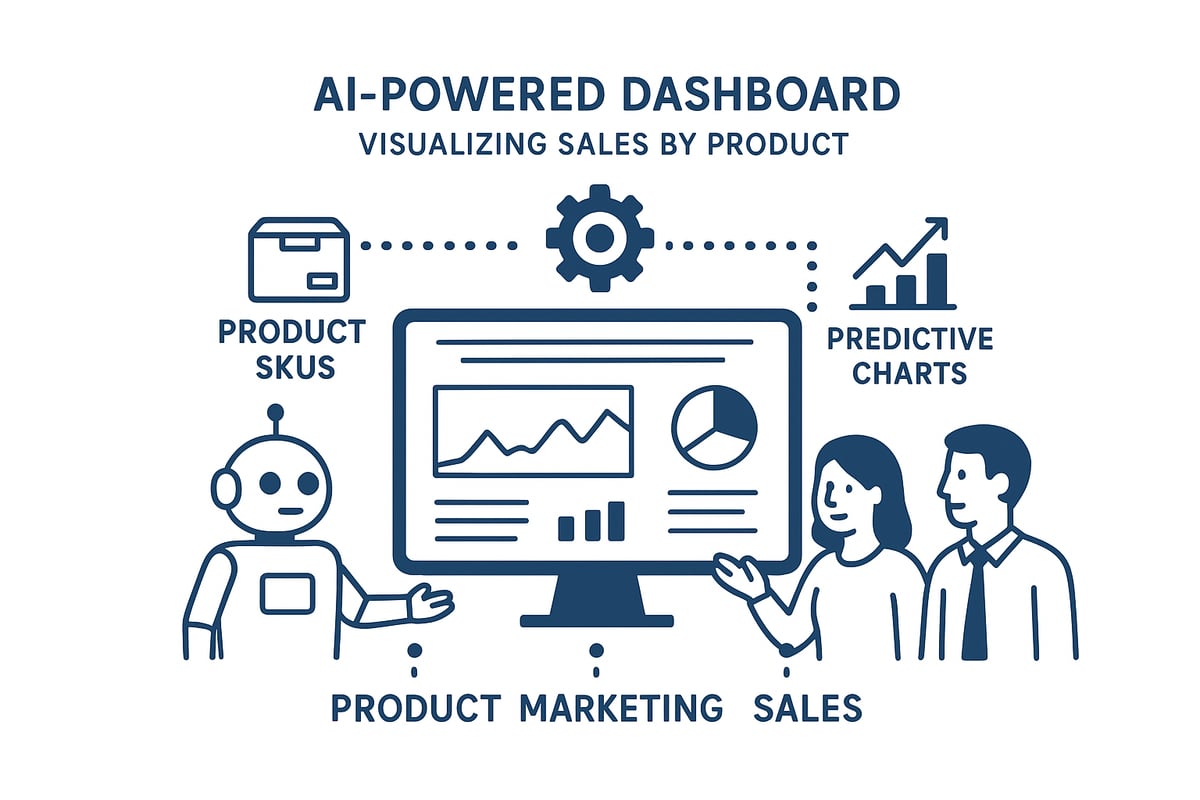
Artificial intelligence is transforming the way companies analyze sales by product, turning raw data into actionable insights. In 2026, Agentic Automation—also known as Agentic AI—will play a pivotal role in shaping go-to-market strategies for B2B SaaS and enterprise software. Instead of relying on manual spreadsheets, teams now leverage automated tools that collect, cleanse, and visualize sales by product data in real time.
The Rise of Agentic AI in Product Sales Reporting
Agentic AI acts as a digital teammate, constantly monitoring sales by product metrics and surfacing trends before humans spot them. These systems automate data collection and reporting, freeing up teams to focus on strategy. For example, AI-powered tools like Mipler Advanced Reports offer predictive sales forecasting, anomaly detection, and inventory optimization.
Key benefits of Agentic AI in sales analytics:
- Predicts demand spikes for individual products.
- Flags quality or pricing issues using returns and discount data.
- Recommends inventory adjustments for top-performing SKUs.
Industry leaders are already embracing these technologies. According to AI Sales Trends to Watch in 2026, autonomous AI agents are rapidly becoming standard for real-time, product-level reporting, giving early adopters a measurable edge.
Integrating AI into GTM and Revenue Operations
Forward-thinking B2B SaaS companies are embedding AI into every layer of go-to-market execution. By integrating Agentic AI into revenue operations, they align product, marketing, and sales teams with a unified view of sales by product performance.
Here’s how this works in practice:
- AI analyzes sales by product data to identify lagging offerings.
- It triggers a cross-functional response—marketing tweaks campaigns, sales adjusts enablement, and product teams address feature gaps.
- The system tracks the impact, showing improvements in pipeline velocity, lower churn, and increased ARR.
By acting on these insights, businesses future-proof their GTM strategy and gain a head start on competitors still relying on traditional analytics.
Turning Insights into Action: Strategies for Scalable Revenue
Transforming sales by product insights into revenue growth starts with building a unified growth function. In 2026, B2B SaaS and enterprise software teams must break silos and align product, marketing, and sales within a single, data-driven framework.

From Data to Execution: Building a Unified Growth Function
Operationalizing sales by product insights means embedding analytics into every team’s daily workflow. Start by aligning KPIs and activities across product, marketing, and sales. Use shared dashboards that visualize real-time product performance, enabling teams to make informed decisions instantly.
Establish continuous feedback loops. For example, when sales by product data reveals a sudden dip in net sales for a feature, product managers can quickly adjust the roadmap, while marketing pivots messaging. Scenario planning, powered by Agentic AI, helps teams anticipate market shifts and act proactively.
Unified growth functions thrive by integrating these insights directly into pipeline reviews and ARR forecasting. The result is rapid course correction and stronger market positioning.
Actionable Tactics for B2B SaaS and Enterprise Growth
To scale revenue, leverage sales by product analytics for actionable tactics:
- Dynamic pricing based on real-time sales velocity
- Targeted promotions for regions or segments with high potential
- Inventory rebalancing driven by predictive demand signals
- Product bundling tailored to customer cohorts
Segmentation lets teams personalize outreach, driving higher conversion rates. Integrate sales by product insights into sales enablement and training resources, as explored in sales enablement content best practices, to empower reps with data-driven playbooks.
Scenario planning using historical sales by product trends helps SaaS companies reallocate resources to high-velocity products, boosting ARR and pipeline growth. The path from insight to execution hinges on embedding analytics into every layer of go-to-market strategy.
Future Trends: Evolving Sales by Product Analytics for 2026
In 2026, the future of sales by product analytics is being shaped by three powerful forces: real-time data, AI-driven automation, and the convergence of sales, marketing, and product teams. Companies are moving beyond static dashboards and building dynamic systems that deliver insights as fast as the market changes.
Today, advanced tools use Agentic AI to predict demand, automate campaign triggers, and recommend inventory moves before issues arise. For example, platforms highlighted in the Salesforce Data and Analytics Trends for 2026 report show how AI is making revenue operations more proactive and autonomous.
Omnichannel tracking is now essential. Sales by product analytics must capture data from web, mobile, retail, and partner channels, giving teams a unified view for smarter decisions. Integrating external sources like market trends and competitor benchmarks enables richer, context-aware reporting.
Key future trends include:
- Real-time, AI-powered recommendations for sales by product actions
- Automated GTM execution with minimal manual intervention
- Seamless integration of external and internal data for holistic insights
- Agentic AI driving scenario planning and revenue ops
With the B2B SaaS market expanding rapidly, forward-thinking companies are investing in next-gen analytics stacks to future-proof their go-to-market strategy. The strategic imperative is clear: leverage modern sales by product platforms or risk falling behind.
You’ve just explored how sales by product analytics can turn scattered data into a powerful growth engine for 2026. Imagine sitting down with your team—everyone’s on the same page, KPIs are finally telling the same story, and product insights are driving real decisions, not just filling dashboards. That’s the kind of transformation we help founders and go-to-market leaders achieve every day. If you’re ready to see how these strategies fit your own company’s journey, let’s chat about what’s possible. You can Book Your Personal Intro Call and start building a path to scalable, repeatable revenue—together.

Latest From
The Blog

Go To Market Strategy Consulting Guide For 2025 Success

Go To Market Strategy McKinsey Guide For Success 2025
.jpg)
Crossing the Enterprise Chasm: A Practical Guide to Sales-Led Growth (SLG)

Let's Build The Future Together
