
Strategic Marketing Strategy Guide: Winning Tactics for 2026

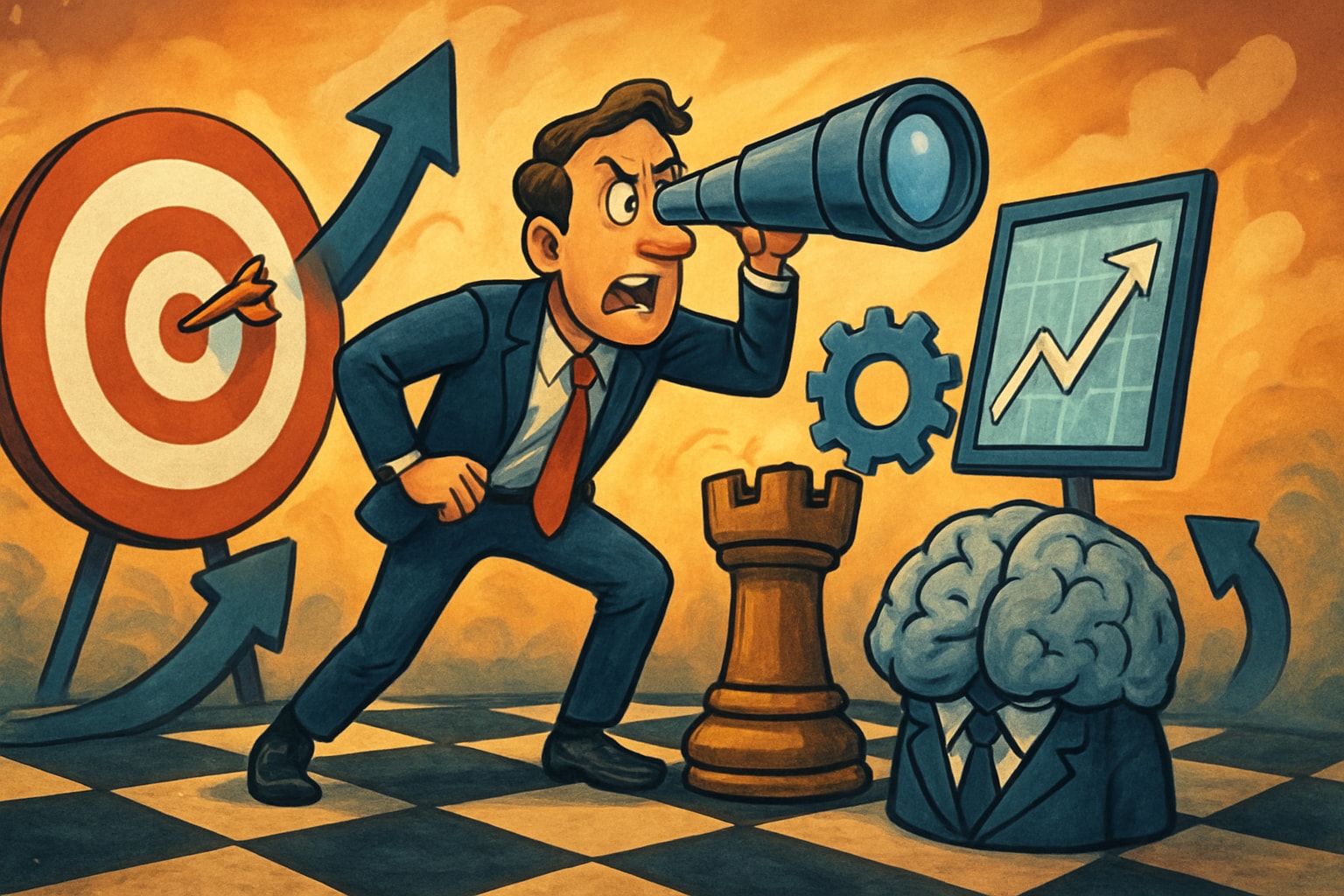


The pace of change in marketing has never been faster. By 2026, AI-driven innovation, automation, and rapid market shifts will separate the leaders from the laggards in B2B SaaS and enterprise software. Are you prepared to adapt, or will your current playbook leave you behind?
In this new era, complexity and data overload are both a challenge and a chance. Companies face buyers who expect more, teams stretched across silos, and pressure to deliver real results. To thrive, organizations need a strategic marketing strategy that unites product, marketing, and sales around a single purpose—driving measurable growth and market impact.
This guide will walk you through building a future-proof approach. You’ll learn how to achieve go-to-market alignment, harness Agentic AI and automation, optimize revenue operations, and focus on outcomes that matter: pipeline, ARR, and true market leadership.
The Foundations of a Strategic Marketing Strategy for 2026
In 2026, a strategic marketing strategy is more than a plan, it is the backbone of sustainable growth for B2B SaaS and enterprise software companies. As AI and Agentic Automation reshape customer journeys, leaders must redefine their approach to drive results.
Traditional silos between product, marketing, and sales simply cannot keep pace with today’s high-velocity, tech-driven markets. Fragmented efforts cause misalignment, wasted resources, and missed opportunities. Instead, the future belongs to organizations that unify these functions into a single, agile growth engine.
According to Gartner's case study on unified GTM structures, 75% of high-growth SaaS companies report that unified go-to-market teams significantly outperform siloed organizations. This alignment ensures everyone is accountable for pipeline, ARR, and market positioning, not just surface-level metrics.
Here’s a quick comparison:
| Old Approach | Modern Strategic Marketing Strategy |
|---|---|
| Vanity metrics (likes, MQLs) | Pipeline, ARR, customer expansion |
| Siloed teams | Unified growth function |
| Static campaigns | Agile, data-driven execution |
Examples of success with cross-functional alignment:
- A SaaS provider realigned teams, resulting in 40% faster time-to-market.
- An enterprise software firm doubled pipeline by merging sales and marketing operations.
Continuous feedback loops and agile execution are now essential. Rapid iteration, real-time data, and collaboration fuel a strategic marketing strategy that adapts to changing buyer needs and outpaces competitors.

Step 1: Market Intelligence & Positioning for Competitive Advantage
In 2026, a strategic marketing strategy begins with deep market intelligence. The B2B SaaS landscape is shifting fast, with AI and automation rewriting buyer expectations. Success hinges on not just knowing your market, but anticipating its every move.

Understanding Evolving Buyer Needs
B2B buyer journeys are transforming as Agentic AI and digital platforms empower decision-makers. Today’s buyers are self-reliant, researching solutions long before engaging sales. According to Forrester, 74% of B2B buyers now demand personalized, self-service experiences.
Consider a SaaS company adapting to this shift by launching AI-driven chatbots and on-demand demos. Their pipeline grew as prospects could explore features and pricing autonomously. This pivot toward buyer-led research is now a cornerstone of any strategic marketing strategy.
- Buyers expect instant, tailored content.
- Decision cycles are faster and less linear.
- Agentic AI tools guide buyers through complex choices before human contact.
Data-Driven Market Segmentation and ICP Refinement
Agentic Automation is revolutionizing how SaaS firms define and pursue their ideal customers. Real-time data, AI, and predictive analytics now power ICP refinement, uncovering micro-segments and intent signals invisible to manual methods.
One enterprise SaaS leader implemented Agentic AI for segmentation. The result? A 30% lift in conversion rates as the system dynamically targeted high-intent accounts.
- AI identifies emerging buyer patterns.
- Predictive models score leads for sales readiness.
- Segmentation adapts as markets evolve, fueling a strategic marketing strategy that keeps pace.
Crafting Differentiated Positioning Statements
Standing out in a crowded SaaS field requires more than clever slogans. Frameworks like “Jobs-to-be-Done” and value proposition mapping help teams develop compelling, buyer-centric positioning. The clarity of your message directly impacts pipeline and ARR.
For example, after a thoughtful repositioning, one company saw a 25% pipeline jump post-rebrand. Clear articulation of value made it easier for buyers to see the fit. To deepen your approach, explore Forrester's insights on B2B personalization strategies for actionable ways to connect positioning with what buyers care about most.
- Focus on outcomes, not features.
- Test statements with real buyers for resonance.
- Revisit positioning quarterly as markets shift.
Step 2: Integrating Agentic AI & Automation into Marketing Execution
Integrating Agentic AI is redefining what a strategic marketing strategy looks like for B2B SaaS and enterprise software leaders. Unlike legacy automation, Agentic AI empowers autonomous agents to make decisions, optimize campaigns, and personalize experiences at scale. According to industry reports, 40% of all marketing tasks will be AI-driven by 2026. For companies looking to future proof their strategic marketing strategy, adopting frameworks like those found in SaaS Marketing Strategy Frameworks is critical for staying ahead.

The Rise of Agentic AI in B2B Marketing
Agentic AI is more than a buzzword; it represents a leap from simple rule-based automation to intelligent, self-directed systems. These AI agents can:
- Analyze buyer intent signals in real time
- Automatically launch and optimize campaigns
- Qualify and route leads with high precision
For example, a SaaS company might deploy Agentic AI to manage content creation, adapt messaging to different buyer personas, and monitor engagement across channels. This shift enables teams to focus on strategy and creativity, while AI handles repetitive execution.
Building Intelligent Workflows for Revenue Operations
Agentic Automation is transforming revenue operations by seamlessly connecting marketing, sales, and product data. Intelligent workflows powered by Agentic AI can:
- Score and route leads instantly based on behavioral data
- Sync insights across CRM, CDP, and analytics platforms
- Trigger personalized follow-ups without manual intervention
A leading SaaS firm recently cut its lead response time by 50% after integrating AI-driven routing into its revenue operations. Embedding Agentic AI into your strategic marketing strategy ensures that every handoff, from marketing to sales, is fast, data-informed, and customer-centric.
Overcoming Challenges and Ensuring Human Oversight
Harnessing Agentic AI brings new challenges, including data bias, compliance, and the risk of losing brand voice. To address these, organizations should:
- Establish clear governance frameworks for AI deployment
- Blend automated execution with ongoing human review
- Foster a culture of collaboration between marketers and AI experts
Best-in-class teams regularly audit AI outputs and update training data to maintain quality. By balancing Agentic Automation with strategic oversight, companies can unlock growth while protecting brand integrity.
Step 3: Unified GTM Execution—Aligning Product, Marketing, and Sales
Breaking silos is at the heart of any strategic marketing strategy for B2B SaaS growth. When product, marketing, and sales work in isolation, execution slows and pipeline shrinks. According to McKinsey, companies with unified go-to-market teams achieve pipeline velocity 20% faster than their siloed peers.
SaaS leaders are moving to a single growth function, where cross-disciplinary teams share goals, insights, and accountability. This shift empowers organizations to respond faster to market changes and buyer needs.

Breaking Down Silos for Scalable Growth
Silos slow momentum and create blind spots. In a high-velocity SaaS market, this can mean missed opportunities and stalled growth. By realigning teams under a unified growth banner, companies unlock faster decision cycles and more cohesive customer journeys.
Consider a SaaS firm that combined product, marketing, and sales into one agile unit. The result: improved collaboration, quicker campaign launches, and measurable pipeline gains. This approach is now foundational to any strategic marketing strategy focused on scale.
Building Cross-Functional Playbooks and Enablement
Developing shared go-to-market playbooks is critical. These documents outline messaging, workflows, and enablement assets that everyone can access. When sales and marketing collateral is aligned, win rates climb. In fact, one company saw an 18% increase within a single quarter.
Continuous training and feedback loops ensure teams stay sharp and adapt quickly. Agentic AI can surface insights from every touchpoint, making it easier to refine the strategic marketing strategy in real time. For more frameworks on alignment, see Product Marketing Strategy Essentials.
Measuring What Matters: From Activity to Revenue Impact
Success is no longer about disconnected KPIs. The new standard for a strategic marketing strategy is to track metrics that tie directly to pipeline, ARR, and customer expansion. Real-time dashboards provide visibility into revenue drivers and campaign impact.
One enterprise SaaS firm transformed its results by implementing unified GTM analytics. The outcome: a 300% increase in qualified leads and significantly higher ARR. Measurement must always reflect business impact.
GTM Consult: Expert Go-To-Market Alignment for SaaS Growth
GTM Consult specializes in aligning product, marketing, and sales for sustainable SaaS growth. Their proven models have driven outcomes such as 60% pipeline contribution and 25% pipeline growth after strategic rebranding.
Whether you are a startup or a mid-market SaaS company, their tailored engagement models help operationalize your strategic marketing strategy for maximum impact. When expert guidance is needed to unify your GTM approach, GTM Consult is a proven partner.
Step 4: Orchestrating Multi-Channel Demand Generation
To win in the B2B SaaS and enterprise software arena, a strategic marketing strategy demands a cohesive demand engine that combines inbound, outbound, and ABM. The rise of Agentic AI lets teams orchestrate hyper-personalized, multi-touch campaigns across every channel. For example, one SaaS leader doubled their SQLs using AI-powered omnichannel outreach. For more insights, see B2B SaaS Marketing Best Practices.
Content, Community, and Thought Leadership
Building pipeline now means building trust. A strategic marketing strategy hinges on educational content, active communities, and credible thought leadership. According to LinkedIn, 62 percent of B2B buyers engage with thought leadership before vendor shortlisting. Webinars, podcasts, and peer networks create touchpoints that not only nurture leads but also accelerate sales cycles.
- Host expert-led webinars and AMAs
- Launch a branded podcast series
- Foster peer-led communities for ongoing engagement
These tactics make your brand a go-to resource for prospects.
Optimizing Channel Mix and Budget Allocation
Maximize results by using data-driven frameworks to select and optimize channels. Test, measure, and double down on what works. For example, an enterprise software firm shifted 30 percent of their spend to digital, unlocking higher ROI and faster pipeline growth.
- Map channels to each stage of the buyer journey
- Use AI to predict best-fit channels and content formats
- Reallocate budget quarterly based on real performance
A flexible, analytics-driven approach keeps your strategy future-proof.
Step 5: Continuous Optimization and Future-Proofing Your Strategy
Staying ahead in 2026 means embracing continuous optimization as the core of your strategic marketing strategy. The market never stands still, and neither can your approach. To win, B2B SaaS and enterprise software teams must foster a culture where rapid learning and adaptation are the norm.
Agile execution is key. Consider these practices:
- Run iterative tests on campaigns and GTM messaging.
- Hold regular cross-functional retrospectives to gather feedback.
- Use quarterly strategy reviews to pivot quickly.
- Leverage AI-driven analytics for predictive insights and real-time adjustments.
| Top Trends to Future-Proof Your Strategy | Impact Area |
|---|---|
| Agentic AI Automation | Campaign execution, personalization |
| Privacy-first marketing | Data compliance, trust |
| Shifting buyer expectations (self-serve, digital) | Sales enablement, pipeline growth |
For example, one SaaS company increased customer retention by 20% by embedding ongoing GTM optimization into their weekly sprints. Their teams used Agentic AI to spot churn signals early and pivot messaging before risks escalated.
To build a resilient strategic marketing strategy, invest in adaptable teams and flexible processes. Encourage collaboration between product, marketing, and sales. For deeper optimization frameworks and actionable tactics, explore the Growth Marketing Strategy Guide, which details scalable approaches for unified growth functions.
The companies that thrive in 2026 will be those that treat optimization not as a project, but as a permanent mindset.
After diving into the stories of SaaS teams breaking silos, harnessing Agentic AI, and turning data into real growth, you might be wondering—how do you turn these big ideas into your own company’s success story? You don’t have to figure it out alone. I’ve seen founders and growth leaders transform uncertainty into momentum when they get the right guidance. If you’re ready to align your product, marketing, and sales for real, measurable revenue impact, let’s talk about your roadmap for 2026. Take the first step and Book Your Personal Intro Call.

Latest From
The Blog
Go To Market Strategy Consulting Guide For 2025 Success

Go To Market Strategy McKinsey Guide For Success 2025
.jpg)
Crossing the Enterprise Chasm: A Practical Guide to Sales-Led Growth (SLG)

Let's Build The Future Together
