

B2 B Business Guide: Strategies for Success in 2026




Did you know B2B ecommerce is projected to soar to $47.54 trillion by 2030? This explosive growth signals a new era for every ambitious b2 b business aiming to thrive in a rapidly changing market.
This guide delivers a clear, actionable roadmap for success in 2026. We’ll explore the latest models shaping the landscape, the game-changing power of AI and Agentic Automation, and how alignment across product, marketing, and sales unlocks true growth.
Here’s what you’ll discover:
- How digital transformation and omnichannel strategies are redefining B2B models
- Practical steps to harness AI, especially Agentic Automation, for operational excellence
- Proven frameworks for aligning teams and building a winning go-to-market engine
- Actionable tactics you can implement right now to fuel pipeline and ARR gains
Ready to future-proof your B2B strategy? Dive in and turn market opportunity into measurable results.
The Evolving B2B Landscape in 2026
The world of b2 b business is transforming at breakneck speed. By 2026, digital-first strategies are not just an option—they are the new standard. Imagine a marketplace where every B2B interaction feels as seamless and intuitive as your favorite consumer app.
Key Trends Shaping the Landscape:
- Digital Transformation: Companies are racing to digitize operations, automate workflows, and harness data for sharper decision-making. Omnichannel commerce is now table stakes, with buyers expecting to shift from web to app to in-person without missing a beat.
- Self-Serve Expectations: Modern B2B buyers crave independence. They want to research, compare, and even purchase complex solutions online, often before ever speaking to a salesperson.
The scale is astonishing. Global B2B ecommerce is now almost three times the size of B2C, fueled by rapid adoption across regions and industries. According to B2B eCommerce market size and growth analysis, this explosive growth is reshaping everything from supply chains to customer engagement.
Today's buyer journeys are more complex than ever. Multiple stakeholders, longer approval cycles, and higher risk mean B2 b business leaders must adapt quickly. The stakes are high, and the path to purchase is rarely linear.
Another seismic shift? Rising demands for sustainability, transparency, and compliance. Customers and regulators alike are holding businesses accountable, pushing for ethical sourcing and clear reporting.
Hybrid models are everywhere. Giants like Amazon and new app marketplaces blend B2B and B2C elements, delivering scale while keeping niche focus. Vertical players such as Chemnet excel by serving specialized industries, while horizontal platforms like payment gateways adapt to cross-industry needs.
In this evolving landscape, agility is the name of the game. The b2 b business of 2026 thrives by embracing digital transformation, meeting buyer expectations, and staying ahead of market trends.
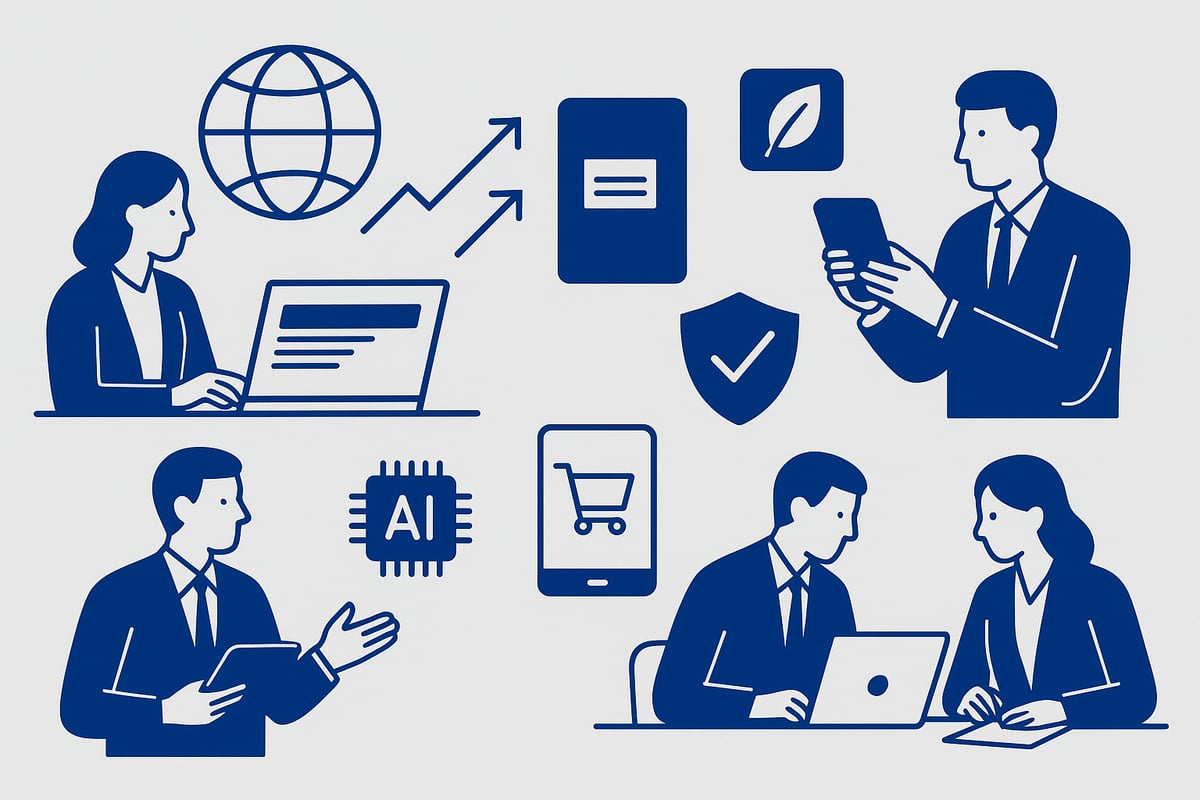
Core Strategies for B2B Success in 2026
To thrive in the rapidly changing b2 b business landscape, organizations must master the art of cross-functional alignment, embrace cutting-edge automation, and execute flawless go-to-market strategies. Let’s break down the essential frameworks powering tomorrow’s industry leaders.

Aligning Product, Marketing, and Sales for Unified Growth
In 2026, b2 b business growth hinges on the seamless integration of product, marketing, and sales teams. When these teams share unified KPIs and collaborate on operational dashboards, pipeline velocity and ARR soar.
Proven practices include:
- Setting cross-team quarterly goals tied to revenue metrics.
- Developing enablement playbooks for consistent messaging.
- Running weekly feedback loops to break down silos.
Take the story of a SaaS company that doubled its pipeline by aligning product launches with targeted marketing campaigns and real-time sales training. This kind of collaboration keeps everyone focused on shared outcomes and drives sustainable growth.
Leveraging AI and Agentic Automation in B2B
Agentic AI is reshaping b2 b business operations by empowering autonomous workflows across sales, marketing, and customer support. Unlike traditional automation, Agentic Automation adapts to changing data in real time, enabling smarter lead qualification and hyper-personalized outreach.
Key impacts include:
- AI-driven chatbots handling complex support queries.
- Automated RFP responses boosting conversion rates.
- Dynamic pricing engines optimizing deals on the fly.
Case studies show that integrating Agentic AI can cut lead response times in half and improve forecasting accuracy. To maximize value, ensure robust data integration and ethical AI governance across all teams.
Building a Scalable Go-To-Market (GTM) Framework
A repeatable, data-driven GTM strategy is the backbone of high-performing b2 b business models. Start by validating product-market fit, then craft messaging that stands out in crowded markets.
Core steps:
- Map ideal customer profiles and segment outreach.
- Use differentiated positioning to capture attention.
- Equip teams with enablement tools for rapid execution.
For deeper insights, explore this Go-To-Market Strategy Guide to see how leading SaaS and enterprise software firms are achieving measurable pipeline and ARR growth.
Step-by-Step Guide: Executing a Modern B2B Go-To-Market Strategy
Launching a successful b2 b business in 2026 means more than just having a great product. It requires a clear, data-driven plan that aligns your teams, leverages technology, and adapts to a fast-evolving buyer landscape. Here’s a step-by-step guide to help you build a modern, scalable go-to-market strategy.

Step 1: Market and Buyer Insights
Begin your b2 b business journey by defining your true market potential. Analyze Total Addressable Market (TAM), Serviceable Available Market (SAM), and Serviceable Obtainable Market (SOM) to size up opportunities.
- Map out buyer personas and decision-maker roles
- Identify pain points through interviews and surveys
- Use competitive intelligence to uncover market gaps
- Segment your audience using analytics tools
- Benchmark against industry standards for buyer behavior
Understanding your buyers’ journeys and motivations sets a strong foundation for every next move.
Step 2: Product Positioning and Messaging
Craft messaging that speaks directly to each segment’s needs. Build unique value propositions that resonate with the rational and emotional drivers behind b2 b business decisions.
- Align messaging with core pain points and desired outcomes
- Run A/B tests to optimize value statements
- Address objections and create trust through transparency
- Highlight success stories from SaaS and enterprise software
Effective positioning helps your offering stand out, even in crowded markets.
Step 3: Revenue Engine Setup (Demand Gen, Sales, Enablement)
Activate growth by engineering a revenue engine that integrates marketing, sales, and enablement. For b2 b business teams, this means deploying both inbound and outbound campaigns, personalized ABM, and AI-powered automation.
- Equip sales with enablement content and objection-handling guides
- Use dashboards to track pipeline health and conversion rates
- Automate lead scoring and nurturing with Agentic AI
- Align compensation with go-to-market goals
- Explore proven B2B SaaS Lead Generation tactics to maximize pipeline
Seamless collaboration and smart automation fuel consistent growth.
Step 4: Measurement, Iteration, and Scale
Measure what matters. Set unified KPIs tied to pipeline and ARR, then use closed-loop analytics for full visibility.
- Conduct regular go-to-market reviews and retrospectives
- Apply AI-driven forecasting for smarter resource allocation
- Optimize with data-backed insights from every campaign
- Learn from case studies of iterative GTM refinement
Continuous improvement ensures your b2 b business not only grows, but thrives as markets evolve.
The Role of Agentic AI in B2B Growth
Agentic AI is transforming how b2 b business leaders approach growth, efficiency, and customer experience. Unlike traditional automation, which follows predefined rules, Agentic AI acts with autonomy, making decisions, adapting workflows, and learning from outcomes. This leap enables B2B teams to orchestrate complex processes without constant human oversight.

Agentic Automation empowers sales, marketing, and customer success teams to execute tasks that once required hours of manual effort. For example:
- AI-powered chatbots handle complex customer queries and route leads instantly.
- Automated RFP response engines draft proposals tailored to each client’s needs.
- Dynamic pricing engines adjust offers in real time based on buyer profiles and market data.
Adoption of Agentic AI in b2 b business is delivering measurable ROI. According to recent industry reports, companies leveraging Agentic Automation have reduced operational costs by up to 30 percent and improved lead response times by over 50 percent. These capabilities drive higher conversion rates and accelerate pipeline growth.
However, integrating Agentic AI presents challenges. Seamless data integration and robust governance are essential to avoid silos and ensure AI outputs remain ethical and accurate. Teams must invest in training and build trust in AI-driven recommendations.
Looking ahead, future-focused b2 b business strategies will feature self-optimizing go-to-market systems, AI-powered product launches, and predictive revenue operations. For deeper insight into Agentic AI’s impact on enterprise platforms, see Agentic AI transforming enterprise platforms.
As Agentic Automation continues to evolve, B2B organizations that embrace these tools gain a decisive edge—delivering personalized, scalable experiences that drive sustainable growth.
Overcoming Common B2B Challenges in 2026
Navigating the evolving landscape of b2 b business in 2026 means facing hurdles that demand agility and innovation. Lengthy buying cycles and multi-stakeholder decision processes remain persistent obstacles, often slowing growth for even the most ambitious teams.
Market saturation is another challenge. As more players enter established verticals, differentiation becomes vital. Smart b2 b business leaders are leaning into data-driven go-to-market strategies, refining their value propositions, and building unified growth functions to stand apart.
Customer dependency and limited market bases can place revenue at risk. To build resilience, consider these proven tactics:
- Diversify offerings and expand into adjacent markets.
- Embrace hybrid B2B2C models for broader reach.
- Invest in customer success programs to drive retention.
- Foster strong, multi-threaded relationships within accounts.
Agentic AI is transforming how b2 b business teams forecast demand, manage inventory, and optimize the customer journey. By adopting AI-powered marketing automation, companies streamline lead management and personalize outreach, resulting in measurable pipeline growth and improved retention.
Finally, the most successful organizations are those that adapt quickly to regulatory and economic shifts. They use iterative GTM reviews, robust data analytics, and continuous learning to stay ahead, turning challenges into opportunities for sustainable growth.
Case Studies: B2B Innovators Leading the Way
In the fast-evolving b2 b business world, real-world innovators set the pace for what’s possible. Let’s explore how leading companies are not just keeping up but redefining growth, AI adoption, and go-to-market excellence.
Vertical and Horizontal Platform Success
- Chemnet and Machinio zeroed in on industry-specific needs, building vertical B2B platforms that dominate their niches by tailoring solutions for complex procurement and compliance.
- Horizontal platforms like Slack and global payment gateways excelled by serving cross-industry collaboration and transaction demands, scaling rapidly with robust GTM alignment.
B2B2C and Marketplace Expansion
- Amazon’s third-party seller ecosystem is a prime B2B2C example, enabling suppliers to access exponential reach and blending consumer-like simplicity with enterprise-grade logistics.
- SaaS companies such as Filtrous achieved a 27% boost in organic conversion by refining their GTM playbook, while xtype.io drove 60% pipeline contribution in just 12 months.
- Hadean realized a 300% surge in lead generation, leveraging Agentic AI to automate qualification and personalize outreach.
Lessons Learned and Actionable Takeaways
- Failed GTM launches often stemmed from siloed teams and unclear value propositions. Successful pivots focused on unified growth functions and data-driven enablement.
- Top innovators use operational dashboards, AI-driven forecasting, and continuous feedback loops to adapt quickly.
- For deeper insights on product marketing and GTM execution, visit B2B Product Marketing Strategies.
These stories show that the future belongs to b2 b business leaders who embrace collaboration, Agentic AI, and unified, data-powered GTM strategies.
After seeing how B2B is transforming—where data, AI, and real customer stories drive real growth—it’s clear you don’t have to navigate this changing landscape alone. Imagine what you could achieve if your product, marketing, and sales teams pulled together with a unified vision and the right frameworks. At GTM Consult, I’ve seen founders and leaders like you turn scattered KPIs into scalable revenue—and I’d love to help write your next success story. If you’re curious about taking the next step, let’s chat about your unique challenges and goals. Book Your Personal Intro Call

Latest From
The Blog

Go To Market Strategy Consulting Guide For 2025 Success

Go To Market Strategy McKinsey Guide For Success 2025
.jpg)
Crossing the Enterprise Chasm: A Practical Guide to Sales-Led Growth (SLG)

Let's Build The Future Together
