

Lead Generation and Revenue: Building a Predictable Engine

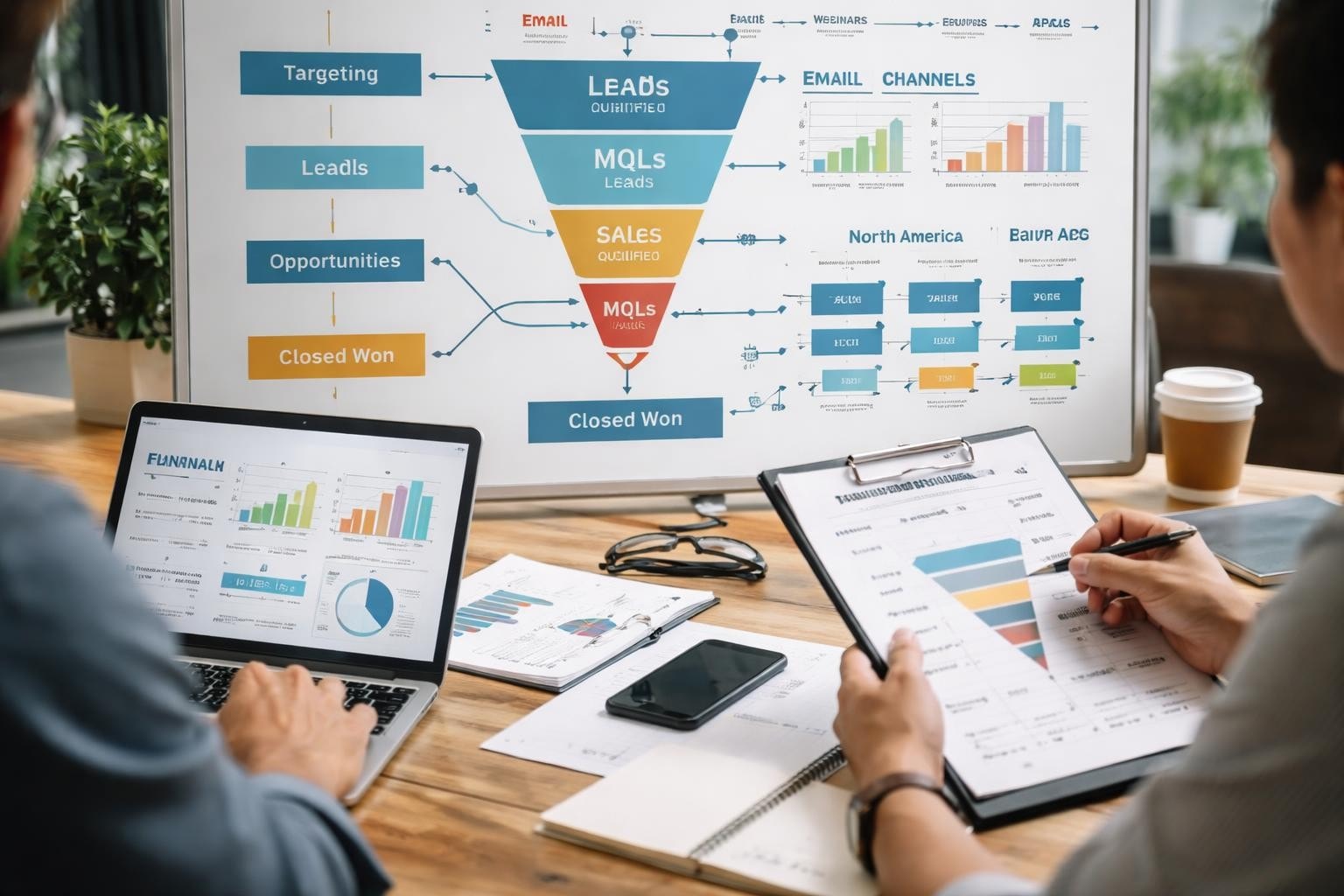


Your board wants 3x pipeline coverage by next quarter. Your SDR team is burning through leads with a 2% conversion rate. Marketing swears they're hitting MQL targets, but sales says the leads are garbage. Sound familiar? This disconnect between lead generation and actual revenue creation is killing B2B SaaS companies in the $3M–$75M ARR range faster than any competitor ever could.
The truth is brutal: 68% of B2B companies struggle to generate quality leads, according to recent lead generation statistics. But the real problem isn't volume. It's the complete misalignment between how you generate leads and how you convert them into predictable revenue.
The Lead Generation and Revenue Alignment Framework
Most B2B SaaS companies treat lead generation and revenue as separate functions. Marketing owns top-of-funnel. Sales owns close rates. Nobody owns the middle. This organizational gap creates what I call "pipeline purgatory," where leads exist but revenue doesn't materialize.
Here's the reality check you need:
- Pipeline coverage ratios vary wildly by region: US markets need 4–5x, EMEA needs 5–6x, DACH requires 6–7x due to longer enterprise cycles
- Lead-to-opportunity conversion should hit 12–15% for qualified leads; anything below 8% signals fundamental targeting problems
- Velocity metrics matter more than volume: a 30-day sales cycle with 10% conversion beats a 90-day cycle with 15% conversion every time
The B2B lead generation best practices outlined by industry leaders emphasize qualification over quantity, but most operators skip the harder work of building systematic handoffs between marketing and sales.
Why Your Lead Generation and Sales Process Is Broken
Let me tell you about a $12M ARR SaaS company I worked with last year. They were generating 400 MQLs monthly. Sales accepted maybe 180. Only 22 became opportunities. The problem wasn't lead quality in isolation. It was that marketing optimized for form fills while sales optimized for enterprise logos.

Lead generation and revenue alignment requires three non-negotiable elements:
- Unified ICP definition with firmographic, technographic, and behavioral signals that both teams actually use
- SLA-driven handoffs with response time commitments (5 minutes for inbound, 24 hours for outbound nurture)
- Shared revenue accountability where marketing owns pipeline creation, not just lead volume
When you structure your B2B SaaS lead generation around these principles, conversion rates jump 20–40% within 90 days.
Multi-Region Lead Generation and Execution Challenges
Scaling lead generation and revenue systems across US, EMEA, and DACH markets isn't about translation. It's about completely different buying behaviors, legal frameworks, and competitive landscapes.
| Region | Avg. Sales Cycle | Preferred Channels | Conversion Benchmark |
|---|---|---|---|
| US | 45–60 days | LinkedIn, paid search, events | 12–15% lead-to-opp |
| EMEA | 60–90 days | Industry events, partnerships, referral | 10–13% lead-to-opp |
| DACH | 90–120 days | Direct outreach, trade associations, case studies | 8–11% lead-to-opp |
The critical mistake? Applying US playbooks to European markets. GDPR compliance isn't just legal overhead; it fundamentally changes how you approach demand generation consulting and lead nurturing sequences.
Your DACH prospects expect deep technical validation before any commercial conversation. Your US prospects want ROI calculators in the first meeting. Lead generation and qualification criteria must adapt accordingly, or you'll waste 60% of your pipeline investment on leads that never had a chance.
Building Cross-Functional Lead Generation and Revenue Operations
The companies crushing revenue targets in 2026 have stopped organizing around functions. They've built integrated revenue operations that connect every touchpoint from first visit to renewal.
Here's your operational checklist:
- Implement bidirectional SLA tracking: Marketing measures sales follow-up speed; sales measures lead response time
- Create regional plays with local context: EMEA needs case studies in local languages; DACH requires reference customers in-region
- Build lead scoring that predicts revenue, not engagement: Intent signals matter more than whitepaper downloads
- Track full-funnel velocity: Time-to-MQL, MQL-to-SQL, SQL-to-close by cohort and channel
The lead generation strategies that work in 2026 prioritize quality and speed over sheer volume. But quality isn't subjective. It's measurable through revenue contribution analysis.

Lead Generation and Technology Stack Integration
Your martech stack probably has 12+ tools. Most create data silos that destroy lead generation and revenue visibility. I've seen $30M ARR companies unable to answer basic questions: Which channels drive pipeline? What's our CAC by region? How long does it take to convert an enterprise lead?
Critical integration points:
- CRM-to-marketing automation with real-time sync (not batch updates)
- Conversation intelligence feeding lead scoring models
- Revenue attribution connecting first touch to closed-won
- Predictive analytics identifying high-propensity accounts before they convert
Your lead generation and sales technology should eliminate manual handoffs, not create new process bottlenecks. When GTM Consult designs GTM operating systems, we map every data flow and decision point to ensure leads never fall through cracks.
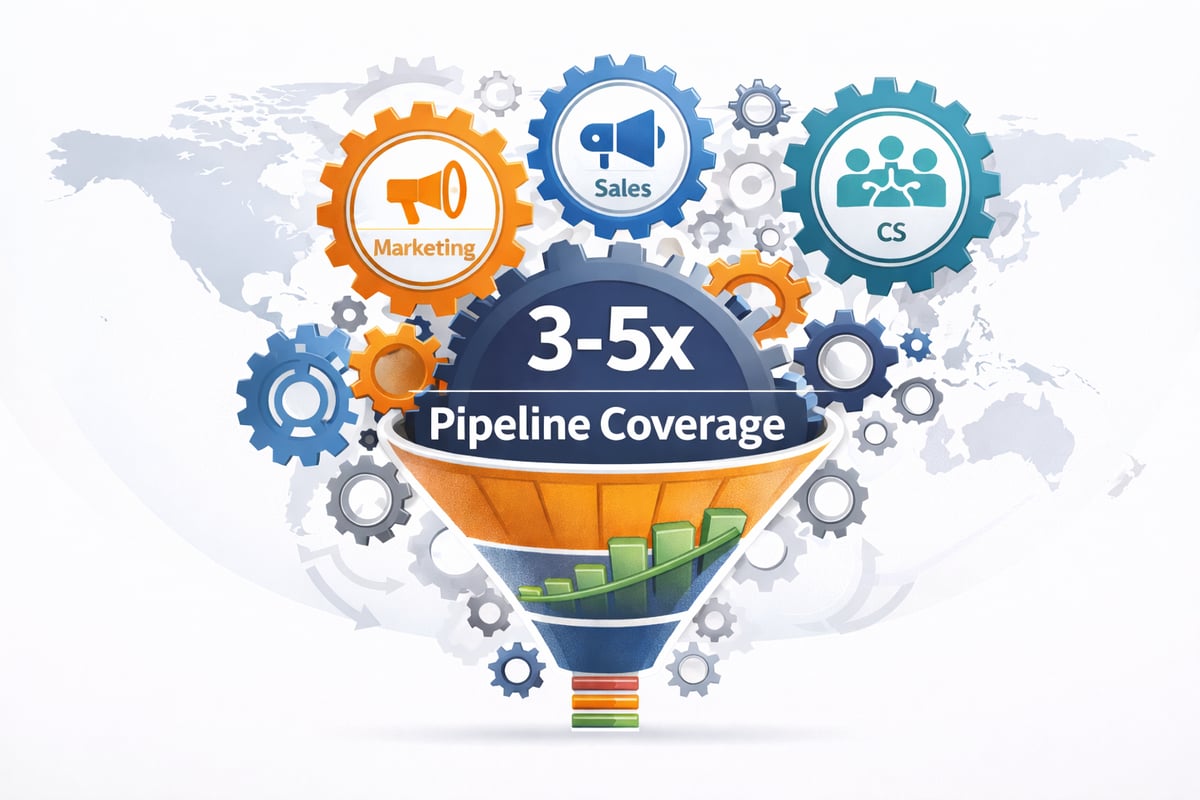
The difference between 3x and 5x pipeline coverage often comes down to automation quality, not rep headcount. Companies achieving exceptional results focus on systematic execution over heroic individual effort.
Lead Generation and CAC Optimization Across Segments
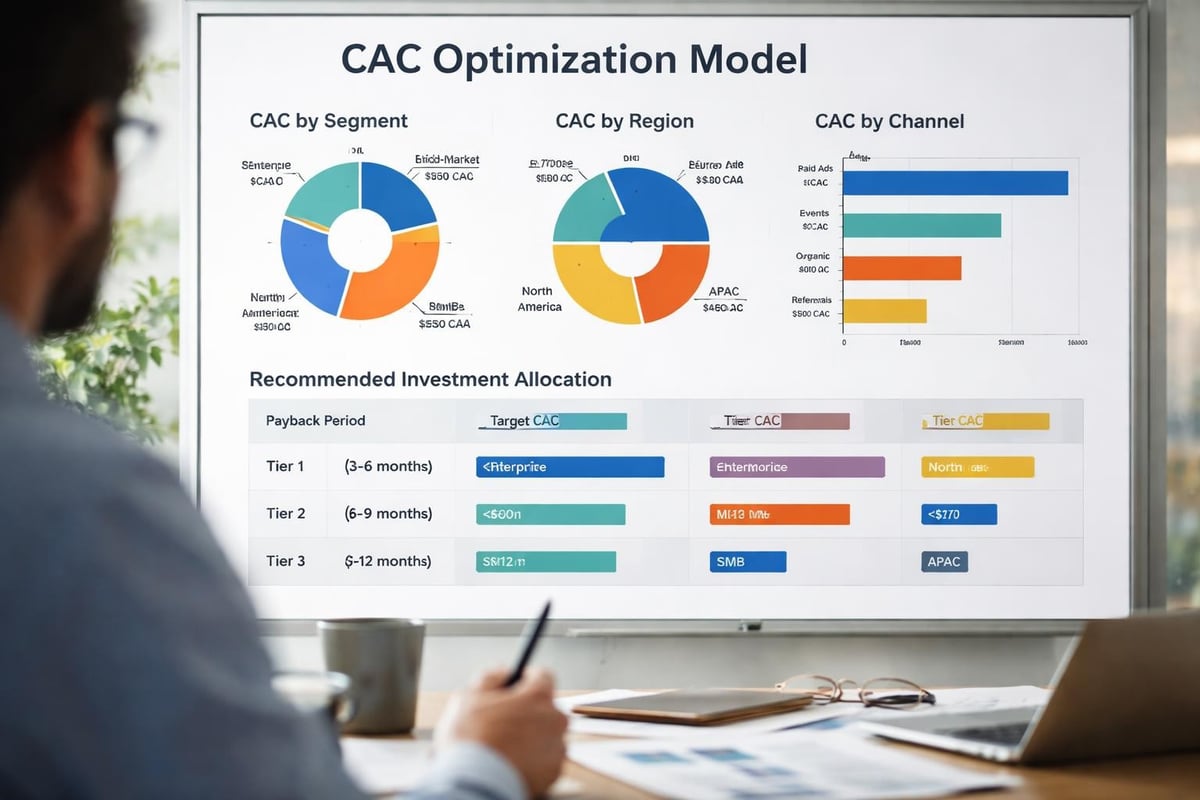
Blended CAC is a vanity metric. What matters is CAC by segment, region, and channel. Your enterprise motion in DACH might justify $45K CAC. Your self-serve PLG motion in the US should be under $1,200.
According to Digital Silk's lead generation statistics, companies that segment their lead generation and CAC analysis by customer tier see 35% better unit economics. But most finance teams still report one number to the board.
Break down your lead generation and customer acquisition costs this way:
| Segment | Target CAC | Acceptable Payback | Primary Channel |
|---|---|---|---|
| SMB ($5K–$25K ACV) | $800–$2,000 | 6 months | Paid search, content |
| Mid-market ($25K–$100K) | $3,000–$8,000 | 12 months | Outbound, events |
| Enterprise ($100K+) | $15,000–$50,000 | 18–24 months | ABM, partnerships |
Understanding B2B SaaS scaling economics means knowing exactly where to invest in lead generation and where to cut underperforming channels. Many companies waste 40% of their marketing budget on programs that generate leads but destroy unit economics.
For companies serious about optimizing their entire revenue engine, GTM Services provide the systematic approach needed to align lead generation investments with actual revenue outcomes. This isn't about hiring more marketers; it's about building operating discipline that connects every dollar spent to pipeline created and revenue closed.
Measuring What Matters in Lead Generation and Revenue Growth
Stop tracking MQLs. Start tracking revenue contribution by cohort. The companies winning in today's environment measure lead generation and pipeline performance through outcome metrics, not activity metrics.
Your executive dashboard should show:
- Pipeline coverage ratio by segment and region (target: 4–6x depending on market)
- Lead-to-revenue conversion rate and velocity (not just lead-to-opportunity)
- Win rate by lead source and channel
- Average contract value by acquisition channel
- Time to first value and expansion revenue potential
The distinction between vanity metrics and revenue-driving KPIs determines whether your lead generation and sales investments compound or waste away. PE-backed teams especially need clarity on which metrics actually predict exits.
When you implement proper measurement frameworks, you discover uncomfortable truths. That channel generating 30% of your MQLs? It might contribute only 8% of closed revenue. The outbound program your CMO wants to cut? Could be your highest-velocity path to enterprise logos.
Lead generation and revenue alignment isn't a project. It's an operating discipline that separates predictable SaaS businesses from those lurching between good and bad quarters. The companies achieving 3–5x pipeline coverage and 20–40% higher conversions have built systematic approaches connecting every lead source to revenue outcomes. If you're ready to transform your GTM engine from chaotic to predictable, GTM Consult brings 20+ years of hands-on B2B SaaS experience to execute alongside your team and deliver measurable results across US, EMEA, and DACH markets.

Latest From
The Blog

Go To Market Strategy Consulting Guide For 2025 Success


Go To Market Strategy McKinsey Guide For Success 2025
.jpg)
Crossing the Enterprise Chasm: A Practical Guide to Sales-Led Growth (SLG)

Let's Build The Future Together
